
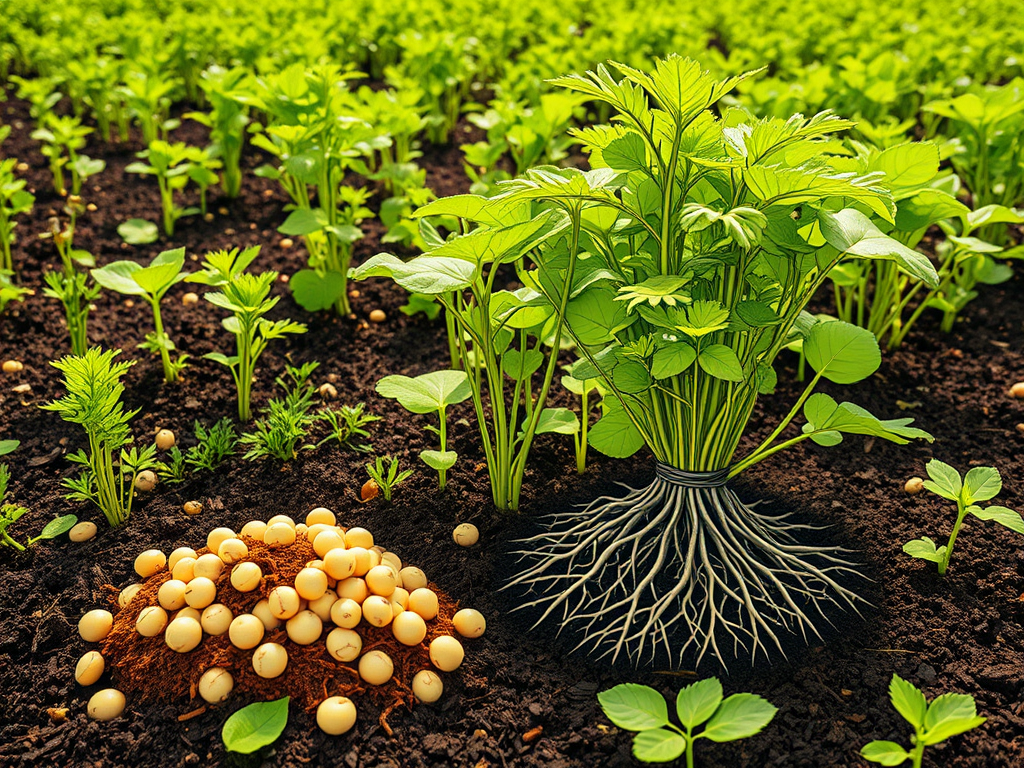
In the pursuit of sustainable agriculture, researchers are continually exploring innovative ways to protect crops and enhance their productivity. A recent study published in Frontiers in Agricultural Science and Engineering by Prashant Paveen, Vipul Kumar, Prahlad Masurkar, Devendra Kumar, Amine Assouguem, Chandra Mohan Mehta, and Rachid Lahlali, has shed light on a promising solution for managing Sclerotinia stem rot in chickpeas. This research highlights the dual benefits of biocharBiochar is a carbon-rich material created from biomass decomposition in low-oxygen conditions. It has important applications in environmental remediation, soil improvement, agriculture, carbon sequestration, energy storage, and sustainable materials, promoting efficiency and reducing waste in various contexts while addressing climate change challenges. More, particularly hardwood biochar, when used as a carrier for the beneficial fungus Trichoderma, demonstrating its ability to both suppress disease and promote plant growth.
Chickpeas are a vital crop globally, with India contributing approximately 70% of the world’s production. However, this essential legume faces a significant threat from Sclerotinia sclerotiorum, the pathogen responsible for white mold disease, which can lead to yield losses exceeding 50% under favorable conditions. Traditional disease management often relies on chemical fungicides, but there is a growing need for eco-friendly alternatives. Biochar, a charcoal-like substance made from organic materials, has emerged as a strong candidate due to its porous structure, high carbon content, and ability to support microbial growth and enhance soil health.
The study investigated three types of biochar—wheat straw, organic kitchen waste, and hardwood—to evaluate their effectiveness as carriers for Trichoderma. The researchers meticulously analyzed the biochar properties, including organic carbon, total nitrogen, phosphorus, potassium, magnesium, calcium, pHpH is a measure of how acidic or alkaline a substance is. A pH of 7 is neutral, while lower pH values indicate acidity and higher values indicate alkalinity. Biochars are normally alkaline and can influence soil pH, often increasing it, which can be beneficial More, and ashAsh is the non-combustible inorganic residue that remains after organic matter, like wood or biomass, is completely burned. It consists mainly of minerals and is different from biochar, which is produced through incomplete combustion. Ash Ash is the residue that remains after the complete More content. The findings revealed that hardwood biochar stood out. It contained the highest lignin content (31.3%) and cellulose (34.5%) , which are crucial for forming stable carbon structures and increasing porosityPorosity of biochar is a key factor in its effectiveness as a soil amendment and its ability to retain water and nutrients. Biochar’s porosity is influenced by feedstock type and pyrolysis temperature, and it plays a crucial role in microbial activity and overall soil health. Biochar More in the resulting biochar. This enhanced porosity is vital for retaining water and nutrients, ultimately benefiting plant growth.
One of the most compelling findings was the superior ability of hardwood biochar to support Trichoderma populations. Hardwood biochar at a 150 µm mesh size sustained the highest Trichoderma population, reaching 33.5×10⁵ colony-forming units per gram after six weeks. This is significant because Trichoderma species are known biocontrol agents that can parasitize plant pathogens, compete for nutrients, and produce antifungal compounds. The macropores of biochar provide an ideal habitat, protecting these beneficial microbes and supplying them with carbon and mineral nutrients.
Beyond supporting beneficial microbes, hardwood biochar demonstrated a remarkable capacity to inhibit the growth of S. sclerotiorum. The study found that a 4% concentration of hardwood biochar with a 150 µm mesh size provided the most effective suppression of the pathogen while simultaneously promoting Trichoderma growth. In field trials, the combination of hardwood biochar and Trichoderma resulted in a significant reduction in disease incidence, dropping to 44.8%. This dual action—pathogen suppression and bioagent promotion—underscores biochar’s potential as a multi-purpose soil amendmentA soil amendment is any material added to the soil to enhance its physical or chemical properties, improving its suitability for plant growth. Biochar is considered a soil amendment as it can improve soil structure, water retention, nutrient availability, and microbial activity. More.
The positive effects extended to plant growth as well. Chickpea plants treated with hardwood biochar and Trichoderma exhibited significant improvements in shoot length and root dry mass. The increased root mass, in particular, aligns with the known ability of Trichoderma to stimulate biomassBiomass is a complex biological organic or non-organic solid product derived from living or recently living organism and available naturally. Various types of wastes such as animal manure, waste paper, sludge and many industrial wastes are also treated as biomass because like natural biomass these More production and lateral root growth through auxin-dependent mechanisms. Furthermore, these plants showed a higher total phenol content, with the hardwood biochar and Trichoderma combination leading to the highest concentration of 480 μg⋅g−1 gallic acid equivalents. Phenolic compounds are crucial indicators of plant defense responses, suggesting that this treatment enhances the plant’s natural resistance mechanisms against pathogens.
This research paves the way for more sustainable and environmentally friendly agricultural practices. The application of 4% hardwood biochar at a 150 µm mesh size is recommended as an optimal strategy for managing Sclerotinia stem rot in chickpeas, with potential adaptability to other crops. While this study provides compelling evidence, further research is needed to explore the long-term effects of biochar on soil health and microbial diversity across various agroecological zones, and to standardize biochar production methods for consistent quality.
Source: Paveen, P., Kumar, V., Masurkar, P., Kumar, D., Assouguem, A., Mehta, C. M., & Lahlali, R. (2025). Evaluation of biochar as a Trichoderma carrier for managing Sclerotinia sclerotiorum in chickpea. Frontiers in Agricultural Science and Engineering, 12(2), 391–405




Leave a Reply