

In a world where the quest for sustainable solutions is paramount, biocharBiochar is a carbon-rich material created from biomass decomposition in low-oxygen conditions. It has important applications in environmental remediation, soil improvement, agriculture, carbon sequestration, energy storage, and sustainable materials, promoting efficiency and reducing waste in various contexts while addressing climate change challenges. More emerges as a beacon of hope, offering a green approach to address uranium contamination. Xiong et al. (2025) explore the potential of biochar-based materials in remediating uranium-contaminated water and soil, highlighting the versatility and efficiency of this eco-friendly material.
Uranium, a naturally occurring radioactive element, plays a crucial role in energy production and medical applications. However, its presence in water and soil, often due to mining and industrial activities, poses significant risks to human health and the environment.
Biochar, a carbon-rich material produced from the pyrolysisPyrolysis is a thermochemical process that converts waste biomass into bio-char, bio-oil, and pyro-gas. It offers significant advantages in waste valorization, turning low-value materials into economically valuable resources. Its versatility allows for tailored products based on operational conditions, presenting itself as a cost-effective and efficient More of biomassBiomass is a complex biological organic or non-organic solid product derived from living or recently living organism and available naturally. Various types of wastes such as animal manure, waste paper, sludge and many industrial wastes are also treated as biomass because like natural biomass these More, has gained attention as a cost-effective and sustainable solution for environmental remediation. Its unique properties, including high surface area, porosityPorosity of biochar is a key factor in its effectiveness as a soil amendment and its ability to retain water and nutrients. Biochar’s porosity is influenced by feedstock type and pyrolysis temperature, and it plays a crucial role in microbial activity and overall soil health. Biochar More, and diverse surface functional groups, make it an excellent adsorbent for various pollutants, including uranium.The adsorption capacity of biochar can be further enhanced through various modification techniques. Physical modifications, such as ball milling, increase the surface area and porosity of biochar, while chemical modifications introduce specific functional groups that enhance its interaction with uranium. Biological modifications, such as microbial fermentation, offer a green approach to tailoring biochar’s properties for uranium removal.
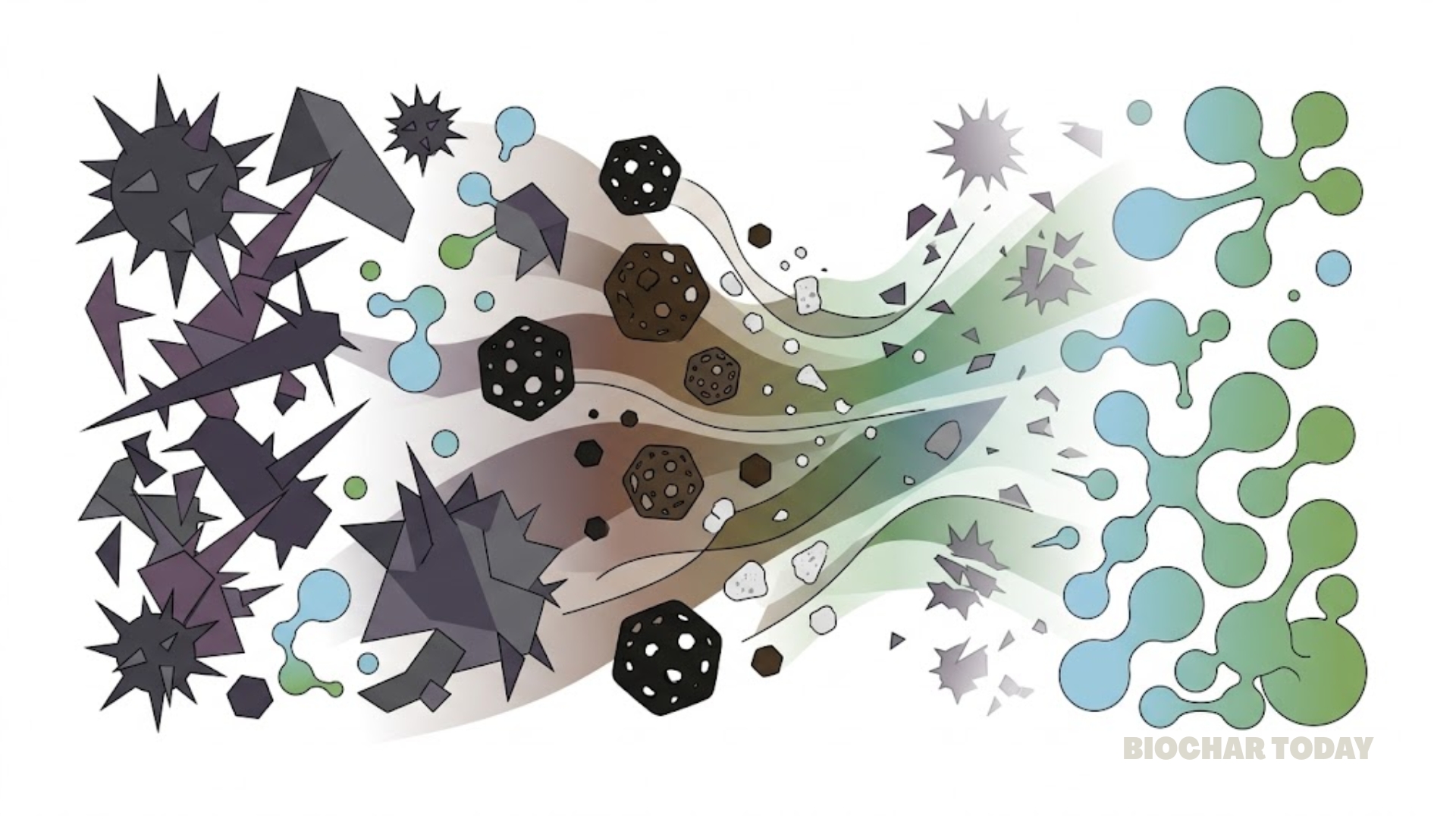
The removal of uranium by biochar involves various mechanisms, including physical adsorption, surface complexation, and chemical reduction. Physical adsorption occurs due to the porous structure of biochar, while surface complexation involves the interaction of uranium with functional groups on the biochar surface. Chemical reduction, often facilitated by metal doping or the presence of reducing agents, converts soluble uranium (VI) into insoluble uranium (IV), further immobilizing the contaminant.
Source: Xiong, X., Liu, J., Xiao, T., Lin, K., Huang, Y., Deng, P., Hu, H., & Wang, J. (2025). Remediation of uranium-contaminated water and soil by biochar-based materials: A review. https://doi.org/10.1007/s42773-025-00438-2



Leave a Reply