
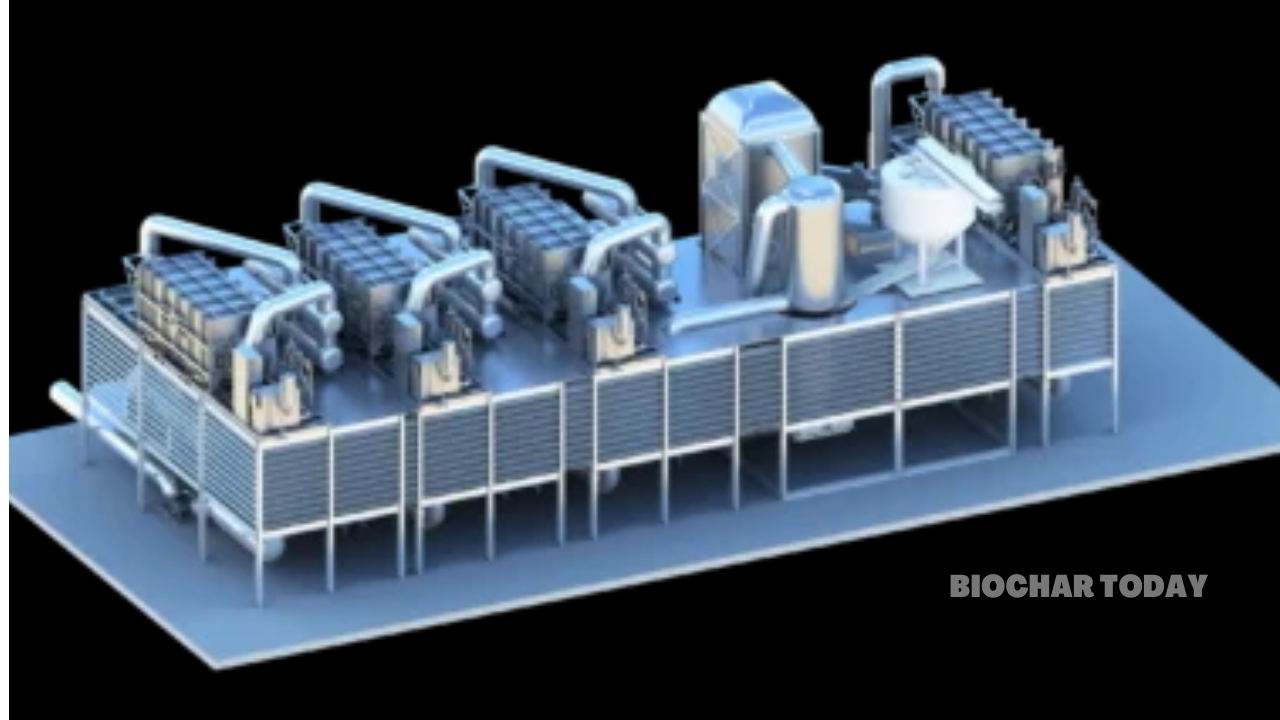
French clean technology provider Haffner Energy has introduced a modular biomass-driven power and cooling architecture designed specifically for the rapidly expanding data center market. Built upon the firm’s established CORE100 platform and its new C-iB multi-module variant, the solution provides off-grid primary and supplementary energy options tailored for energy-intensive digital infrastructure. By integrating local thermochemical conversion with localized thermal management, the system directly targets facilities seeking immediate power scaling without being constrained by utility grid connection delays.
The primary operational challenge driving this technology deployment is the acute power queue bottleneck and thermal burden facing modern data centers. As AI workloads and cloud computing accelerate energy demand, operators face multi-year delays for high-voltage electrical grid interconnections and upgrades. Furthermore, conventional cooling systems consume immense volumes of municipal water and grid power. To expand processing capacity rapidly while maintaining corporate sustainability targets, data centers require reliable, baseload, low-carbon energy solutions capable of providing simultaneous power generation and high-efficiency thermal regulation without straining local water infrastructure.
Haffner Energy resolves these interconnected constraints by deploying a high-density, multi-module energy generation system fueled by localized residual biomassBiomass is a complex biological organic or non-organic solid product derived from living or recently living organism and available naturally. Various types of wastes such as animal manure, waste paper, sludge and many industrial wastes are also treated as biomass because like natural biomass these More. The modular design features a 10-module deployment configuration—comprising dedicated operational units, built-in system redundancy, and limited natural gas backup—to ensure continuous power delivery. The system utilizes diverse, locally sourced feedstocks, such as agricultural residues and forestry waste, which can be stored on-site for several weeks to guarantee supply chain resilience. Crucially, the thermochemical process produces high-value syngasSyngas, or synthesis gas, is a fuel gas mixture consisting primarily of hydrogen and carbon monoxide. It is produced during gasification and can be used as a fuel source or as a feedstock for producing other chemicals and fuels. More to drive power and cooling loops while simultaneously co-producing high-stability biocharBiochar is a carbon-rich material created from biomass decomposition in low-oxygen conditions. It has important applications in environmental remediation, soil improvement, agriculture, carbon sequestration, energy storage, and sustainable materials, promoting efficiency and reducing waste in various contexts while addressing climate change challenges. More for permanent biogenic carbon removal.
The integrated package yields major commercial, operational, and environmental benefits for data center developers and bioenergy equipment providers. By supplementing or bypassing conventional grid connections, operators can bring compute capacity online significantly faster. According to Philippe Haffner, Chairman and CEO of Haffner Energy, each module integrated into a comprehensive data center package generates roughly €6 million (£5.1 million) in revenue—nearly tripling the returns of standard syngas-only configurations. Furthermore, the technology slashes on-site water consumption for cooling, provides verified carbon dioxide removal via biochar co-production, and expands revenue streams through strategic partner equipment integration.


Leave a Reply