
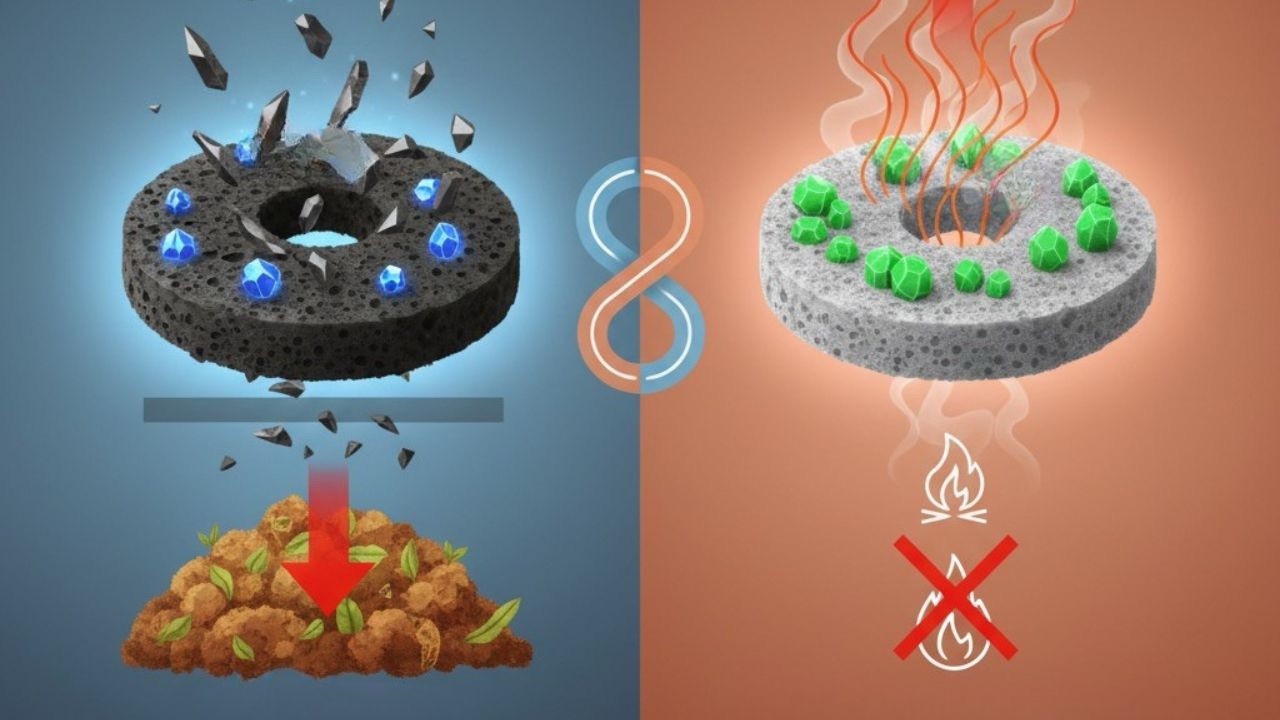
Key Takeaways
- Cleaner Compost, Safer Food: Chemical modification of biocharBiochar is a carbon-rich material created from biomass decomposition in low-oxygen conditions. It has important applications in environmental remediation, soil improvement, agriculture, carbon sequestration, energy storage, and sustainable materials, promoting efficiency and reducing waste in various contexts while addressing climate change challenges. More, such as with phosphoric acid (H3PO4), traps dangerous heavy metals in the compost, reducing their bioavailable content by up to 42.0% , making the resulting fertilizer safer for crops and human consumption.
- Less Pollution, More Nutrients: Treating manure compost with magnesium (Mg)-modified biochar significantly cuts greenhouse gas emissions, reducing CH4 by 66.7% and NH3 by 26.7%. This helps retain valuable nitrogen in the fertilizer instead of losing it to the atmosphere.
- Faster, Better Fertilizer: Biochar acts as a catalyst and a home for helpful microbes, accelerating the composting process and increasing the stability (humus content) of the final fertilizer product by up to 37.2%.
- Fights Superbugs: Biochar’s structure suppresses the transfer of antibiotic resistance genes (ARGs) among bacteria in the compost. Modified BC achieved a reduction in total ARGs by 66.2%, which is critical for controlling the spread of “superbugs.”
- The Future is “Engineered”: Simple, raw biochar isn’t enough; the next generation of solutions involves engineering the BC chemically, biologically, or structurally to precisely target and solve specific problems in the manure, optimizing the process for both environmental and agricultural benefit.
The effective treatment and utilization of livestock and poultry manure (LPM) pose a major global environmental challenge. Conventional composting, the primary method for nutrient recycling, often falls short, suffering from substantial carbon (C) and nitrogen (N) losses (up to 48.7% and 27.5%, respectively) , low humification, and insufficient mitigation of residual contaminants like heavy metals (HM) and antibiotics. However, a 2025 critical review titled, “Enhancing livestock manure composting efficiency through advanced biochar functionalization: A critical review,” published in the Environmental Chemistry and Ecotoxicology journal by Dong Wang, Yu Liu, Xinyuan Wei, Yulong Shi, Xiaomei Xie, Haoran Li, and Qingwen Zhang, synthesized recent advances demonstrating how functionalized biochar (BC) is providing a transformative solution. The core finding is that chemically and biologically engineered BC acts as a multifunctional catalyst, moving manure composting into an era of precision waste valorization.
A major drawback of traditional composting is the emission of greenhouse gases (N2O, CO2, CH4) and harmful gases (NH3, H2S), which not only exacerbates climate issues but also degrades the quality of the final product. The review highlights that modifying biochar significantly enhances its adsorption and catalytic performance to mitigate these losses. Magnesium (Mg)-modified corn stover BC, applied in pig manure composting, demonstrated a stark reduction in gaseous emissions: CH4 emissions were cut by 66.7%, N2O by 29.0%, and NH3 by 26.7%. This superior performance was linked to a significant increase in the BC’s specific surface area (SSA) by 46.9% and pore volume (PV) by 40.7% after Mg modification. The Mg-modification worked through multiple mechanisms: it promoted the growth of microorganisms and suppressed denitrifying bacteria (reducing N2O) and anaerobic methanogenic bacteria (reducing CH4). Furthermore, Mg-modified BC mitigates NH3 emissions through the interaction of adsorbed NH3 and NH4+ to form MgNH4PO4⋅6H2O.
Similarly, NaOH-modified corn straw BC reduced NH3 and H2S emissions during chicken manure composting by 40.6% and 77.8%, respectively. This was achieved as the modification increased the SSA, porosityPorosity of biochar is a key factor in its effectiveness as a soil amendment and its ability to retain water and nutrients. Biochar’s porosity is influenced by feedstock type and pyrolysis temperature, and it plays a crucial role in microbial activity and overall soil health. Biochar More, and alkaline functional group content, enhancing its adsorption capacity (AC) for NH3. Iron (Fe)-modified BC also promoted ammonium adsorption by increasing SSA and functional groups (FG), ultimately resulting in a 30% reduction in NH3 emissions during composting. These advancements move beyond simple mitigation, effectively increasing the total nitrogen retention rate by up to 63.6% when using nanoscale corn straw BC.
Compost quality is gauged by its humification degree. Functionalized BC accelerates this process by enhancing microbial catabolic activity, supplying nutrients, and mediating electron transfer, which promotes the synthesis of stable humus. MnO2-modified corn stover BC increased the concentrations of humus and HA (humic acid) in chicken manure compost products by 29.1% and 37.2%, respectively. The metallic component, such as Mn2+, enhances the activity of lignin-degrading enzymes and facilitates redox cycling and electron transfer processes, accelerating the conversion of unstable small molecules into stable macromolecules.
The enhanced humification facilitates the effective removal of contaminants during composting, ensuring the safety of the final compost product. LPM often contains HM and antibiotics, which pose environmental risks. Phosphoric Acid (H3PO4)-modified coconut shell BC demonstrated a major reduction in bioavailable HM in compost. It significantly reduced the bioavailable contents of metals such as Ni by 42.0%, Mn by 39.7%, Fe by 35.3%, Pb by 36.3%, and Zn by 32.3%. The incorporated phosphates form metal phosphates (e.g., Zn2P2O7⋅H2O) through coprecipitation, immobilizing the metals.
Antibiotic and ARG Reduction: BC enhances the degradation of antibiotics through superior adsorption (via electrostatic and π-π interactions) and by elevating composting temperatures. The addition of 10% wheat straw BC increased the degradation rates of oxytetracycline and tetracycline in swine manure composting by 13.8% and 23.3%, respectively. More importantly, H3PO4-modified BC reduced the abundance of total antibiotic resistance genes (ARGs) in compost products by 66.2%. This is achieved because the porous structure of BC limits cell-to-cell adhesion, suppressing the horizontal gene transfer (HGT) of ARGs.
The diverse functionalization strategies covered in the review—including physical (ball milling), chemical (acid/alkali, metal doping), biological (microbial colonization, earthworm modification), and emerging composite methods—demonstrate the industry’s rapid move toward advanced BC functionalization. However, this advance brings crucial challenges. The review highlights that inappropriate BC production methods can lead to the formation of harmful substances, such as Polycyclic Aromatic Hydrocarbons (PAHs), Persistent Free Radicals (PFRs), and Perfluorochemicals (PFCs). For example, low pyrolysisPyrolysis is a thermochemical process that converts waste biomass into bio-char, bio-oil, and pyro-gas. It offers significant advantages in waste valorization, turning low-value materials into economically valuable resources. Its versatility allows for tailored products based on operational conditions, presenting itself as a cost-effective and efficient More temperatures or sludge feedstockFeedstock refers to the raw organic material used to produce biochar. This can include a wide range of materials, such as wood chips, agricultural residues, and animal manure. More can increase the bioavailability of PAHs , and PFRs can significantly suppress seed germination and seedling growth.
Future research must prioritize the tailored design of BC based on specific composting goals and feedstock and advance the mechanistic understanding at the molecular and microbial level using omics technologies. It is essential to develop standardized protocols that minimize the generation of toxic byproducts and to establish robust field-scale validation programs to ensure the safe and sustainable integration of this transformative material into agriculture.
Source: Wang, D., Liu, Y., Wei, X., Shi, Y., Xie, X., Li, H., & Zhang, Q. (2025). Enhancing livestock manure composting efficiency through advanced biochar functionalization: A critical review. Environmental Chemistry and Ecotoxicology.





Leave a Reply