
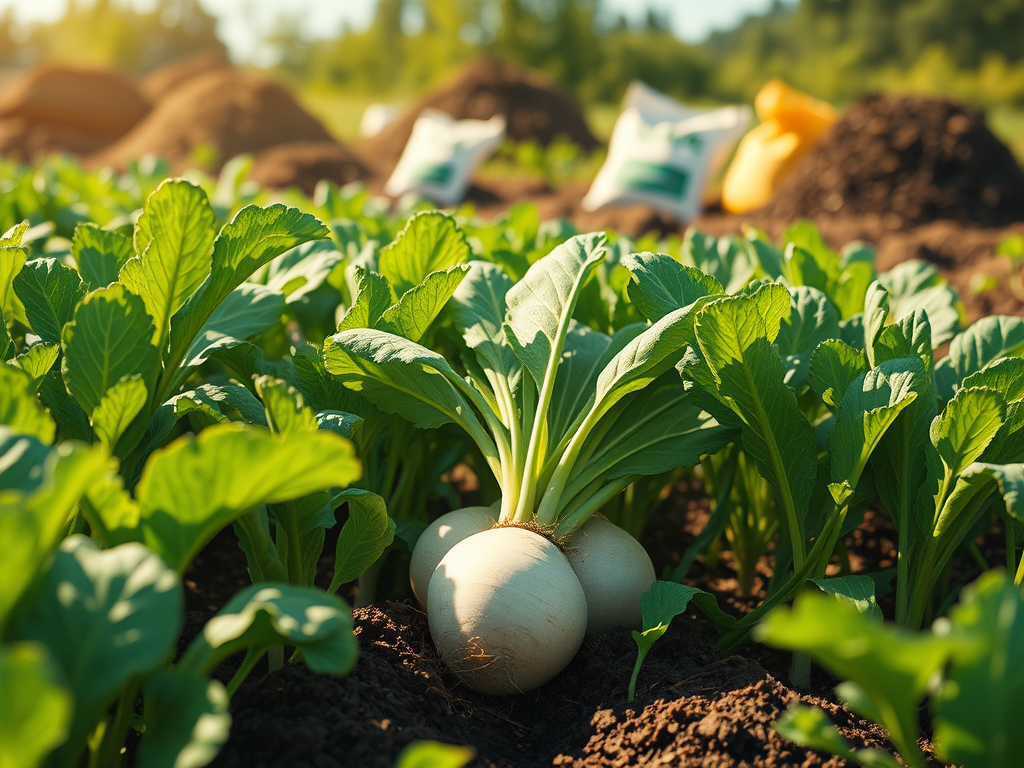
In a world increasingly focused on sustainable practices, agriculture is no exception. Machado et al., in a study published in Plants, investigated the impact of different fertilization strategies on turnip growth and phytochemical accumulation. The researchers explored the use of biocharBiochar is a carbon-rich material created from biomass decomposition in low-oxygen conditions. It has important applications in environmental remediation, soil improvement, agriculture, carbon sequestration, energy storage, and sustainable materials, promoting efficiency and reducing waste in various contexts while addressing climate change challenges. More, compost, and inorganic nitrogen, examining their effects on nutrient uptake, yield, and antioxidant responses in turnips.
The study highlighted the potential of biochar and compost as sustainable alternatives to conventional inorganic fertilizers. Biochar, a charcoal-like material produced from biomassBiomass is a complex biological organic or non-organic solid product derived from living or recently living organism and available naturally. Various types of wastes such as animal manure, waste paper, sludge and many industrial wastes are also treated as biomass because like natural biomass these More pyrolysisPyrolysis is a thermochemical process that converts waste biomass into bio-char, bio-oil, and pyro-gas. It offers significant advantages in waste valorization, turning low-value materials into economically valuable resources. Its versatility allows for tailored products based on operational conditions, presenting itself as a cost-effective and efficient More, has gained attention for its ability to improve soil fertility and promote plant growth. Compost, on the other hand, is a rich source of organic matter that enhances soil health and nutrient availability.
The researchers found that the combined application of biochar, compost, and a reduced amount of inorganic nitrogen resulted in high dry biomass yields, comparable to those achieved with inorganic fertilization alone. This suggests that sustainable fertilization strategies can effectively support crop growth while minimizing reliance on conventional fertilizers. Moreover, the study revealed that different fertilization strategies influenced the accumulation of phytochemicals, such as ascorbic acid and total phenols, in turnips. This finding has implications for tailoring fertilization approaches to achieve specific nutritional goals in crops.
The research underscores the importance of exploring and adopting sustainable fertilization practices in agriculture. Biochar and compost, particularly when used in combination with reduced amounts of inorganic nitrogen, offer promising pathways towards greener and more eco-friendly farming.
SOURCE: Machado, R.M.A.; Alves-Pereira, I.; Velez, D.; Grilo, A.; Veríssimo, I.; Ferreira, R. Exploring Sustainable Fertilization Strategies Involving Biochar, Compost, and Inorganic Nitrogen: Impact on Nutrient Uptake, Yield, Phytochemical Accumulation, and Antioxidant Responses in Turnips. Plants 2025, 14, 529. https://doi.org/10.3390/plants14040529



Leave a Reply