
Key Takeaways
- Rising global temperatures significantly increase carbon dioxide emissions from soils treated with biocharBiochar is a carbon-rich material created from biomass decomposition in low-oxygen conditions. It has important applications in environmental remediation, soil improvement, agriculture, carbon sequestration, energy storage, and sustainable materials, promoting efficiency and reducing waste in various contexts while addressing climate change challenges. More.
- Soil in agricultural crop fields releases more than three times as much extra carbon dioxide under warming compared to forest soils.
- Biochar made from woody materials produces a stronger release of greenhouse gas when heated than biochar made from crops or grasses.
- The size of the temperature rise is the primary factor driving increased soil carbon loss, followed by the amount of biochar applied.
- Climate mitigation plans must account for temperature increases to ensure biochar applications remain effective for long-term carbon storage.
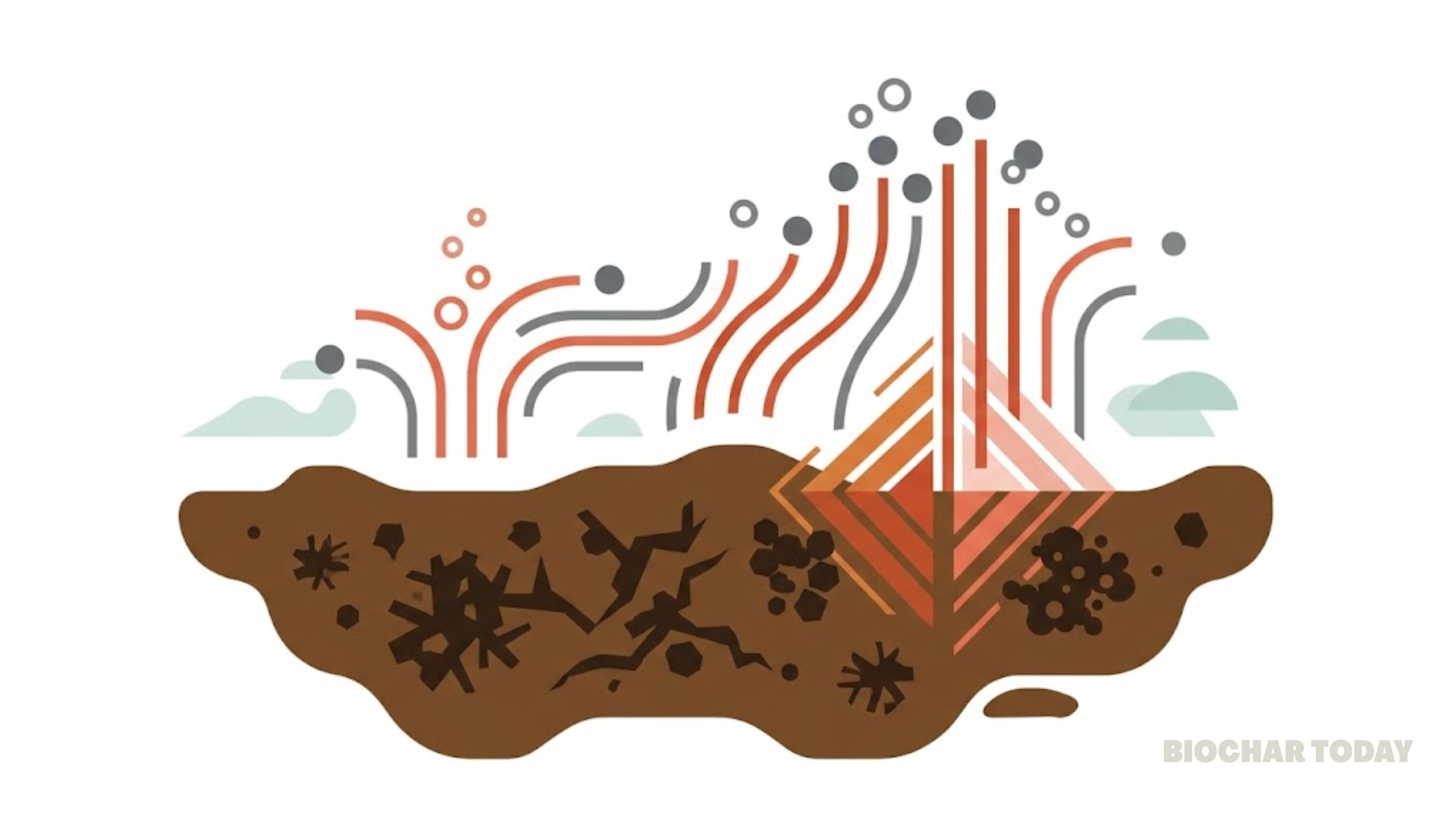
A comprehensive global study published in Biochar by Tongyu Xu, Qiufeng Xu, Yan Lei, Fei Li, Amit Kumar, Dafeng Hui, Jianming Xue, Shengdao Shan, Yongfu Li, Hepeng Li, and Junjie Lin demonstrates that climate warming significantly elevates carbon dioxide emissions from soils amended with biochar. Soil represents one of the largest natural storage reservoirs for carbon on Earth, playing a central role in regulating global climate systems. Incorporating biochar into topsoil has gained widespread interest as an effective strategy to lock away carbon while enhancing crop yields and soil health. However, most previous evaluations focused on stable climate conditions, leaving major questions about how rising global temperatures affect carbon storage in biochar-treated ecosystems.
The researchers conducted a systematic global analysis incorporating over two thousand paired observations across thirty-two scientific publications to determine how higher temperatures alter carbon dioxide release from biochar-treated soils. Across all evaluated ecosystems, experimental warming increased carbon dioxide emissions from biochar-amended soils by an average of seventy-seven percent. The magnitude of this response varied dramatically based on land use, with cropland ecosystems showing an increase of 117.5 percent in carbon dioxide release under elevated temperatures. This cropland emission increase was nearly four times greater than the 30.9 percent increase observed in forest soils, highlighting the heightened vulnerability of cultivated agricultural lands to warming-induced carbon loss.
The specific characteristics of the applied biochar played a key role in controlling how strongly soil emissions responded to rising temperatures. Soils treated with biochar produced from woody feedstocks exhibited a much stronger increase in carbon dioxide emissions when warmed compared to soils amended with biochar derived from agricultural crop residues or grasses. Particle size also influenced the outcome, as smaller biochar particles triggered a larger warming response than coarser materials. Furthermore, higher application rates of biochar consistently amplified carbon dioxide release across both agricultural and forest soils, indicating that applying excessive amounts of biochar can backfire under warming conditions.
Statistical analysis revealed that the magnitude of temperature increase served as the single most dominant factor driving elevated carbon dioxide release, surpassing the influence of soil properties and biochar specifications. Secondary drivers differed across ecosystems, with biochar application rate and biochar carbon-to-nitrogen ratio ranking as critical secondary factors in croplands, whereas soil carbon-to-nitrogen ratio held greater importance in forest ecosystems. Warm conditions accelerate microbial decomposition of both fresh biochar components and native soil organic matter, stimulating fungal activity and shifting microbial community structures toward faster organic matter breakdown.
These findings show that failing to account for temperature increases could lead to a substantial overestimation of biochar’s long-term carbon sequestration potential. To prevent unintended carbon losses in warming agricultural landscapes, management strategies should favor non-woody feedstocks, lower pyrolysisPyrolysis is a thermochemical process that converts waste biomass into bio-char, bio-oil, and pyro-gas. It offers significant advantages in waste valorization, turning low-value materials into economically valuable resources. Its versatility allows for tailored products based on operational conditions, presenting itself as a cost-effective and efficient More production temperatures, and moderate application rates. Integrating temperature sensitivity into carbon accounting frameworks and life-cycle assessments will ensure realistic climate mitigation projections and protect soil carbon reservoirs in a warming world.
Source: Xu, T., Xu, Q., Lei, Y., Li, F., Kumar, A., Hui, D., Xue, J., Shan, S., Li, Y., Li, H., & Lin, J. (2026). Warming increases CO2 emissions in biochar-amended cropland soil. Biochar, 8, Article 106.



Leave a Reply