

Key Takeaways
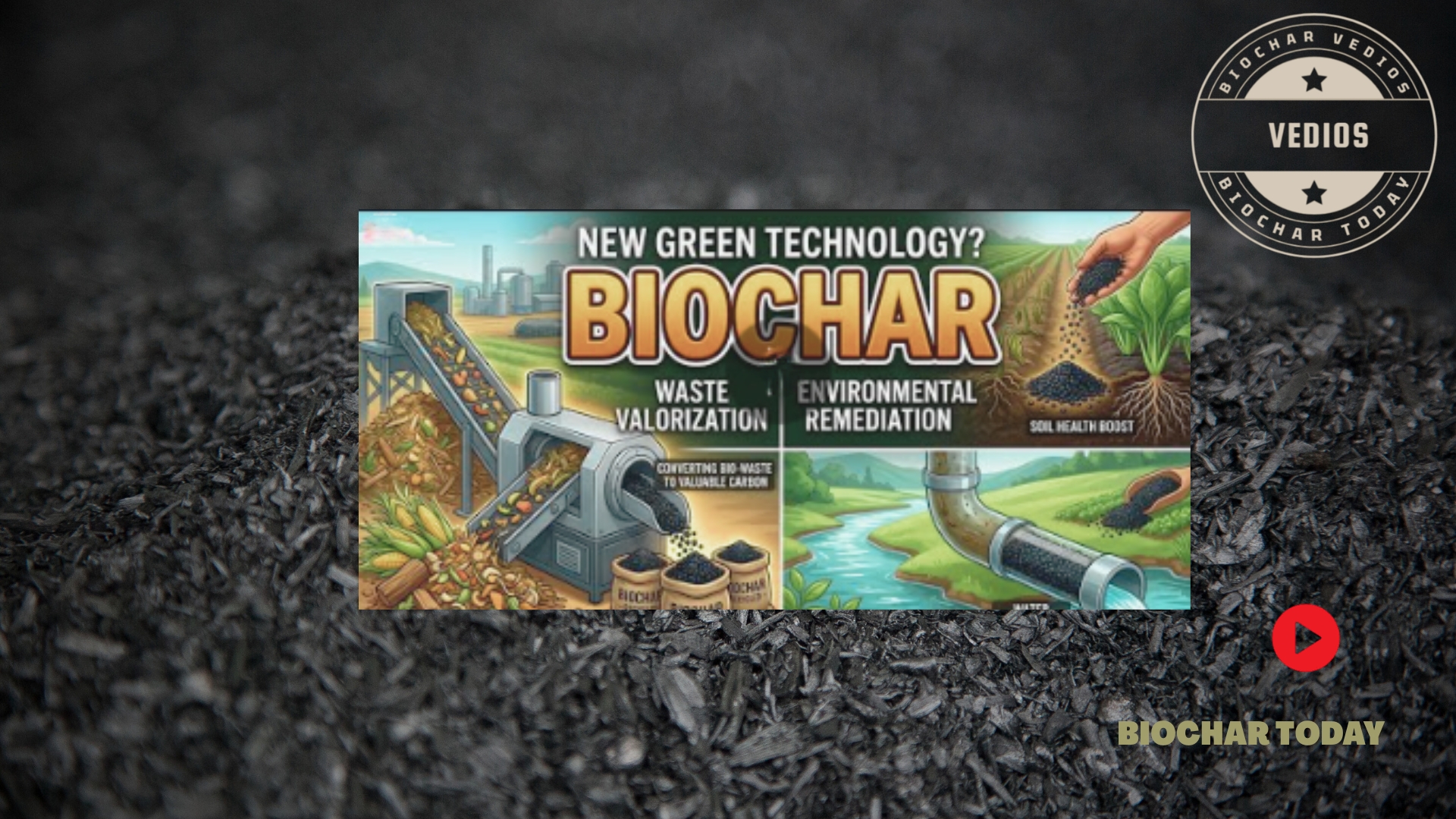
- BiocharBiochar is a carbon-rich material created from biomass decomposition in low-oxygen conditions. It has important applications in environmental remediation, soil improvement, agriculture, carbon sequestration, energy storage, and sustainable materials, promoting efficiency and reducing waste in various contexts while addressing climate change challenges. More acts as a permanent storage vault for carbon, locking it away for centuries to millennia instead of letting it escape into the air.
- Making biochar from farm and forest waste helps manage garbage while producing clean heat and energy for homes and businesses.
- When added to farm fields, this material acts like a sponge, holding onto water and nutrients to help crops grow better in dry or poor soils.
- High-tech building materials like concrete and asphalt can now include biochar to reduce their environmental footprint and trap carbon in our roads and buildings.
- Global experts agree that biochar is ready to use today and could eventually remove billions of tonnes of greenhouse gases from the atmosphere every year.
The global effort to combat climate change has reached a critical stage where reducing new emissions is no longer enough; we must also remove existing carbon dioxide from the atmosphere. According to a comprehensive status report published by Gassnova SF and authored by Kathrin Weber along with a team of international experts, biochar has emerged as one of the most mature and scalable solutions for this challenge. By transforming biogenic carbon—originally captured by plants through photosynthesis—into stable, aromatic carbon structures, biochar prevents that carbon from returning to the atmosphere as greenhouse gases. Today, biochar is the dominant source of durable carbon removal credits in voluntary markets, with global production capacity for both biochar and traditional charcoalCharcoal is a black, brittle, and porous material produced by heating wood or other organic substances in a low-oxygen environment. It is primarily used as a fuel source for cooking and heating. More now exceeding 324,000 tonnes annually.
One of the most significant findings of the report is the sheer scale of potential impact. In sustainable scenarios that utilize existing biomassBiomass is a complex biological organic or non-organic solid product derived from living or recently living organism and available naturally. Various types of wastes such as animal manure, waste paper, sludge and many industrial wastes are also treated as biomass because like natural biomass these More waste without competing for food-producing land, biochar systems can remove approximately 2.7 billion tonnes of carbon dioxide every year. If combined with other benefits, such as the co-production of renewable heat and power and the avoidance of methane from decaying waste, the total global mitigation effect could reach a staggering 10.3 billion tonnes annually. This represents a massive opportunity to use existing agricultural and forestry residues to meet net-zero targets while simultaneously addressing waste management problems.
The report highlights that biochar’s effectiveness is not limited to carbon storage. In agricultural settings, biochar serves as a powerful soil conditioner. Meta-analyses show that it can increase crop yields by an average of 10 percent, with the most dramatic improvements occurring in weathered tropical soils where it boosts water retention and nutrient availability. Furthermore, applying biochar to soil has been proven to significantly reduce nitrous oxide emissions, which is a greenhouse gas far more potent than carbon dioxide. Beyond the farm, industrial sectors are beginning to embrace biochar as a carbon-negative additive. Incorporating small amounts of biochar into concrete—typically below 5 percent by weight—can improve its strength and durability while turning our buildings into permanent carbon sinks. Similar advances are being seen in asphalt, where biochar enhances resistance to aging and high-temperature rutting.
Despite these clear benefits, the report notes that the primary barrier to large-scale deployment is no longer the technology itself, but rather market demand and regulatory clarity. While production is scaling rapidly in regions like Europe and North America, and innovative projects are flourishing in the global south, markets for biochar products need to grow significantly to match the available supply of biomass. Governments can play a vital role here by supporting certification frameworks and creating procurement incentives that encourage the use of carbon-storing materials in public infrastructure. As of 2026, the voluntary carbon market is already providing essential income streams to farmers and families involved in biochar production, demonstrating that this technology is not just an environmental tool, but an economic one as well.
The durability of biochar is another key scientific pillar confirmed by the researchers. Unlike fresh compost which breaks down in months, biochar remains in the soil for centuries. Modern analytical techniques suggest that biochar produced at high temperatures may even persist on a millennial scale. This permanence is what gives biochar its high integrity as a carbon removal method. The study concludes that with robust monitoring and sustainable sourcing of waste materials, biochar is positioned to play a central role in the near-term global climate strategy. By integrating responsible feedstockFeedstock refers to the raw organic material used to produce biochar. This can include a wide range of materials, such as wood chips, agricultural residues, and animal manure. More sourcing with matched end-use applications, the world can maximize both the environmental and economic benefits of this ancient yet cutting-edge solution.
Source: Weber, K., Sørmo, E., Cornelissen, G., Budai, A., Rasse, D., Bier, H., & Robichaud, T. (2026). Current State of Biochar as a Carbon Dioxide Removal Solution: Status Report for Mission Innovation Countries and Beyond. Gassnova SF.




Leave a Reply