
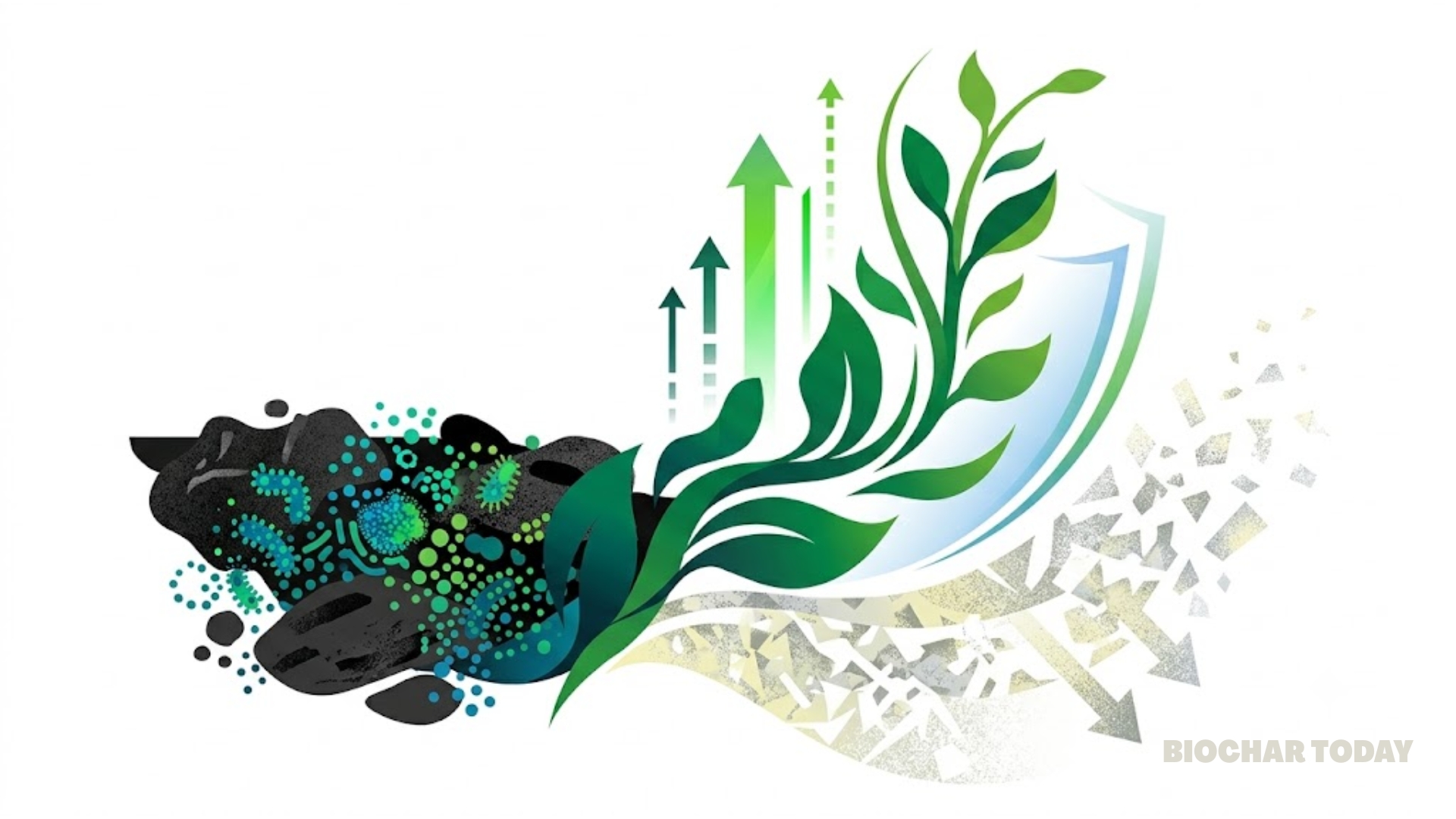
A new review published in Current Research in Biotechnology by Abhishek Dadhich, Rashmi Choudhary, Yoshita Sharma, Irra Dhar, and Rohit Jain explores a notable approach to environmental challenges: using a combination of biocharBiochar is a carbon-rich material created from biomass decomposition in low-oxygen conditions. It has important applications in environmental remediation, soil improvement, agriculture, carbon sequestration, energy storage, and sustainable materials, promoting efficiency and reducing waste in various contexts while addressing climate change challenges. More and microbes to clean up polluted soil and water. This isn’t just about using a single solution, but rather harnessing a powerful synergy. The review highlights how biochar, a carbon-rich material made from agricultural waste, acts as a protective habitat and performance booster for beneficial microorganisms, leading to remarkable improvements in breaking down pollutants and enhancing soil health. The findings show that this combined method can achieve over 90% degradation of certain pesticides and immobilization of heavy metals, far surpassing traditional methods. This integrated approach offers a dual benefit, addressing agricultural waste and pollution simultaneously.
The efficacy of biochar as a microbial carrier stems from its unique structural and chemical properties. Biochar’s porous architecture provides an extensive and protected habitat for microbes. This network of macropores, mesopores, and micropores shields microorganisms from environmental stressors such as desiccation, UV radiation, and predation, while also facilitating the exchange of nutrients and gases. Chemically, biochar is rich in oxygen-containing functional groups like carboxyl and hydroxyl groups, which enhance microbial adhesion through electrostatic interactions. The material also acts as a redox mediator, facilitating electron transfer in key microbial processes. This protective and stimulating environment allows microbes to survive longer and function more effectively than they would on their own, making biochar a superior carrier compared to traditional materials like clay or peat.
The synergy between biochar and microbes has been proven highly effective in degrading pesticide residues. For instance, biochar loaded with Pseudomonas putida was shown to degrade 80-90% of the organophosphate chlorpyrifos within 72 hours. This enhanced performance is attributed to biochar’s ability to concentrate pollutants near microbial cells, and its alkaline pHpH is a measure of how acidic or alkaline a substance is. A pH of 7 is neutral, while lower pH values indicate acidity and higher values indicate alkalinity. Biochars are normally alkaline and can influence soil pH, often increasing it, which can be beneficial More and redox-active groups which stabilize and facilitate the activity of enzymes like organophosphate hydrolase. Similarly, in heavy metal contamination, the combined approach shows significant improvements.
Pseudomonas aeruginosa immobilized on poultry manure biochar reduced the bioavailability of cadmium (Cd) by 70% through the secretion of siderophores, while biochar’s own functional groups immobilized lead (Pb) with 95% efficiency. In another case, a system with biochar and Bacillus and arbuscular mycorrhizal fungiThese are friendly fungi that form a partnership with plant roots. They act like an extension of the root system, helping plants access water and nutrients more effectively. Biochar can create a cozy habitat for these helpful fungi, boosting their growth and improving plant health. More (AMF) reduced cadmium content in rice grains by 65%, compared to only 40% with biochar alone.
Beyond remediation, this biochar-microbe system is a powerful tool for sustainable agriculture, enhancing soil fertility and crop yields. In a two-year field study, a biochar composite loaded with Azospirillum brasilense and AMF increased wheat grain yields by 22% and reduced the need for synthetic N-P-K fertilizers by 35%. The biochar provides a stable, long-lasting carbon sink, increasing soil organic carbon by 1.5-2.0% annually, which fosters resilient agroecosystems. This approach also benefits waste management. In composting, biochar-microbe systems have been shown to reduce composting time by 30% and boost total nitrogen and phosphorus content in the final compost by 22% and 18%, respectively, compared to controls without biochar. Biochar also serves as a fermentation enhancer in anaerobic digestion, with its conductive properties boosting methane yields by 40-60%.
Emerging research and future directions highlighted in the review focus on tailoring these systems for novel pollutants. This includes using functionalized biochars (e.g., nano-decorated, nutrient-loaded, pH-buffered) for targeted microbial delivery and enhanced performance in specific environments. Multi-omics approaches like metagenomics and proteomics are being used to understand the intricate functional pathways, confirming that biochar-microbe systems enhance microbial resilience and degradation potential. While challenges like large-scale production costs and potential ecotoxicological risks need to be addressed, this body of work strongly positions biochar-microbe systems as a powerful and eco-friendly tool for addressing global environmental challenges.
SOURCE: Dadhich, A., Choudhary, R., Sharma, Y., Dhar, I., & Jain, R. (2025). Integrating functional biochar and synthetic microbial consortia for circular bioeconomy and sustainable contaminant remediation. Current Research in Biotechnology, 5(1), 100319.



Leave a Reply