
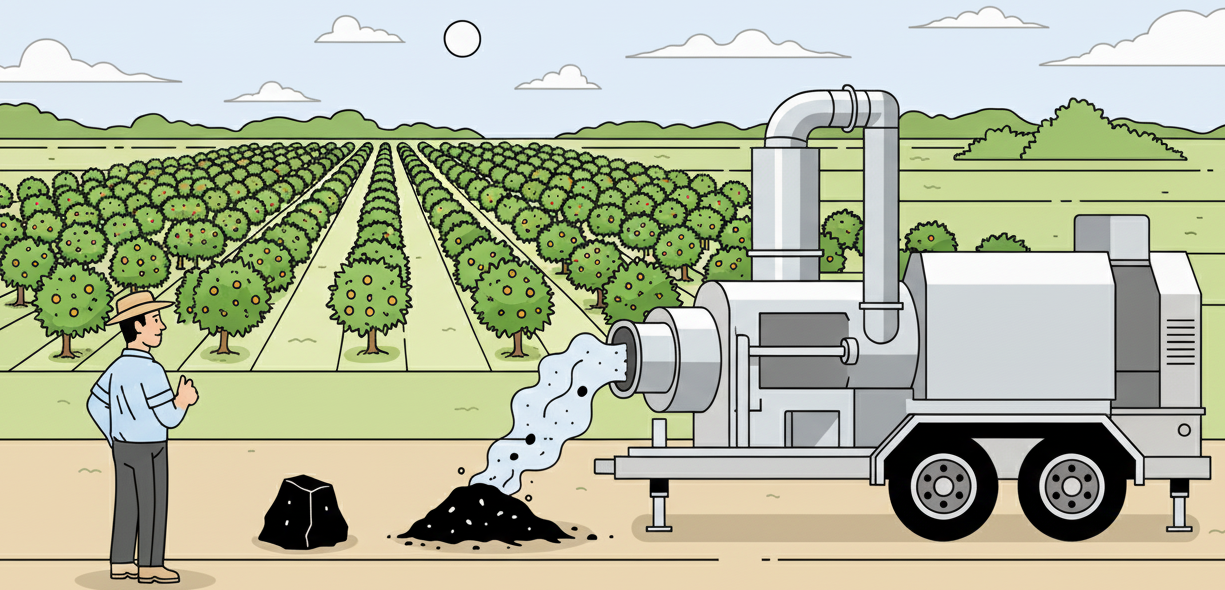
Citrus growers in Polk County, Florida, are exploring an on-site biocharBiochar is a carbon-rich material created from biomass decomposition in low-oxygen conditions. It has important applications in environmental remediation, soil improvement, agriculture, carbon sequestration, energy storage, and sustainable materials, promoting efficiency and reducing waste in various contexts while addressing climate change challenges. More production method as a sustainable alternative to open-air burning of agricultural waste. The project, a collaborative effort among farmers, researchers, and government agencies, focuses on repurposing old trees and other grove debris into a valuable soil amendmentA soil amendment is any material added to the soil to enhance its physical or chemical properties, improving its suitability for plant growth. Biochar is considered a soil amendment as it can improve soil structure, water retention, nutrient availability, and microbial activity. More.
The initiative utilizes a specialized machine, a mobile carbonizer nicknamed a “Tigercat,” which heats the biomassBiomass is a complex biological organic or non-organic solid product derived from living or recently living organism and available naturally. Various types of wastes such as animal manure, waste paper, sludge and many industrial wastes are also treated as biomass because like natural biomass these More in a low-oxygen environment, transforming it into biochar. This process sequesters carbon that would otherwise be released into the atmosphere through burning or decomposition. The resulting biochar is then incorporated directly back into the groves, closing the loop on agricultural waste and creating a nutrient-rich material that improves the sandy Florida soil.
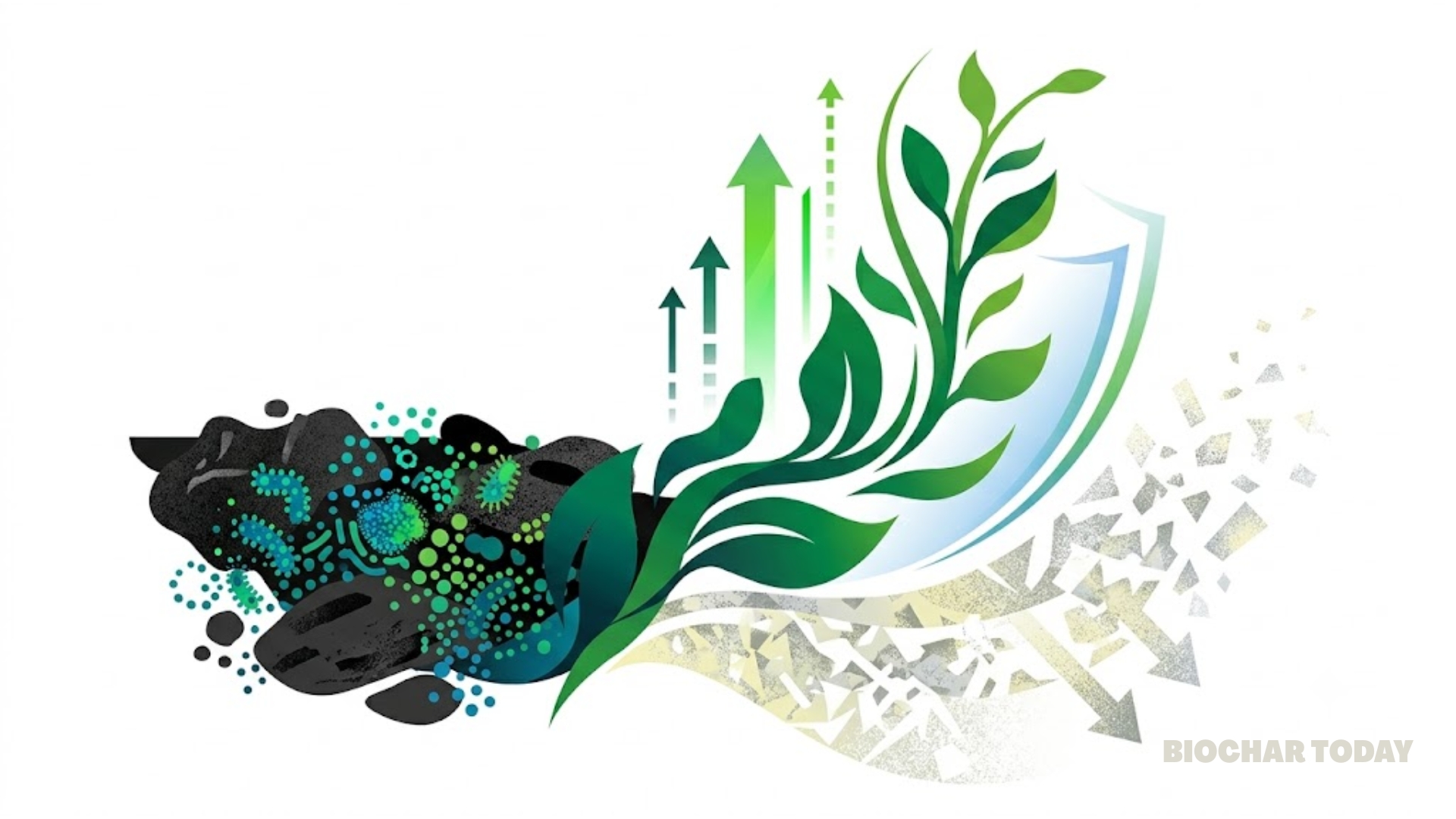
The primary motivations for the project are multifaceted. From an environmental standpoint, it offers a direct way to reduce harmful smoke and particulate emissions associated with burning. For the farmers, the biochar holds potential to significantly enhance soil quality, particularly its ability to retain water and essential nutrients. This is especially beneficial in sandy soils, which often struggle with poor water retention. Additionally, project leaders are investigating the biochar’s capacity to filter pollutants from water, an important consideration in the region’s sensitive water systems.
This pilot program represents a shift towards more circular and regenerative agricultural practices within the citrus industry. By converting what was once considered waste into a resource, the farmers are not only addressing a practical challenge but also contributing to broader environmental goals related to soil health and carbon sequestration. The outcomes of this trial could provide a replicable model for other agricultural sectors looking to manage waste and improve land stewardship.
SOURCE: Florida citrus farmers test on-site biochar production to cut burning and boost soil health



Leave a Reply