
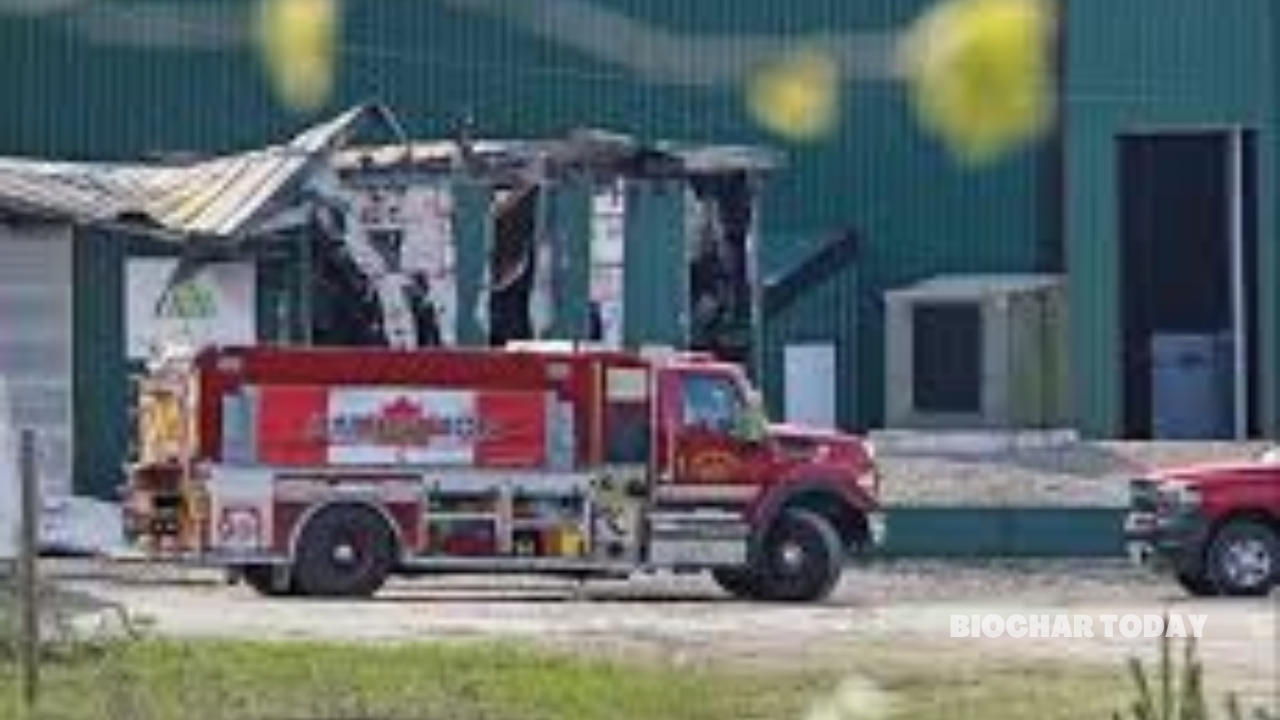
An early morning fire on May 22, 2026, destroyed a primary production building at the Haliburton Forest BiocharBiochar is a carbon-rich material created from biomass decomposition in low-oxygen conditions. It has important applications in environmental remediation, soil improvement, agriculture, carbon sequestration, energy storage, and sustainable materials, promoting efficiency and reducing waste in various contexts while addressing climate change challenges. More facility on Kennaway Road in Canada. The blaze broke out at approximately 1:30 a.m., drawing a coordinated response from three regional fire departments. Twenty-two firefighters from Dysart, Algonquin Highlands, and Highlands East spent 11 hours suppressing the fire. Fortunately, officials reported no injuries, and local authorities confirmed there is no threat to public safety due to the natural composition of the materials. Managing Director Malcolm Cockwell stated that management is evaluating the overall structural damages while the Office of the Ontario Fire Marshal conducts an active investigation into the origin of the incident.
The major challenge arising from this incident centers on operational disruption and capacity management for the Canadian producer. Haliburton Forest Biochar serves as a critical regional processor, utilizing residual wood chips, shavings, and powder from its parent company’s sawmill operations to manufacture porous, carbon-capturing products. Because the fire completely compromised one of the main production buildings, the company faces immediate hurdles regarding facility security, supply chain continuity, and the capacity to fulfill industrial demand. Managing the fallout requires determining the exact level of operational impairment without compromising the safety of the remaining infrastructure or contaminating the surrounding environment.
In response to the emergency, the company and local emergency services implemented immediate containment and recovery protocols. First responders secured the perimeter swiftly, preventing the fire from migrating to adjacent sawmill infrastructure or surrounding timberlands. To address the long-term operational challenges, Haliburton Forest Biochar management initiated comprehensive site clean-up operations alongside the formal provincial investigation. The company is leveraging its robust institutional framework and recent capital foundations to stabilize the site, while technical teams systematically evaluate how to safely reallocate production tasks or utilize remaining structures to mitigate downstream supply deficits.
The outcomes of these actions have allowed Haliburton Forest Biochar to maintain organizational stability amid a serious industrial setback. While the long-term impact on production timelines remains under review, immediate environmental and public health hazards were entirely averted. This resilience highlights the strength of the division, which benefited from a $10 million expansion investment in 2022 and an additional $4.6 million grant from the Ontario government last year to transition into engineered biochar. Armed with these advanced manufacturing foundations, the company remains positioned to navigate the recovery process and eventually restore its processing capabilities.




Leave a Reply