
Middelanis, T., Looschelders, D., Mueller, P. et al. Potential of biocharBiochar is a carbon-rich material created from biomass decomposition in low-oxygen conditions. It has important applications in environmental remediation, soil improvement, agriculture, carbon sequestration, energy storage, and sustainable materials, promoting efficiency and reducing waste in various contexts while addressing climate change challenges. More to mitigate methane production in paddy soils—application of a new incubation and modelling approach.Biogeochemistry168, 6 (2025). https://doi.org/10.1007/s10533-024-01200-9
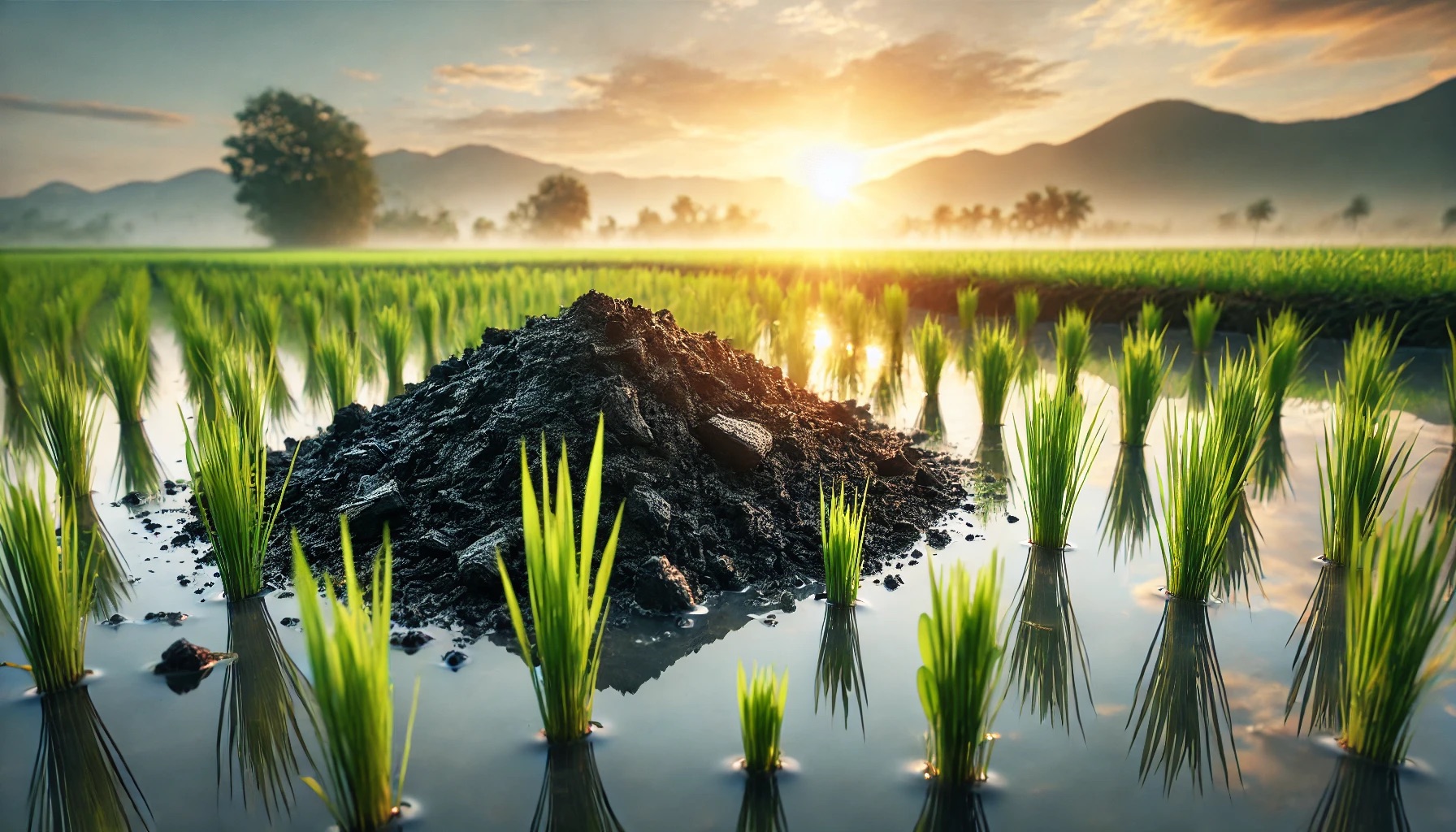
Methane (CH₄) emissions from paddy soils significantly contribute to global greenhouse gas levels. This study explored how biochar, a carbon-rich material, can mitigate methane emissions. Researchers used two experimental setups with untreated and pH-adjusted biochar to isolate its effects on methane dynamics in controlled conditions.
Key Findings:
- Methane Reduction: Biochar consistently reduced methane production rates in paddy soils, showing a 25.89% average reduction.
- Pre-Methanogenic Delay: Untreated biochar delayed the onset of methane production by 24.24%, while pH-leveled biochar shortened this delay by 7%.
- pHpH is a measure of how acidic or alkaline a substance is. A pH of 7 is neutral, while lower pH values indicate acidity and higher values indicate alkalinity. Biochars are normally alkaline and can influence soil pH, often increasing it, which can be beneficial More Influence: Biochar’s short-term pH elevation impacts methane mitigation in laboratory settings. However, this effect diminishes in field conditions, emphasizing biochar’s direct role in reducing methane, independent of pH changes.
- Mechanisms at Play: Beyond pH effects, biochar’s redox-active properties and potential impacts on soil microbial activity contribute to its effectiveness.
Biochar shows promise as a methane mitigation tool for paddy soils, especially through reduced production rates. However, its effectiveness varies with experimental conditions, highlighting the need for standardized testing to bridge the gap between lab and field results. Future research should further investigate biochar’s microbial interactions and optimize its application for scalable climate solutions.
This research underscores biochar’s potential to support sustainable agriculture while addressing climate change.




Leave a Reply