
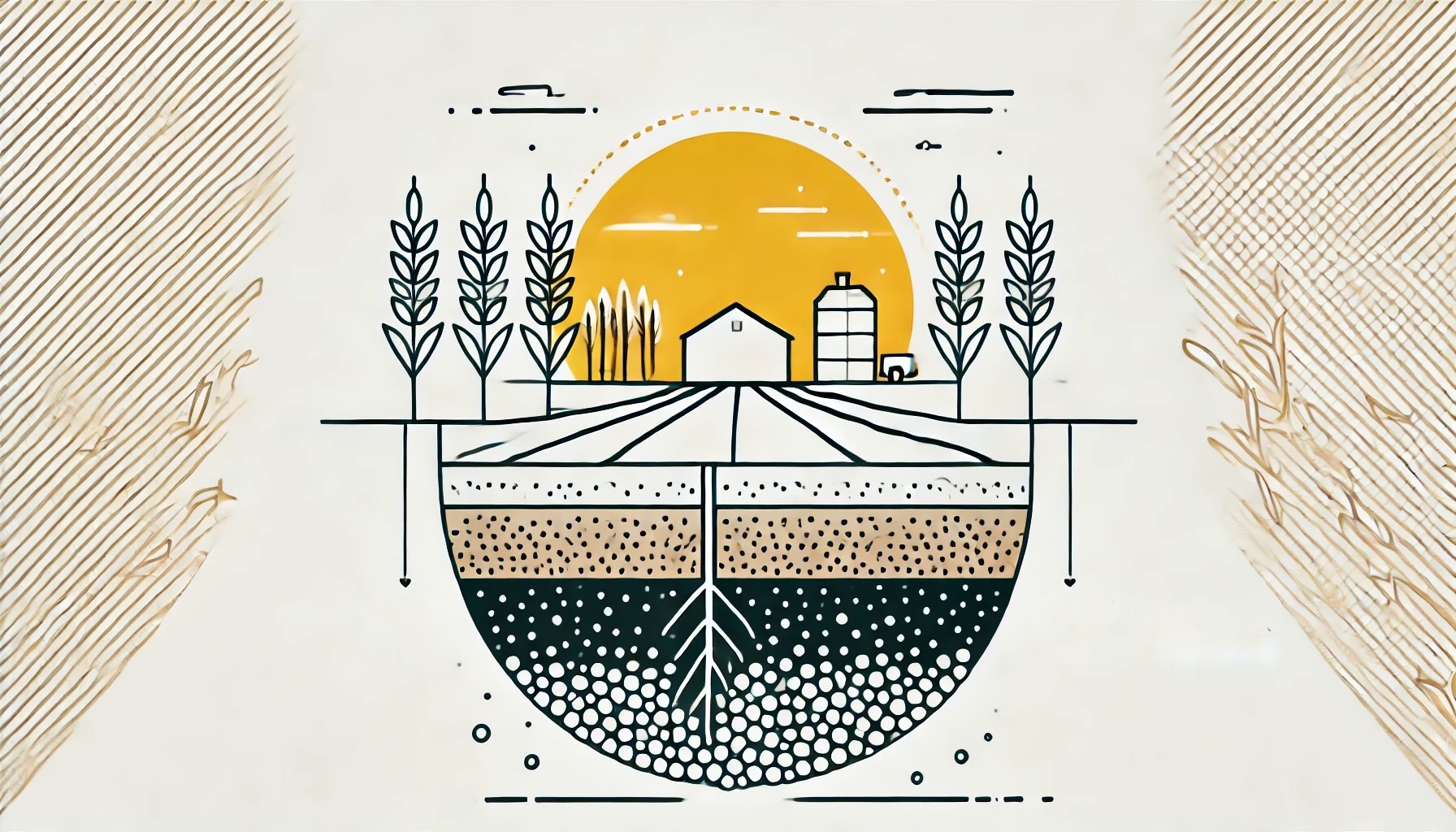
Gong, et al (2024) Converting BiocharBiochar is a carbon-rich material created from biomass decomposition in low-oxygen conditions. It has important applications in environmental remediation, soil improvement, agriculture, carbon sequestration, energy storage, and sustainable materials, promoting efficiency and reducing waste in various contexts while addressing climate change challenges. More Into Biochar-Based Urea Promotes Environmental and Economic Sustainability in Rice-Wheat Rotation System. GCB Bioenergy. https://doi.org/10.1111/gcbb.70014
A recent study explored the use of biochar-based urea (BU) in rice-wheat farming to address environmental and economic challenges. Biochar, derived from organic residues, is known for improving soil health and reducing greenhouse gas (GHG) emissions. However, its high cost and practical challenges have limited its widespread adoption. To overcome these barriers, researchers have combined biochar with urea to create BU, a fertilizer that promises environmental benefits at reduced costs.
In controlled experiments, BU was tested alongside traditional urea and biochar-amended fertilizers. Results showed that BU reduced ammonia (NH3) volatilization by 22-31% and nitrous oxide (N2O) emissions by 44-66% compared to conventional urea. These reductions stem from BU’s ability to slow nitrogen release and enhance microbial activity that facilitates nitrogen retention in soil. Additionally, BU improved nitrogen use efficiency (NUE) by up to 29% during the wheat season, ensuring crops absorbed more of the applied fertilizer.
Economically, BU demonstrated significant potential. While traditional biochar application incurred losses due to high costs, BU proved cost-effective, offering comparable benefits at a lower biochar input. Furthermore, BU improved soil structure, increasing soil aggregation and carbon sequestration, which are crucial for long-term fertility and sustainability.
The study highlights BU as a promising solution for sustainable agriculture. By integrating environmental benefits with economic viability, BU could help farmers in rice-wheat systems achieve higher productivity while reducing their environmental footprint. Future research is needed to assess its long-term field impacts and optimize production methods.




Leave a Reply