
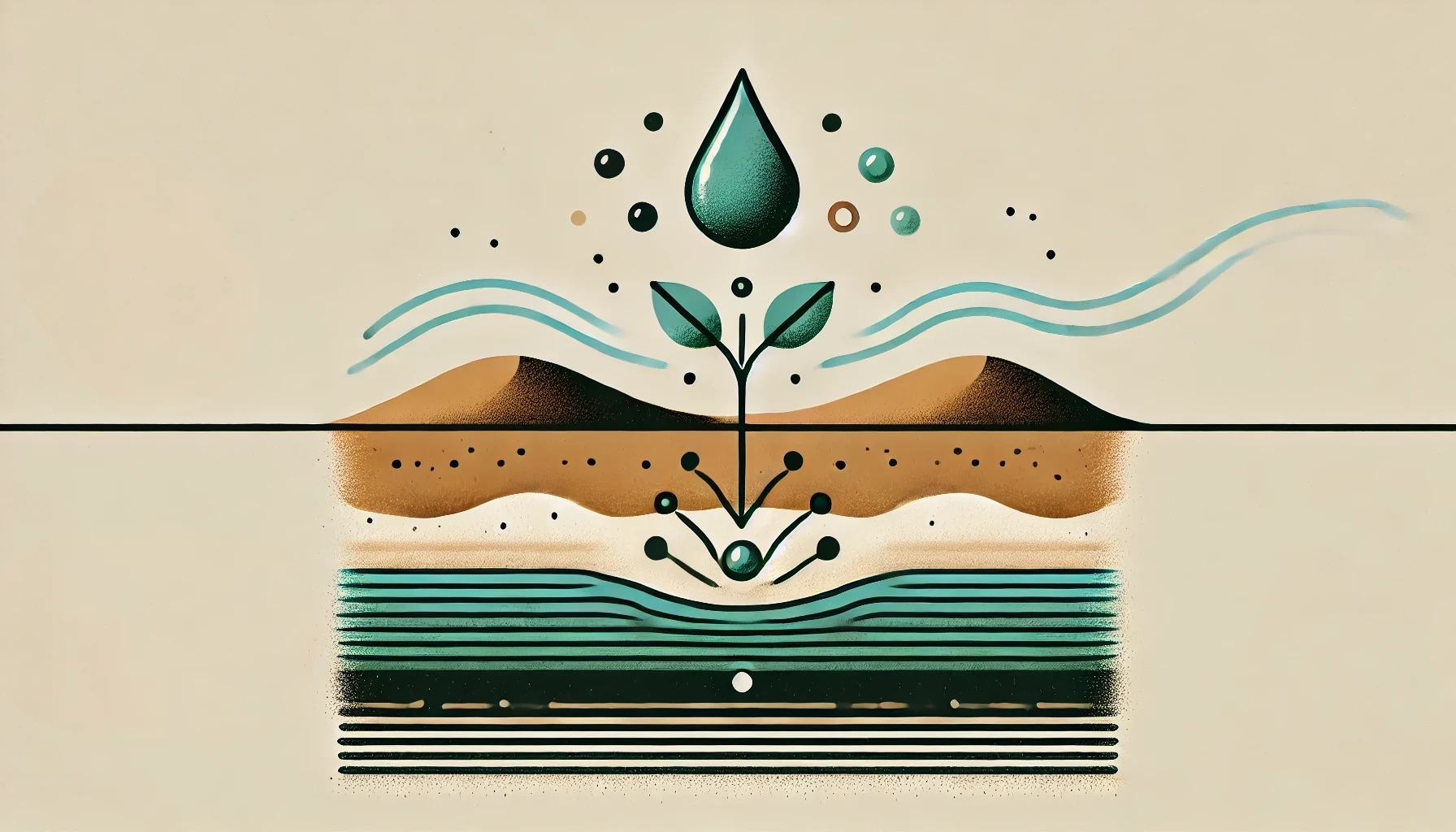
Desertification is a significant environmental challenge, characterized by poor soil quality, limited water retention, and nutrient deficiencies. Researchers have explored ways to combat desertification by improving soil properties. A recent study examined the combined use of biocharBiochar is a carbon-rich material created from biomass decomposition in low-oxygen conditions. It has important applications in environmental remediation, soil improvement, agriculture, carbon sequestration, energy storage, and sustainable materials, promoting efficiency and reducing waste in various contexts while addressing climate change challenges. More, polyethylene oxide (PEO), and seaweed fertilizer to enhance desert soils, focusing on their impact on water retention, erosion resistance, and plant growth.
Key Findings
Water Retention
Biochar, a porous material derived from organic sources, enhanced the soil’s ability to hold water. Its small particle size filled gaps between sand particles, creating more storage space for water. PEO, a polymer, formed a protective membrane over the soil surface, reducing evaporation and improving retention. The addition of seaweed fertilizer contributed further by stabilizing soil water content over time. The optimal treatment increased water-holding capacity by up to 6.7%.
Erosion Resistance
Wind erosion is a significant problem in sandy soils. PEO effectively formed a solidified layer, binding loose soil particles into a stable matrix resistant to wind speeds up to 18 m/s. Biochar and seaweed fertilizer improved soil structure by increasing medium-sized particles, further reducing susceptibility to erosion.
Soil Aggregate Stability
Stable soil aggregates are crucial for reducing erosion and improving soil health. The combination of the three materials increased the proportion of water-stable aggregates. Biochar’s functional groups and microbial activity contributed to forming larger aggregates, while PEO and seaweed fertilizer supported particle cohesion.
Nutrient Enrichment
Seaweed fertilizer significantly improved soil nutrient content, including phosphorus, potassium, and organic matter, which are essential for plant growth. The addition of biochar also increased the soil’s carbon content, creating a healthier environment for plant roots.
Plant Germination and Growth
Alfalfa seeds germinated better in treated soils compared to untreated controls. The combination of biochar, PEO, and seaweed fertilizer provided a balanced environment conducive to seed growth, with the best treatment showing a 26.7% improvement in germination rates.
Recommended Application
The study identified an optimal formulation of 6% biochar, 0.6% PEO, and 2% seaweed fertilizer. This combination achieved the best balance between improving water retention, enhancing soil structure, and boosting nutrient levels. However, the researchers noted that excessive amounts of these materials could increase costs and hinder plant growth due to issues like clogged pores and nutrient overload.
Limitations and Future Research
While laboratory results were promising, real-world field trials are needed to validate these findings under long-term and larger-scale conditions. Additionally, researchers aim to optimize the application methods to minimize resource wastage and further enhance efficiency.
The co-application of biochar, PEO, and seaweed fertilizer offers a sustainable and effective approach to combating desertification. By improving water retention, erosion resistance, and soil nutrient content, this method provides a pathway for ecological restoration and agricultural development in arid regions. Further research and field implementation will be essential for refining and scaling this innovative solution.
SOURCE: Li, H., Liu, H., Qi, B. et al. Co-application of polyethylene oxide (PEO), biochar, and seaweed fertilizer improves desert soil properties. Sci Rep15, 1658 (2025). https://doi.org/10.1038/s41598-025-85915-1



Leave a Reply