
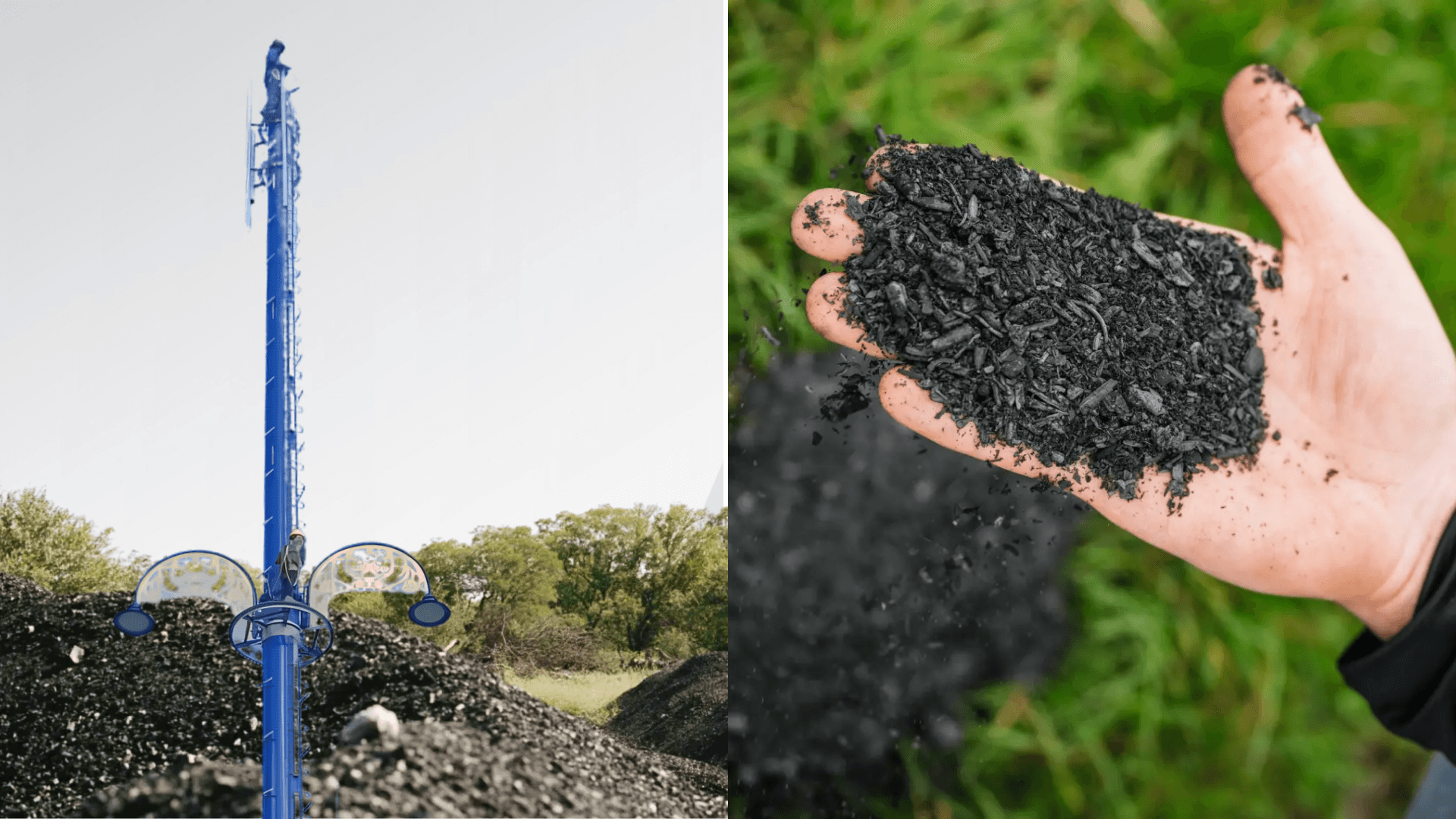
In Malaysia, The EDOTCO Group has officially unveiled its inaugural “BiocharBiochar is a carbon-rich material created from biomass decomposition in low-oxygen conditions. It has important applications in environmental remediation, soil improvement, agriculture, carbon sequestration, energy storage, and sustainable materials, promoting efficiency and reducing waste in various contexts while addressing climate change challenges. More Pole,” a sustainable telecommunications tower infrastructure designed to reduce the carbon footprint of digital connectivity. By utilizing palm-based biochar as a material additive, the organization is moving beyond traditional construction methods to embrace a circular economy model.
The initiative aims to address the telecommunications industry’s heavy reliance on carbon-intensive materials like concrete and steel to meet the exploding demand for digital connectivity. As nations across Asia accelerate their digital transformation, infrastructure providers face the dual pressure of rapid expansion and urgent decarbonization. Traditional tower manufacturing contributes significantly to embodied carbon emissions, creating a substantial hurdle for companies aiming to achieve net-zero targets. The industry required a solution that could decouple physical infrastructure growth from increased environmental degradation without sacrificing structural integrity or performance.
To mitigate these issues, EDOTCO implemented a material innovation solution by developing the Biochar Pole. This structure incorporates biochar derived from oil palm waste, effectively turning a regionally abundant agricultural byproduct into a valuable construction resource. This application of biochar serves to sequester carbon within the infrastructure itself, lowering the overall embodied carbon of the pole compared to standard concrete alternatives. The initiative is not an isolated experiment but part of a broader, multi-faceted sustainability strategy that includes renewable energy adoption and energy-efficient designs, all aimed at redefining how connectivity infrastructure is built.
The deployment of the Biochar Pole has yielded measurable environmental benefits. Data indicates that installing one kilometer of overhead lines using these biochar-enhanced poles saves approximately 1,183 kilograms of carbon dioxide, equivalent to the emissions from burning 440 liters of diesel. Crucially, the poles perform on par with traditional concrete alternatives, proving that sustainable materials can meet rigorous industry standards. For the biochar industry, this project demonstrates that biochar’s utility extends well beyond soil amendmentA soil amendment is any material added to the soil to enhance its physical or chemical properties, improving its suitability for plant growth. Biochar is considered a soil amendment as it can improve soil structure, water retention, nutrient availability, and microbial activity. More, offering viable, scalable applications in the construction and infrastructure sectors that align with corporate carbon neutrality roadmaps.


![Eucalyptus Wood Waste-Derived Biochar Achieves a Ninety-Eight Percent Removal Efficiency for Benzo[ghi]perylene in Vehicle-Wash Wastewater](https://biochartoday.com/wp-content/uploads/2026/10/SCIENCE-BLOGS-2026-2026-10-19T160523.703.jpg)


Leave a Reply