
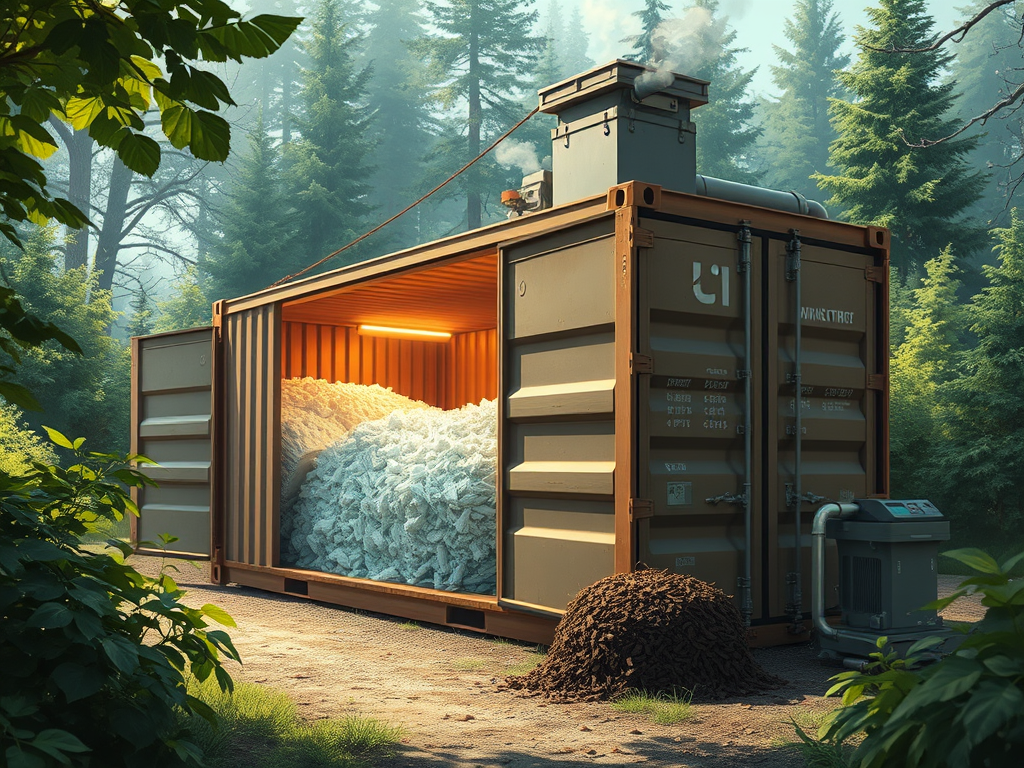
A Seattle-based company, Diaper Stork, is piloting a new method to address the environmental impact of disposable diapers by converting them into biocharBiochar is a carbon-rich material created from biomass decomposition in low-oxygen conditions. It has important applications in environmental remediation, soil improvement, agriculture, carbon sequestration, energy storage, and sustainable materials, promoting efficiency and reducing waste in various contexts while addressing climate change challenges. More. This initiative, supported by grants from King County and the Washington State Department of Commerce, involves a high-heat process called pyrolysisPyrolysis is a thermochemical process that converts waste biomass into bio-char, bio-oil, and pyro-gas. It offers significant advantages in waste valorization, turning low-value materials into economically valuable resources. Its versatility allows for tailored products based on operational conditions, presenting itself as a cost-effective and efficient More. The project aims to divert billions of diapers from landfills across North America annually. In the U.S. alone, disposable diapers account for approximately 1.5% of all landfill waste.
Since 2023, Diaper Stork has provided a compostable diaper service to its customers. The new pyrolysis pilot program, housed in a 40-foot shipping container near Olympia, Washington, processes shredded diapers by heating them in an oxygen-free biorefinery for 24 hours at temperatures between 500 and 600°F (260-315°C). This process eliminates pathogens from the end product.
The company discovered that adding a dry organic material, specifically coffee chaff—a byproduct from coffee roasting—improves the efficiency of the pyrolysis process. The partnership with a local coffee company provides a consistent source of this feedstockFeedstock refers to the raw organic material used to produce biochar. This can include a wide range of materials, such as wood chips, agricultural residues, and animal manure. More. This thermochemical conversion produces biochar in just one day, a much faster process than traditional composting, which can take weeks to biodegrade and an additional six months to cure.
The resulting biochar is a stable carbon form that can be used for agricultural purposes like fertilizer and for water purification. This process sequesters carbon and prevents the release of methane, a greenhouse gas far more potent than carbon dioxide, which is typically released as diapers decompose in landfills.
SOURCE: She Changes Diapers. Into Climate-Friendly Biochar


Leave a Reply