
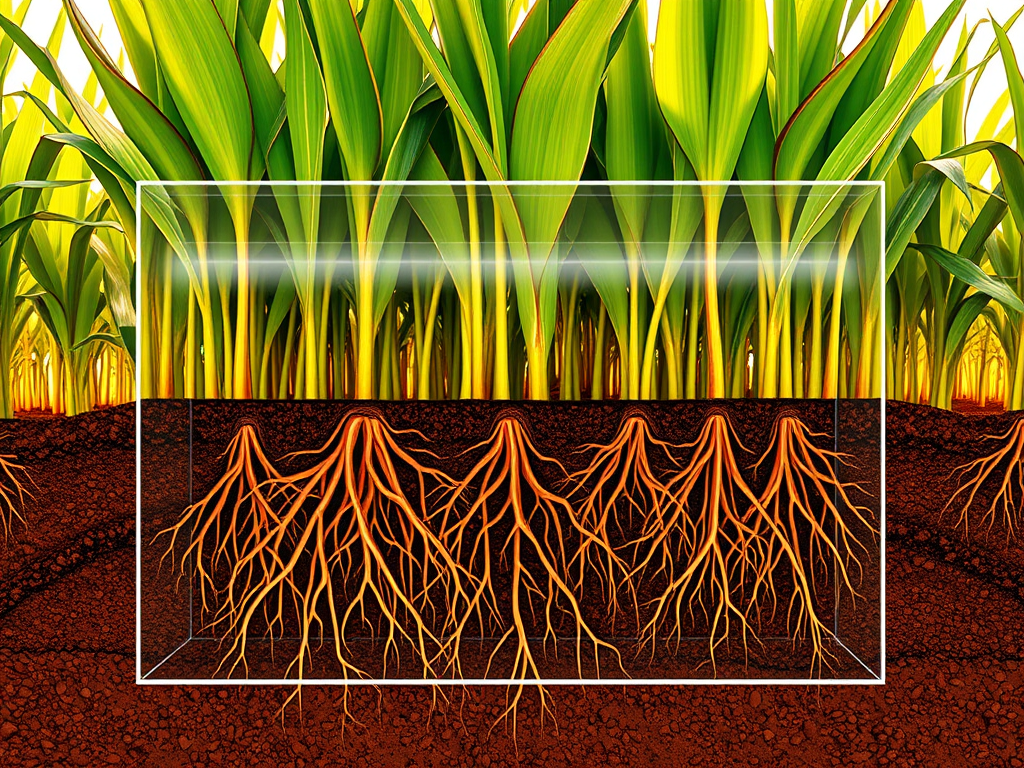
BiocharBiochar is a carbon-rich material created from biomass decomposition in low-oxygen conditions. It has important applications in environmental remediation, soil improvement, agriculture, carbon sequestration, energy storage, and sustainable materials, promoting efficiency and reducing waste in various contexts while addressing climate change challenges. More has shown great promise in improving plant growth and soil health. However, a critical question remains: what is the optimal depth to apply it in the soil to maximize its benefits, especially for root development? A new study, published in Scientific Reports by S. Gaurav, B. Diptanu, Chandra M. Mehta, K. Prasann, E. Nishihara, K. Inubushi, S. Sudo, S. Hayashida, P. K. Patra, Tatiana Minkina, and Vishnu D. Rajput, tackles this uncertainty. This transparent rhizobox trial investigated how different biochar application depths affect maize root structure, overall plant growth, and nutrient availability in the soil, providing valuable insights for sustainable agricultural practices.
The study utilized transparent rhizoboxes, allowing for real-time observation of root growth dynamics. Five treatments were set up: a control (T1) with standard fertilizer, and four biochar treatments where biochar was incorporated at depths of 5 cm (T2), 10 cm (T3), 15 cm (T4), and 20 cm (T5). The results revealed a significant impact of biochar application depth on maize root traits. The deepest application, T5 (20 cm depth), consistently exhibited the most remarkable improvements. Compared to the control (T1), T5 showed a 48.2% increase in root length, a 42.7% increase in root volume, and an impressive 56.7% increase in root dry biomassBiomass is a complex biological organic or non-organic solid product derived from living or recently living organism and available naturally. Various types of wastes such as animal manure, waste paper, sludge and many industrial wastes are also treated as biomass because like natural biomass these More. Intermediate depths also showed positive, though less pronounced, effects: T4 (15 cm) increased root length by 40.4% and root volume by 41.2%. T3 (10 cm) saw increases of 24.7% in root length and 26.75% in root volume, while T2 (5 cm) had increases of 12% in root length and 13.6% in root volume. Interestingly, root diameter tended to decrease with increasing biochar depth. The plants’ root growth angles also became steeper with deeper biochar application, shifting from 56.7° in the control to 39.0° in T5. This enhanced root growth, particularly at deeper levels, is attributed to improved soil structure and nutrient availability. The positive effects of biochar application extended to the above-ground parts of the maize plants. The T5 treatment (20 cm biochar depth) again demonstrated the most significant improvements in shoot traits compared to the control (T1). Specifically, T5 recorded a 23.1% increase in shoot fresh biomass and a 15% increase in shoot dry biomass. Leaf area saw a substantial 50.5% expansion in T5, followed by T4 (42.9%), T3 (12.9%), and T2 (17.1%) compared to the control. The number of leaves also increased significantly in T5 by 40.7%. Plant height and stem girth, while showing initial boosts at shallower depths, ultimately reached their maximum in T5 at later growth stages. These improvements in shoot growth are likely due to increased nutrient availability and improved water retention in the soil, facilitated by the biochar.
Biochar’s impact on soil physicochemical properties was a crucial aspect of the study. The application of biochar significantly altered soil nutrient concentrations, with the deepest application (T5) showing the most pronounced effects. A considerable rise in soil nitrogen, phosphorus, and potassium was observed in biochar-amended treatments. T5 recorded the highest increases: nitrogen by 20.9%, phosphorus by 103%, and potassium by 55.5% compared to the control. Organic carbon also increased by 75% in T5, and magnesium concentration rose by 42.5%. These enhancements in nutrient availability are attributed to biochar’s ability to adsorb and store nutrients, preventing leachingLeaching is the process where nutrients are dissolved and carried away from the soil by water. This can lead to nutrient depletion and environmental pollution. Biochar can help reduce leaching by improving nutrient retention in the soil. More and making them more accessible for plant uptake. The biochar also improved soil pHpH is a measure of how acidic or alkaline a substance is. A pH of 7 is neutral, while lower pH values indicate acidity and higher values indicate alkalinity. Biochars are normally alkaline and can influence soil pH, often increasing it, which can be beneficial More and electrical conductivity (EC), contributing to overall soil fertility. The study also investigated changes in the chemical compounds released by maize roots (root exudates) using GC-MS analysis. Methyl stearate, a fatty acid ester, was consistently found across all treatments. Its concentration increased with the depth of biochar application: from 10.26% in the control (T1) to 14.65% in T5. This suggests that deeper biochar incorporation influenced the biochemical processes within the roots. Methyl stearate is linked to lipid metabolism and plant resilience to stress. Its higher presence in deeper biochar layers might be associated with optimized growth conditions, where less plant stress allows metabolic resources to be directed towards the biosynthesis of such compounds. Other compounds, like butylated hydroxytoluene (an antioxidant) and siloxane derivatives, also varied in abundance depending on the treatment, highlighting the complex biochemical interactions between roots and biochar-amended soil. Microscopic examination further showed that biochar provides an ideal environment for maize root hairs to penetrate and form strong connections, enhancing the plant’s ability to absorb water and nutrients.
This study provides compelling evidence that the depth of biochar application is a critical factor in maximizing its benefits for maize. Incorporating biochar at a depth of 20 cm (T5) consistently led to superior outcomes in both root and shoot development, as well as significant improvements in soil nutrient status. The transparent rhizobox method offered a unique opportunity to observe these intricate interactions in real-time, shedding light on the mechanisms behind biochar’s efficacy. These findings suggest that a targeted approach to biochar application can optimize plant health and productivity, offering a sustainable solution for agricultural systems. The ability of biochar to improve nutrient availability, water retention, and root architecture makes it a valuable tool for enhancing crop resilience, especially in challenging environments. Future research should continue to explore the long-term effects of biochar at various depths and its applicability across different crop types and soil conditions to further unlock its full potential in sustainable agriculture.
Source: Gaurav, S., Diptanu, B., Mehta, C. M., Prasann, K., Nishihara, E., Inubushi, K., Sudo, S., Hayashida, S., Patra, P. K., Minkina, T., & Rajput, V. D. (2025). Effects of biochar amendment at various soil depths on maize roots and growth indices. Scientific Reports, 15(26310).





Leave a Reply