
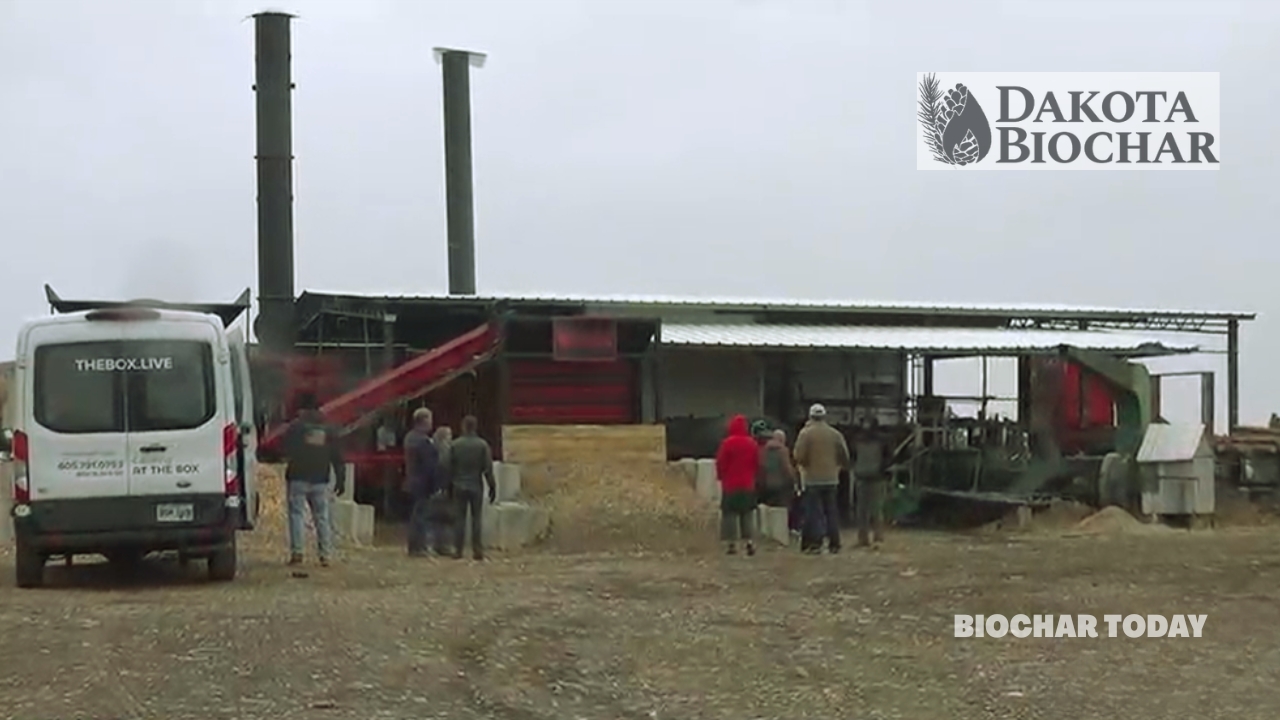
Dakota BiocharBiochar is a carbon-rich material created from biomass decomposition in low-oxygen conditions. It has important applications in environmental remediation, soil improvement, agriculture, carbon sequestration, energy storage, and sustainable materials, promoting efficiency and reducing waste in various contexts while addressing climate change challenges. More has commenced operations at a new production facility in Rockerville, South Dakota, marking a significant development in the regional biochar sector of the United States. The project, led by founder and CEO Justin McNeal, focuses on the thermochemical conversion of forest residues into stable carbon products and renewable energy. By integrating a live pyrolysisPyrolysis is a thermochemical process that converts waste biomass into bio-char, bio-oil, and pyro-gas. It offers significant advantages in waste valorization, turning low-value materials into economically valuable resources. Its versatility allows for tailored products based on operational conditions, presenting itself as a cost-effective and efficient More reactor with advanced screening processes, the company aims to create a circular value chain that links forest management with soil health and carbon markets. This facility serves as a technical demonstration of how localized biochar production can address regional biomassBiomass is a complex biological organic or non-organic solid product derived from living or recently living organism and available naturally. Various types of wastes such as animal manure, waste paper, sludge and many industrial wastes are also treated as biomass because like natural biomass these More surpluses while contributing to the burgeoning carbon removal industry.
The primary challenge addressed by the Rockerville project is the accumulation of hazardous forest residues, which significantly elevate wildfire risks in the Black Hills region. Traditional forest management often results in large volumes of low-value biomass that are either left to decompose, releasing greenhouse gases, or disposed of through open-air pile burning. These methods fail to capture the energy potential of the wood waste and do not provide a path for long-term carbon sequestration. Furthermore, the logistical complexity of “locking in” consistent feedstockFeedstock refers to the raw organic material used to produce biochar. This can include a wide range of materials, such as wood chips, agricultural residues, and animal manure. More supplies and aligning production with carbon revenue streams has historically hindered the scalability of such waste-to-value infrastructure projects.
To resolve these issues, Dakota Biochar has implemented an integrated pyrolysis system designed to process forest residues directly from local thinning operations. The solution involves a rigorous screening process to prepare the biomass for high-temperature treatment in oxygen-limited reactors. This method not only stabilizes the carbon within the biomass but also facilitates the generation of clean energy as a byproduct of the pyrolysis process. By partnering with organizations like Grain Ecosystem, the company has established a business model that balances biochar sales with the generation of verifiable carbon credits, ensuring economic viability while providing a waste management service for the forestry sector.
The outcomes of this initiative include a measurable reduction in local wildfire fuel loads and the production of high-quality soil additives for regional agriculture and land restoration. The facility demonstrates a functional model for small-scale, distributed biochar production that supports local communities through job creation and soil health improvements. Additionally, by capturing carbon in a stable form, Dakota Biochar provides a quantifiable contribution to carbon removal efforts. The successful activation of the Rockerville reactor validates the technical feasibility of using forest waste to drive a climate-positive economy while generating renewable power for the facility’s operations.



Leave a Reply