
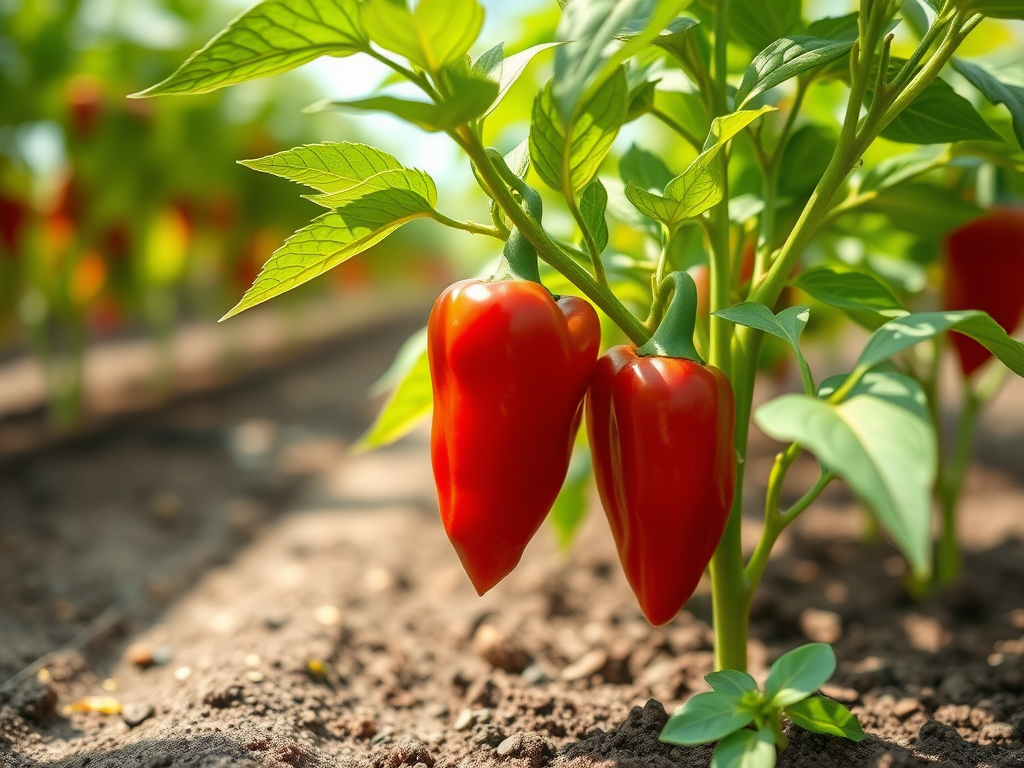
Red pepper is a common vegetable crop in the Mediterranean region, but growers face challenges with silty-clay soils that are often low in organic matter and essential nutrients like phosphorus (P) and zinc (Zn). To address this, researchers Sairan Majeed M. Ali Jaaf, Yunzhou Li, and their colleagues investigated the effects of corncob biocharBiochar is a carbon-rich material created from biomass decomposition in low-oxygen conditions. It has important applications in environmental remediation, soil improvement, agriculture, carbon sequestration, energy storage, and sustainable materials, promoting efficiency and reducing waste in various contexts while addressing climate change challenges. More and poultry litter on pepper growth. Their study, published in the Saudi Journal of Biological Sciences, evaluated how these soil amendments influence plant growth and soil chemical properties. They found that while biochar alone had little effect on most growth parameters, a combination with nutrient-rich poultry litter significantly improved plant health.
Biochar, a carbon-rich material created from heating biomassBiomass is a complex biological organic or non-organic solid product derived from living or recently living organism and available naturally. Various types of wastes such as animal manure, waste paper, sludge and many industrial wastes are also treated as biomass because like natural biomass these More like corncobs, is a sustainable way to improve soil quality and manage agricultural waste. Poultry litter, a mix of manure, feathers, and other materials from poultry farming, is a valuable organic fertilizer rich in macro- and micronutrientsThese are essential nutrients that plants need in small amounts, kind of like vitamins for humans. They include things like iron, zinc, and copper. Biochar can help hold onto these micronutrients in the soil, making them more available to plants. More. However, excessive use of poultry litter can lead to environmental issues such as nutrient leachingLeaching is the process where nutrients are dissolved and carried away from the soil by water. This can lead to nutrient depletion and environmental pollution. Biochar can help reduce leaching by improving nutrient retention in the soil. More and water contamination. Biochar can help by providing long-term carbon storage and improving soil’s ability to hold water and nutrients.
The researchers conducted a greenhouse experiment using silty-clay soil from Iraq that was slightly alkaline and low in organic matter. They tested four different doses of corncob biochar (0%, 0.5%, 1%, and 2%) and four doses of poultry litter (0%, 1%, 2%, and 4%). The biochar, produced at 500∘C, had a high carbon-to-nitrogen (C:N) ratio of 107.7, while the poultry litter had a much lower C:N ratio of 6.3. The biochar was also alkaline (pHpH is a measure of how acidic or alkaline a substance is. A pH of 7 is neutral, while lower pH values indicate acidity and higher values indicate alkalinity. Biochars are normally alkaline and can influence soil pH, often increasing it, which can be beneficial More 9.21), whereas the poultry litter was neutral (pH 6.75).
The results showed that biochar alone was not effective at improving most plant growth parameters. The study attributed this to the biochar’s wide C:N ratio, which restricted the nitrogen supply needed for plant growth. However, poultry litter, either alone or in combination with biochar, significantly increased the concentration of macro- and micronutrients in the soil, which led to a notable improvement in most growth parameters.
The best results for plant growth were achieved with a combination of the two amendments. The application of 0.5% biochar and 2% poultry litter resulted in the highest plant height (36.7 cm) and stem diameter (0.69 cm). This combination provided an optimal balance of structural improvement from the biochar and nutrient enrichment from the poultry litter. In contrast, the lowest plant height (16.7 cm) and stem diameter (0.43 cm) were recorded with the application of 0.5% biochar alone.
The study concluded that a single application of corncob biochar is insufficient for providing the nutrients needed for optimal plant growth. The high C:N ratio of the corncob biochar likely limited nutrient availability, particularly nitrogen. The findings highlight the importance of co-applying biochar with nutrient-rich organic materials like poultry manure to improve plant growth. This combined approach leverages the unique benefits of each material—the biochar for long-term soil structure and carbon storage, and the poultry litter for immediate nutrient supply.
Source: Majeed M. Ali Jaaf, S., Li, Y., Günal, E., El Enshasy, H.A., Salmen, S.H., & Sürücü, A. (2022). The impact of corncob biochar and poultry litter on pepper (Capsicum annuum L.) growth and chemical properties of a silty-clay soil. Saudi Journal of Biological Sciences, 29(10), 2998-3005.




Leave a Reply