
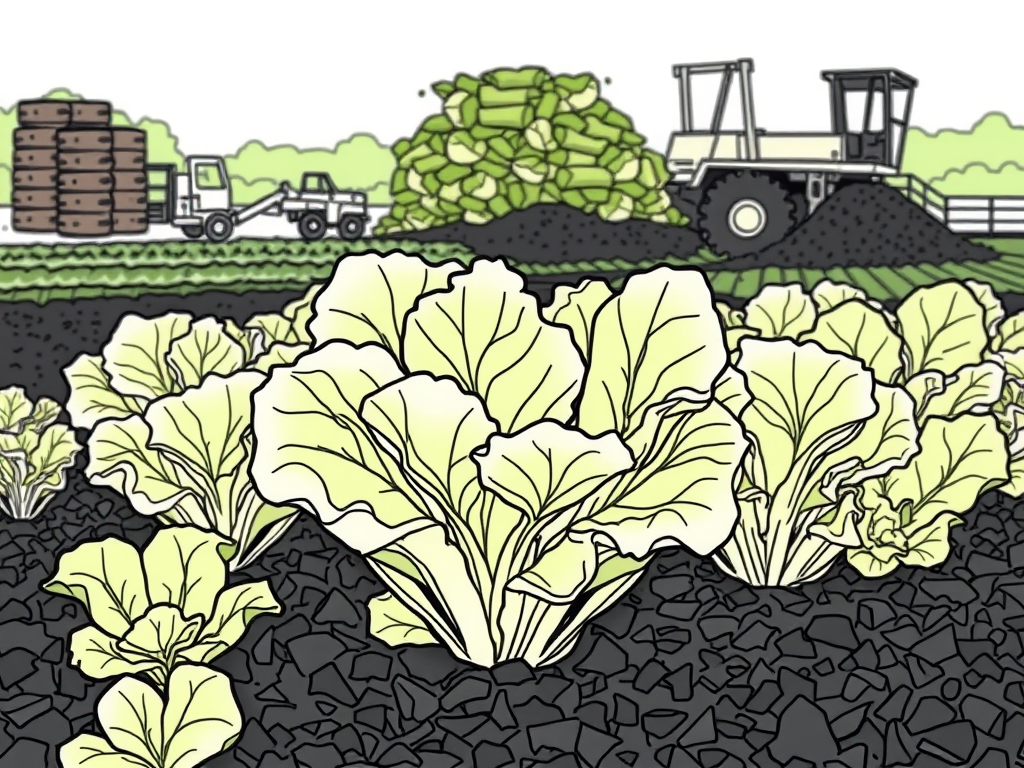
In a recent study published in BiocharBiochar is a carbon-rich material created from biomass decomposition in low-oxygen conditions. It has important applications in environmental remediation, soil improvement, agriculture, carbon sequestration, energy storage, and sustainable materials, promoting efficiency and reducing waste in various contexts while addressing climate change challenges. More, Dong He, Yujiao Wen, and their colleagues (Shangzhi Wei, Shikai Li, Lide Liu, Jinmeng Wu, Zhi Zhou, Nan Zhou, Hongmei Liu, and Zhonghua Zhou) have unveiled a promising approach to soil remediation that not only eliminates pesticide residues but also converts them into beneficial nutrients for crop growth. Their research, titled “Conversation of pesticide residues into ammonium nitrogen (NH4+−N) through AOPs and its fertilization effect on lettuce growth,” tackles the critical issue of persistent organic pollutants (POPs) in agricultural environments, which pose significant threats to both human health and ecosystems.
The widespread and often excessive use of pesticides to ensure high crop yields has led to the accumulation of POPs like Clothianidin (CTD) in agricultural soils. CTD, a highly efficient neonicotinoid insecticide, is particularly concerning due to its long half-life, ranging from 148 to 6931 days, and its ability to accumulate in plants, ultimately entering the human food chain. The imperative to remove such insecticides from the soil environment has driven the exploration of advanced oxidation processes (AOPs).
AOPs are recognized for their capacity to transform stubborn organic pollutants into less toxic or non-toxic substances through the generation of reactive oxygen species (ROS). However, a critical aspect often overlooked is the potential for these degradation processes to convert pesticide components into small molecular nutrients, such as ammonium nitrogen (NH4+−N). This study uniquely focuses on this “nutrient conversion” aspect, aiming to provide a dual benefit of remediation and fertilization.
The researchers synthesized a specialized material: Fe3S4-loaded biochar (BC@Fe3S4) using a one-step hydrothermal method. This composite material demonstrated excellent catalytic capacity to activate peroxymonosulfate (PMS), an oxidant, leading to the degradation of CTD. A key finding of the study was the significant conversion of CTD into NH4+−N in contaminated soil. This conversion was influenced by various factors, including CTD concentration, catalyst dosage, PMS concentration, pHpH is a measure of how acidic or alkaline a substance is. A pH of 7 is neutral, while lower pH values indicate acidity and higher values indicate alkalinity. Biochars are normally alkaline and can influence soil pH, often increasing it, which can be beneficial More, and temperature, with the system showing strong adaptability across these conditions. The BC@Fe3S4 + PMS system exhibited a remarkable ability to degrade CTD, achieving 100% removal.
Beyond mere degradation, the study demonstrated the practical benefits of this nutrient conversion on lettuce growth. For lettuce cultivated in contaminated soil, the dry weight of plants without treatment was significantly lower than those treated with the BC@Fe3S4 + PMS system. The treated lettuce showed a substantial increase in dry weight. Importantly, no CTD residue was detected in the treated lettuce, unlike the untreated contaminated lettuce, which had high residue levels. This demonstrates that the system effectively prevents pesticide accumulation in crops, enhancing food safety.
Further analysis using LC-MS/MS revealed three main degradation pathways for CTD, involving hydroxylation, hydrolysis, and dechlorination. Importantly, a toxicity assessment using T.E.S.T-QSAR software showed a decreasing trend in the toxicity of these degradation intermediates after the BC@Fe3S4 + PMS treatment. This confirms that the process not only removes the primary pollutant but also yields less harmful byproducts. The research also identified the key reactive oxygen species, including hydroxyl radicals , singlet oxygen , and sulfate radicals , as playing leading roles in both CTD degradation and NH4+−N formation. This research offers a promising, feasible strategy and a new perspective for soil remediation by simultaneously addressing pesticide contamination and nutrient depletion. The BC@Fe3S4 + PMS system not only effectively degrades CTD but also transforms it into a valuable fertilizer source, promoting crop growth and improving the agricultural production environment.
Source: He, D., Wen, Y., Wei, S., Li, S., Liu, L., Wu, J., … & Zhou, Z. (2025). Conversation of pesticide residues into ammonium nitrogen (NH4+−N) through AOPs and its fertilization effect on lettuce growth. Biochar, 7(88), 1-17.





Leave a Reply