

Key Takeaways
- Applying biocharBiochar is a carbon-rich material created from biomass decomposition in low-oxygen conditions. It has important applications in environmental remediation, soil improvement, agriculture, carbon sequestration, energy storage, and sustainable materials, promoting efficiency and reducing waste in various contexts while addressing climate change challenges. More to rice fields every year is much more effective at reducing greenhouse gas emissions over a long period than applying a large amount only once.
- Combining yearly biochar treatments with modern water-saving irrigation methods creates the best results for the environment.
- These sustainable farming practices help lower the amount of methane released into the atmosphere while still producing plenty of rice for food.
- Using biochar continuously helps keep the soil healthy and active, which naturally stops the production of harmful gases.
- Long-term monitoring of fields is essential because the benefits of some soil treatments can fade away after just a few years.
Methane is a potent greenhouse gas with a global warming potential significantly higher than carbon dioxide, and traditional rice farming in flooded paddy fields is a major source of these emissions. Researchers publishing in the journal Biochar, including Yu Han and Peng Chen, recently conducted a five-year experiment to determine how different biochar and water management strategies impact these emissions over time. Their work addresses a critical gap in agricultural science, as most studies focus only on short-term effects that may not reflect the long-term reality of soil health and gas production. By tracking the performance of various treatments from 2018 to 2022, the team discovered that the way we apply soil amendments and manage water can either sustain or rapidly diminish environmental benefits.
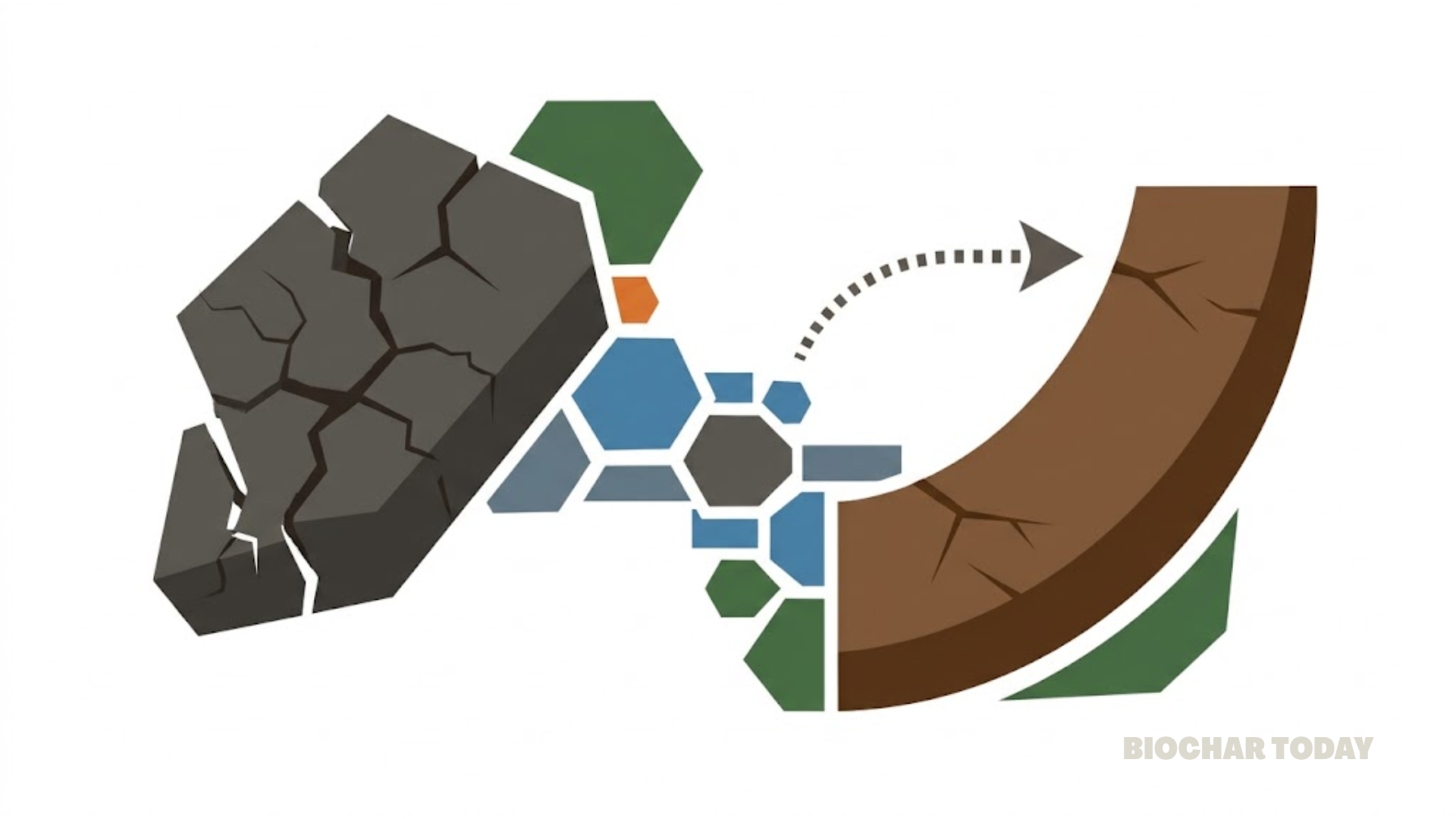
The study compared two main ways of applying biochar, which is a charcoal-like substance made from organic waste that helps the soil hold onto nutrients and air. Some plots received a single large dose at the beginning of the experiment, while others received smaller, continuous amounts every year. In the first year, the single large dose actually worked best, significantly cutting down on methane. However, this effect did not last. As the biochar aged in the soil, its pores became clogged and its ability to improve soil conditions faded. This was especially true in fields using water-saving irrigation, where the frequent cycles of wetting and drying the soil caused the biochar to degrade even faster. By the end of the five years, the single-dose strategy was far less effective than it had been at the start.
In contrast, the strategy of adding a small amount of biochar every year proved to be the superior environmental choice. This continuous replenishment provided the soil with fresh surfaces and minerals that kept the environment favorable for beneficial microbes. These microbes, known as methanotrophs, actually consume methane before it can escape into the air. At the same time, the steady supply of biochar helped maintain a high soil redox potential, which makes the soil less hospitable for the organisms that produce methane in the first place. This regenerative process ensured that the methane-fighting capabilities of the field did not decline over time, but instead grew stronger and more stable as the experiment progressed.
Beyond just reducing gases, the researchers found that the combination of continuous biochar and water-saving irrigation created a win-win scenario for farmers. This approach resulted in the highest average rice yields over the five-year period, proving that environmental protection does not have to come at the cost of food security. The researchers measured a significant increase in soil organic carbon and a reduction in greenhouse gas intensity, meaning that for every pound of rice produced, far less damage was done to the climate. In fact, the most successful treatment reached a point of net negative emissions, effectively acting as a carbon sink that helps pull more warming potential out of the atmosphere than it puts in.
These findings provide a clear roadmap for more sustainable rice production. While it might be tempting to apply a one-time fix to soil, this research highlights that consistent, long-term management is the key to lasting success. As water-saving irrigation becomes more common globally to combat water scarcity, pairing it with annual biochar applications offers a scientifically backed method to produce food while protecting the planet. The study emphasizes that we must look at the entire lifecycle of soil amendments to truly understand their impact on the climate, as the short-term gains of today can easily disappear without a commitment to continuous improvement and monitoring of our agricultural systems.
Source: Han, Y., Chen, P., Zhang, Z., Yan, X., Zhang, G., Zhang, Z., Li, T., Nie, T., & Du, S. (2026). Continuous biochar amendment to achieve long-term CH4 mitigation in paddy fields under water-saving irrigation: a 5-year experiment. Biochar, 8(70).




Leave a Reply