
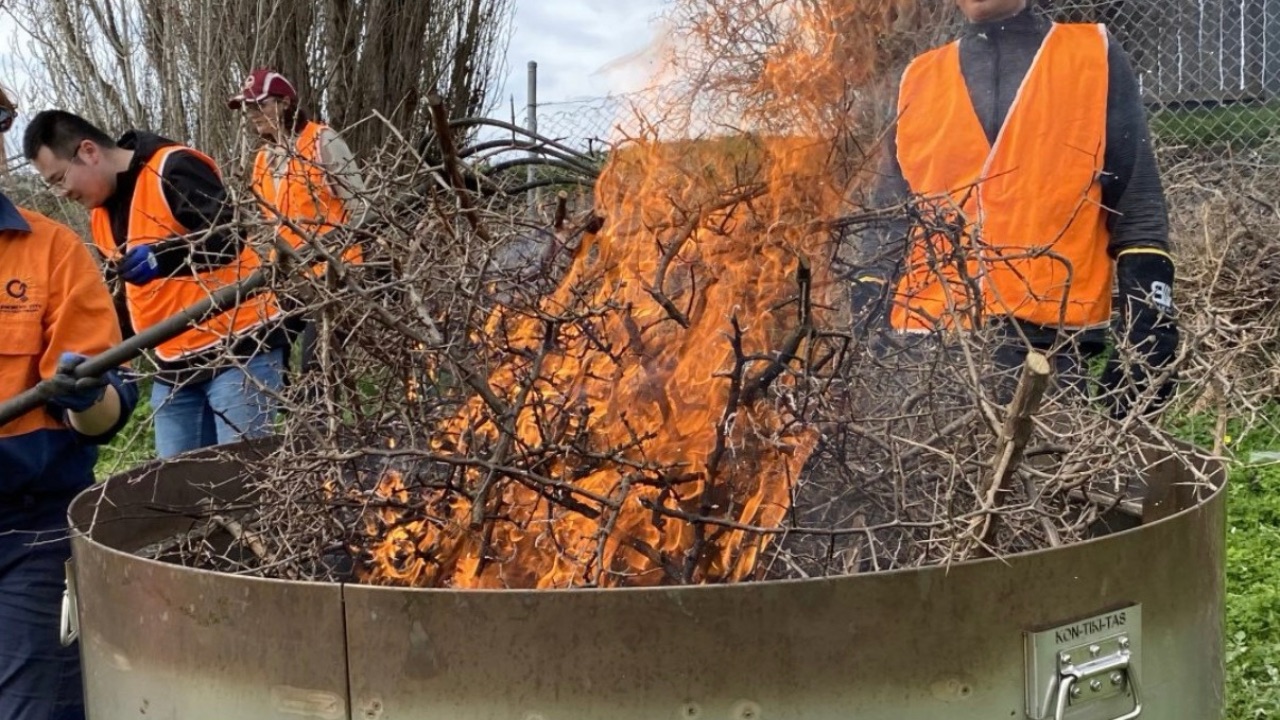
Conservation Volunteers Australia (CVA), in collaboration with the Glenorchy City Council, has announced an upcoming initiative scheduled for January 20, 2026, at Prince of Wales Bay in Tasmania. The event, described as a “BiocharBiochar is a carbon-rich material created from biomass decomposition in low-oxygen conditions. It has important applications in environmental remediation, soil improvement, agriculture, carbon sequestration, energy storage, and sustainable materials, promoting efficiency and reducing waste in various contexts while addressing climate change challenges. More Workshop and Working Bee,” represents a strategic effort to integrate invasive species management with sustainable biomassBiomass is a complex biological organic or non-organic solid product derived from living or recently living organism and available naturally. Various types of wastes such as animal manure, waste paper, sludge and many industrial wastes are also treated as biomass because like natural biomass these More conversion. Volunteers will gather along the timtumili minanya (Derwent River) to manually remove African Boxthorn infestations and immediately process the biomass into biochar using an on-site kiln. This project highlights a localized, circular economy approach where environmental waste is repurposed into a valuable soil amendmentA soil amendment is any material added to the soil to enhance its physical or chemical properties, improving its suitability for plant growth. Biochar is considered a soil amendment as it can improve soil structure, water retention, nutrient availability, and microbial activity. More within the same ecosystem.
The primary challenge addressed by this initiative is the proliferation of African Boxthorn (Lycium ferocissimum), a notorious invasive weed in Australia. This species is particularly problematic due to its rapid spread via avian vectors and its tendency to colonize roadsides and open areas, displacing native flora. Beyond its aggressive growth habits, Boxthorn poses physical risks to humans and wildlife due to its formidable spikes. Traditional removal methods often involve costly transport of biomass to landfills or open burning, which releases carbon back into the atmosphere without capturing value. The persistence of Boxthorn in riparian zones like the Derwent River corridor threatens the integrity of these critical habitats.
To mitigate this issue, CVA and the Glenorchy City Council are implementing a solution that couples mechanical removal with onsite pyrolysisPyrolysis is a thermochemical process that converts waste biomass into bio-char, bio-oil, and pyro-gas. It offers significant advantages in waste valorization, turning low-value materials into economically valuable resources. Its versatility allows for tailored products based on operational conditions, presenting itself as a cost-effective and efficient More. By utilizing a mobile biochar kiln, the project organizers can process the cut Boxthorn immediately, converting the woody biomass into stable carbon. This method drastically reduces the volume of waste while eliminating the need for transport. The process turns the invasive plant’s carbon structure into a porous, stable form that resists degradation, effectively sequestering carbon that would otherwise be released during decomposition or standard incineration. The “working bee” model also serves as an educational platform, training community members on the principles of biochar production and application.
The outcomes of this initiative are multifaceted, delivering benefits to both the immediate landscape and the broader community. The removal of the Boxthorn clears the way for the restoration of native riparian vegetation, with the produced biochar slated for use in soil preparation for plantings scheduled for Winter 2026. This application is expected to enhance soil water retention and nutrient cycling, increasing the survival rates of the new native flora. Furthermore, the project fosters community engagement by allowing volunteers to take a portion of the biochar home for domestic use, thereby extending the soil health benefits beyond the project site and raising awareness about biochar’s utility in residential agriculture.





Leave a Reply