
Lyu, et al (2025) Comparison of three quantification methods used to detect biocharBiochar is a carbon-rich material created from biomass decomposition in low-oxygen conditions. It has important applications in environmental remediation, soil improvement, agriculture, carbon sequestration, energy storage, and sustainable materials, promoting efficiency and reducing waste in various contexts while addressing climate change challenges. More carbon migration in a tropical soil: A 4.5-year field experiment in Zambia. Geoderma. https://doi.org/10.1016/j.geoderma.2024.117153
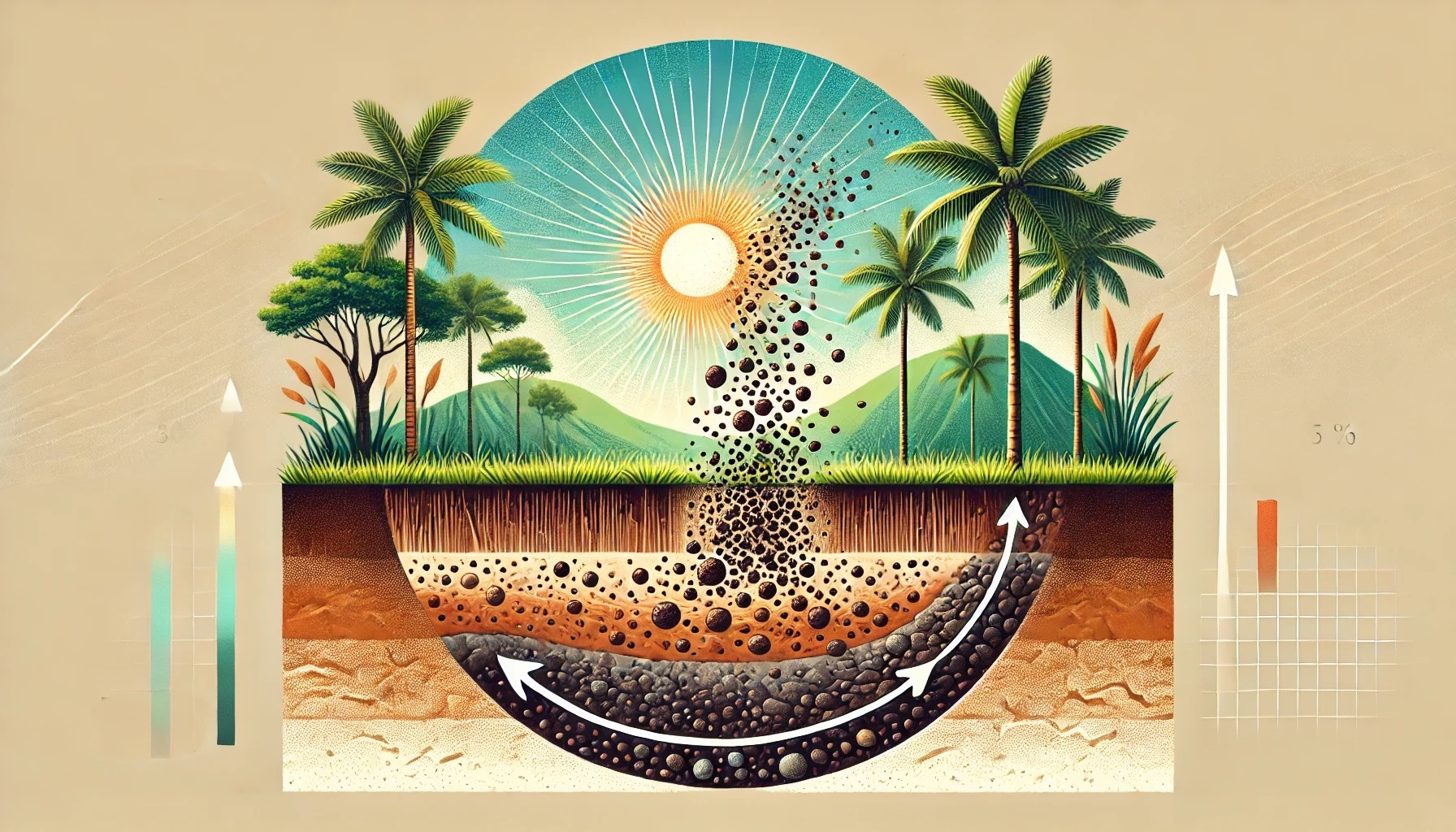
A 4.5-year field study in Zambia explored how biochar carbon (BC) moves through soil and compared three methods for measuring this migration: stable carbon isotopes (δ13C), chemothermal oxidation (CTO), and benzene polycarboxylic acid (BPCA) biomarkers. Each method offered unique insights and highlighted the complexities of assessing biochar’s stability and movement in agricultural soils.
The study applied maize biochar in three particle sizes (fine, medium, coarse) to loamy sand soil. Results showed biochar migrated both vertically and laterally, with differences detected by each method. δ13C isotopes captured more BC in the application layer (0–7 cm) but detected less in deeper layers. CTO, while less sensitive to fine particles, was strongly correlated with δ13C and provided a cost-effective alternative. BPCA biomarkers identified higher BC levels in deeper layers and in areas beyond the experimental plots, indicating its effectiveness in tracking fine particle migration. However, BPCA may also register false positives due to non-pyrogenic aromatic compounds.
This comparison underscores the importance of selecting appropriate methods based on study goals. While δ13C is valuable for high-precision studies, CTO offers a simpler and cost-efficient option. BPCA excels in detecting fine particle migration but requires careful interpretation.
The findings stress the need for further research using diverse biochar types and multiple quantification methods. Accurate measurement of biochar’s distribution and stability is crucial for advancing its use in carbon sequestration and ensuring reliable carbon credit assignments.



Leave a Reply