
Key Takeaways
- Pyrolyzing agricultural coconut waste at higher temperatures generates stable carbon adsorbents that possess a strong affinity for toxic elements.
- The overall removal percentage for target contaminants scales upward when raising the total biocharBiochar is a carbon-rich material created from biomass decomposition in low-oxygen conditions. It has important applications in environmental remediation, soil improvement, agriculture, carbon sequestration, energy storage, and sustainable materials, promoting efficiency and reducing waste in various contexts while addressing climate change challenges. More dosage from half a gram to three grams.
- Prolonging the mechanical shaking period from thirty minutes to one hour yields significantly higher toxic metal capture across wastewater samples.
- Coconut husk biochar reaches maximum extraction efficiencies above ninety-nine percent for both cadmium and chromium under optimized configurations.
- Mathematical tracking confirms that a multi-layered physical attachment process controls the complex accumulation of metals on the biochar surfaces
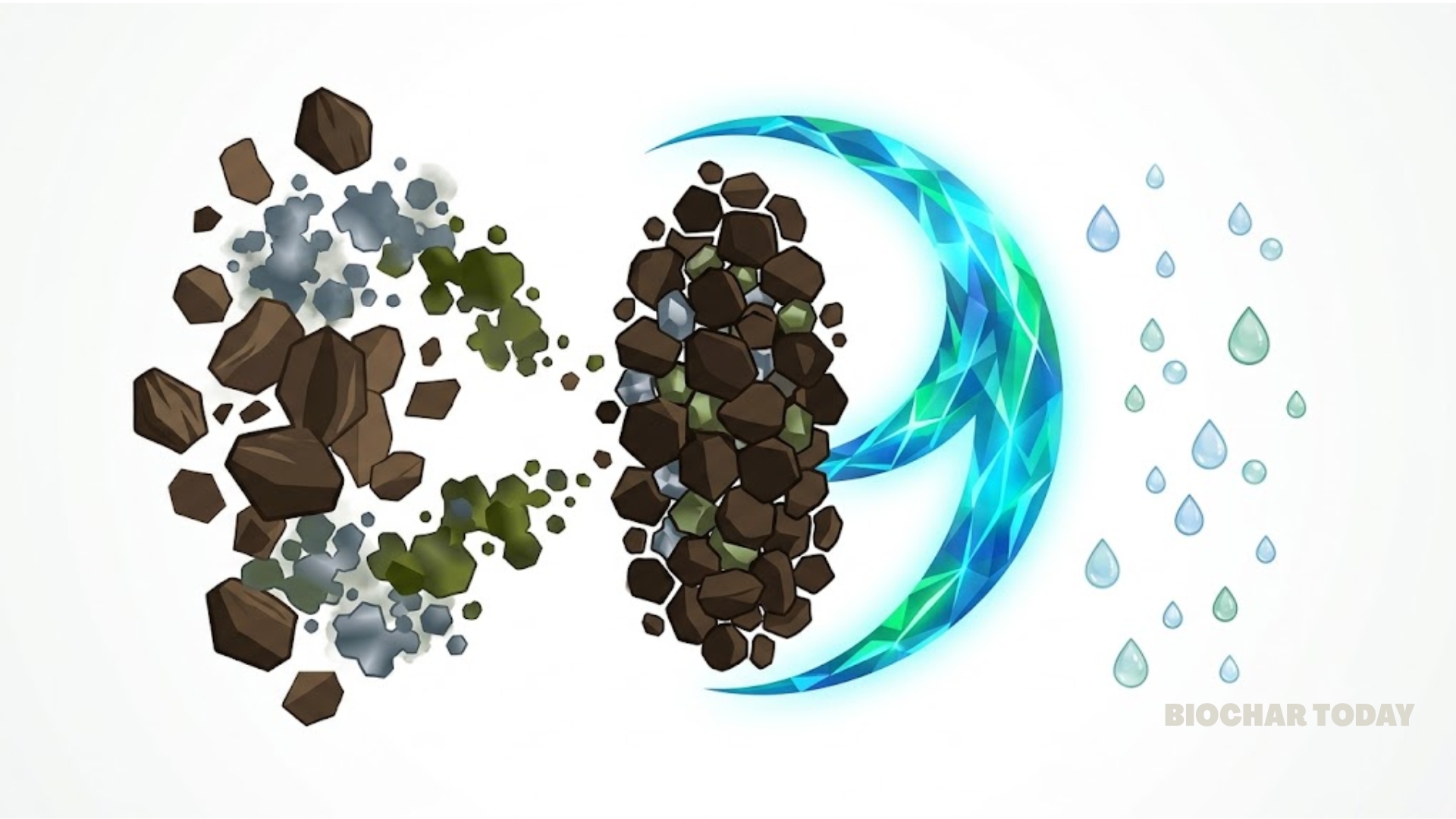
In an investigation published in the journal Next Chemical Engineering, researchers Abudu Ballu Duwiejuah, Samuel Agyei Osei, and Richard Agyemang Osei evaluated how thermal preparation conditions and application dosages alter the performance of coconut husk biochar when cleaning municipal solid waste drainage. The academic team focused on the pervasive challenge of landfill leachate management, where water migrating through unlined dump sites dissolves dangerous industrial residues and creates heavily polluted wastewater. If left untreated, this toxic drainage introduces persistent elements like arsenic, nickel, chromium, and cadmium directly into nearby rivers and shallow groundwater tables, sparking long-term ecological damage and serious public health hazards. To provide an affordable alternative to expensive conventional systems like membrane filtration or chemical precipitation, the researchers harvested discarded agricultural coconut husks from urban markets in Ghana and carbonized them into fine-ground porous media.
The primary experimental findings demonstrate that coconut husk biochar exhibits exceptional performance profiles when capturing highly toxic materials from waste pools. When evaluated under batch treatment conditions, the biochar achieved top-tier extraction rates ranging from ninety-nine point seven six percent to ninety-nine point eight five percent for both cadmium and chromium across the leachate samples. Simultaneously, the charcoal-like medium maintained a consistently strong extraction profile for nickel, safely binding between ninety-three point two eight percent and ninety-five point two two percent of the dissolved metal ions. In contrast, arsenic proved more chemically resistant to standard surface interaction, yielding comparatively lower yet significant extraction percentages that fluctuated between forty-eight point sixty percent and sixty-three point five nine percent depending on the specific operational configuration.
The operational dynamics of the cleaning process were heavily governed by a combination of adsorbent dosage, water contact time, and initial pyrolysisPyrolysis is a thermochemical process that converts waste biomass into bio-char, bio-oil, and pyro-gas. It offers significant advantages in waste valorization, turning low-value materials into economically valuable resources. Its versatility allows for tailored products based on operational conditions, presenting itself as a cost-effective and efficient More temperature. The research team found that increasing the total biochar dosage from half a gram to three grams per one hundred milliliters of wastewater systematically increased total removal rates by multiplying the net availability of active surface binding sites. Extending the mechanical agitation period from thirty minutes to one hour further enhanced the extraction metrics, granting dissolved ions ample time to migrate deep into the inner pores of the carbon structure. Furthermore, biochar produced at a higher pyrolysis temperature of five hundred degrees Celsius generally showed a superior structural affinity for nickel, chromium, and cadmium due to heat-induced increases in total surface area and internal porosityPorosity of biochar is a key factor in its effectiveness as a soil amendment and its ability to retain water and nutrients. Biochar’s porosity is influenced by feedstock type and pyrolysis temperature, and it plays a crucial role in microbial activity and overall soil health. Biochar More. An interesting exception occurred with arsenic, where biochar created at a lower temperature of three hundred fifty degrees Celsius outpaced the higher-temperature variant at intermediate dosages, a phenomenon linked to unique low-temperature surface chemistry profiles.
To uncover the precise mechanics behind this extraction process, the investigators fitted their laboratory data to standard thermodynamic models. The mathematical tracking showed that the Freundlich isotherm model provided the most accurate statistical fit for the behavior of arsenic, chromium, and nickel on the coconut husk material. This modeling outcome confirms that the heavy metals adhere through a physical multi-layered configuration across a heterogeneous adsorbent surface, rather than forming a single uniform layer. The calculated absorption intensity indexes were all greater than one, verifying that the physical structure of the coconut husk carbon naturally favors the spontaneous capture of dissolved pollutants. Ultimately, the authors conclude that converting abundant coconut waste into scalable water-treatment media provides municipalities with a highly sustainable, eco-friendly mechanism to trap toxic heavy metals and keep dangerous landfill runoff from poisoning local water supplies.
Source: Duwiejuah, A. B., Osei, S. A., & Osei, R. A. (2026). Adsorption of toxic metals from landfill leachate using coconut husk biochar. Next Chemical Engineering, 3, 100075.


![Eucalyptus Wood Waste-Derived Biochar Achieves a Ninety-Eight Percent Removal Efficiency for Benzo[ghi]perylene in Vehicle-Wash Wastewater](https://biochartoday.com/wp-content/uploads/2026/10/SCIENCE-BLOGS-2026-2026-10-19T160523.703.jpg)


Leave a Reply