
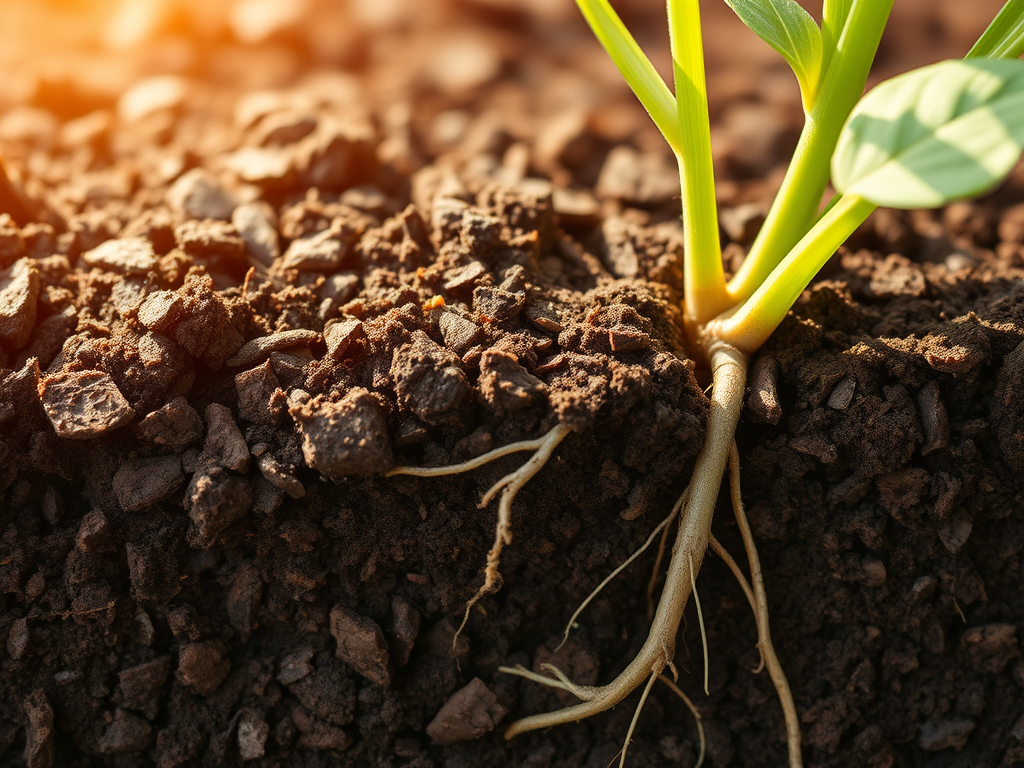
The degradation of coastal saline soils is a significant environmental challenge, leading to poor soil quality and inefficient land use. A study in the journal Agronomy by Wenzhi Zhou, Shuo Xing, and their team explores how a combination of biocharBiochar is a carbon-rich material created from biomass decomposition in low-oxygen conditions. It has important applications in environmental remediation, soil improvement, agriculture, carbon sequestration, energy storage, and sustainable materials, promoting efficiency and reducing waste in various contexts while addressing climate change challenges. More and compost can effectively ameliorate these soils. Their research, based on indoor leachingLeaching is the process where nutrients are dissolved and carried away from the soil by water. This can lead to nutrient depletion and environmental pollution. Biochar can help reduce leaching by improving nutrient retention in the soil. More and soil culture experiments, provides a detailed look at the changes in soil physical properties, nutrient content, and enzyme activity. The findings demonstrate that a rational application of these amendments can improve soil health and fertility, offering a practical solution for land restoration in coastal areas.
The most striking result from the study is the significant reduction in soil salinity. The authors found that a combined application of biochar and compost was highly effective at promoting the leaching of salt ions and improving the soil’s hydraulic conductivity, which is its ability to transmit water. Compared to the control group, the combined biochar and compost treatment reduced the soil electrical conductivity (EC) by 51.22%. This is a critical improvement, as high EC values indicate high soluble salt concentrations, which inhibit plant growth. The study also found that this combined application reduced the soil’s sodium adsorption ratio (SAR) by 63.82%, a key indicator of soil degradation.
Beyond salinity, the amendments profoundly impacted the soil’s physical structure. Both biochar and compost, with their multivoid and loose-textured structures, respectively, were shown to improve soil permeability and help soil particles aggregate. This process promotes the formation of stable soil clusters, which are crucial for a healthy soil structure. The study found that the application of biochar and compost increased the content of water-stable aggregates larger than 0.25 mm, making the soil more stable and resilient. The saturated hydraulic conductivity also saw a remarkable increase of 351.7% with an application rate of 10 g·kg⁻¹ of biochar and 40 g·kg⁻¹ of compost, showing a clear improvement in the soil’s ability to drain water.
In addition to physical improvements, the application of biochar and compost enriched the soil with vital nutrients and boosted biological activity. The amendments, rich in organic matter and nutrients like nitrogen, phosphorus, and potassium, significantly increased their content in the soil. The research also highlighted a marked increase in the activity of key soil enzymes, including urease, phosphatase, and dehydrogenase, which are essential for nutrient cycling and overall soil health.
A key takeaway from the study is the importance of application rates. While the amendments are beneficial, too much of a good thing can be a problem. The researchers warn that excessively high application rates of biochar can increase soil pHpH is a measure of how acidic or alkaline a substance is. A pH of 7 is neutral, while lower pH values indicate acidity and higher values indicate alkalinity. Biochars are normally alkaline and can influence soil pH, often increasing it, which can be beneficial More, while too much compost can lead to higher soil conductivity, both of which can inhibit soil enzyme activity. The optimal balance was found when biochar and compost were applied together, as compost, with its lower pH, can mitigate the pH-increasing effect of biochar, creating a complementary effect that is beneficial for soil health.
Source: Zhou, W., Xing, S., Wu, Y., Zou, R., Li, S., Sun, X., & Zhang, H. (2025). Exploring the Effects of Biochar and Compost on Ameliorating Coastal Saline Soil. Agronomy, 15(9), 2093.




Leave a Reply