
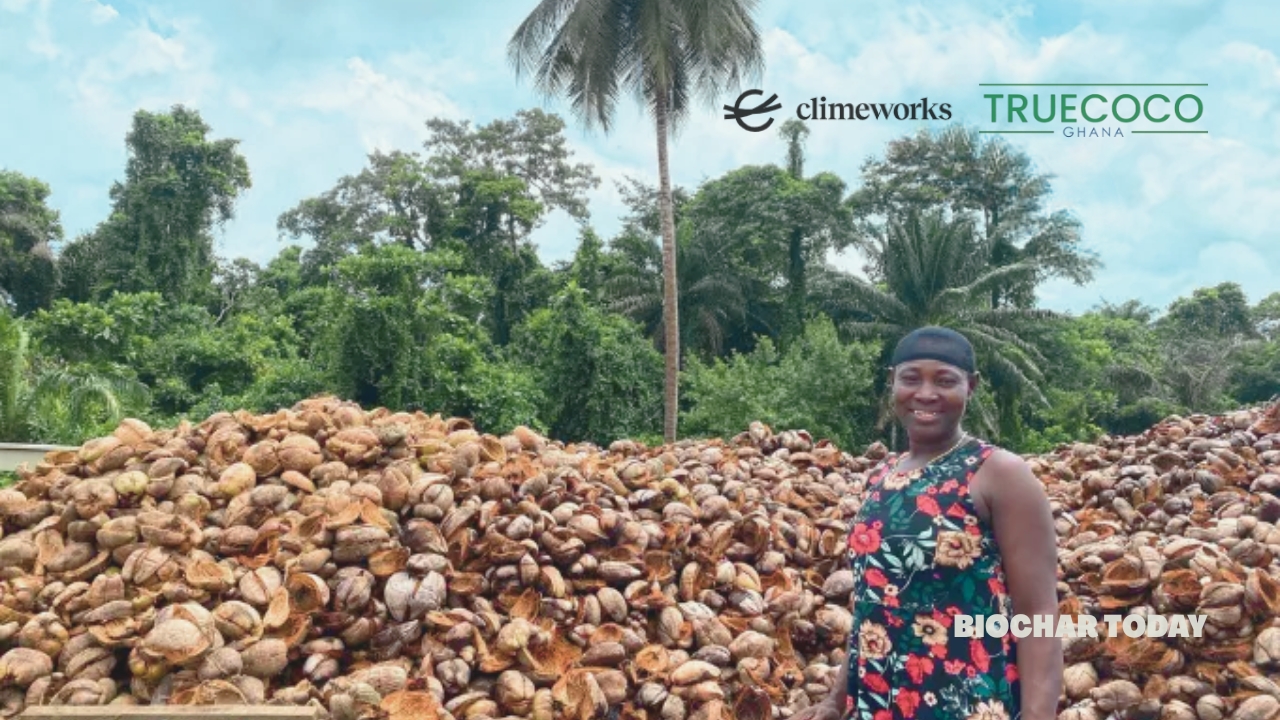
Climeworks, a global leader in high-quality carbon removal, has entered into a multi-year offtake agreement with the Ghana-based biocharBiochar is a carbon-rich material created from biomass decomposition in low-oxygen conditions. It has important applications in environmental remediation, soil improvement, agriculture, carbon sequestration, energy storage, and sustainable materials, promoting efficiency and reducing waste in various contexts while addressing climate change challenges. More firm Truecoco. Under this strategic partnership, which extends until 2032, Climeworks will purchase 90,000 high-quality carbon removal credits certified by Puro.earth. Truecoco specialized in a controlled pyrolysisPyrolysis is a thermochemical process that converts waste biomass into bio-char, bio-oil, and pyro-gas. It offers significant advantages in waste valorization, turning low-value materials into economically valuable resources. Its versatility allows for tailored products based on operational conditions, presenting itself as a cost-effective and efficient More process located in the Western Region of Ghana, where it converts agricultural biomassBiomass is a complex biological organic or non-organic solid product derived from living or recently living organism and available naturally. Various types of wastes such as animal manure, waste paper, sludge and many industrial wastes are also treated as biomass because like natural biomass these More residues—specifically coconut husk waste—into a premium biochar product.
The central challenge addressed by this initiative is the sustainable management of coconut husk waste, which unlike coconut shells, traditionally holds no commercial value and often goes to waste. In West Africa, smallholder farmers face significant hurdles due to decaying soil health and the rising costs of agricultural inputs. Furthermore, the carbon removal market requires high-integrity, science-based projects that can provide verifiable and durable sequestration to meet global climate targets.
Truecoco’s solution involves establishing a circular economy by sourcing coconut husk waste from a network of over 180 smallholder farmers and 12 coconut cooperatives. By utilizing a specialized pyrolysis process, the project prevents this waste from decaying or being burned, instead locking the carbon into a stable biochar form that can remain in the soil for centuries. This biochar is then provided back to local farmers as a cost-effective soil amendmentA soil amendment is any material added to the soil to enhance its physical or chemical properties, improving its suitability for plant growth. Biochar is considered a soil amendment as it can improve soil structure, water retention, nutrient availability, and microbial activity. More, improving moisture retention and fertility while creating a new revenue stream for the community.
The outcomes of this agreement are both environmental and socio-economic, having already delivered over 3,000 tonnes of durable carbon removal for Climeworks in its initial phase. Truecoco’s operations have created more than 35 direct and 100 indirect jobs in Ghana, supporting education and healthcare for local families. By 2030, the company aims to remove more than 250,000 metric tonnes of CO₂ while improving the livelihoods of over 30,000 smallholder farmers across West Africa.




Leave a Reply