
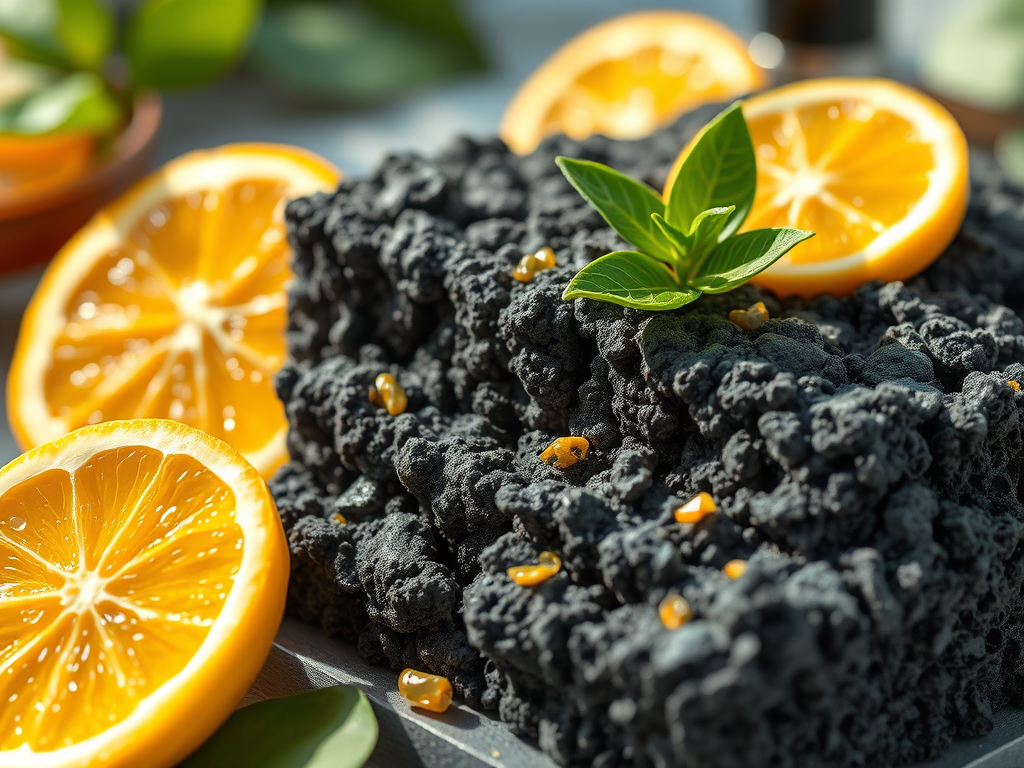
The search for sustainable and efficient energy storage solutions has become critical as global demand for power increases. A recent study published in iScience by Manisha Gautam, Tarun Patodia, and their colleagues introduces a groundbreaking approach to this challenge by converting citrus waste into high-performance materials for zinc-ion hybrid supercapacitors (ZIHSCs). This research highlights a resource-efficient method for creating carbon electrodes, demonstrating the potential of valorizing agro-waste in energy storage technology. The study focuses on using pulp from Citrus limetta (sweet lime), a fruit that generates a significant amount of biomassBiomass is a complex biological organic or non-organic solid product derived from living or recently living organism and available naturally. Various types of wastes such as animal manure, waste paper, sludge and many industrial wastes are also treated as biomass because like natural biomass these More residue during processing, as the primary source material.
The researchers developed a novel synthesis method to transform the citrus pulp into a porous biocharBiochar is a carbon-rich material created from biomass decomposition in low-oxygen conditions. It has important applications in environmental remediation, soil improvement, agriculture, carbon sequestration, energy storage, and sustainable materials, promoting efficiency and reducing waste in various contexts while addressing climate change challenges. More material. This process involves a soft-templating approach using cetyltrimethylammonium bromide (CTAB) followed by chemical activation with phosphoric acid (H3PO4). This dual-activation strategy is key to creating a material with enhanced surface area and a porous structure that can efficiently store energy. The resulting activated biochar, designated as CL@CTAB@ H3PO4_850°C, was used as a cathode in ZIHSC devices.
The material’s structure was analyzed using various techniques. Scanning electron microscopy (SEM) and Brunauer-Emmett-Teller (BET) analyses confirmed the highly porous nature of the materials. The dual-modified sample (CL@CTAB@H3PO4_850°C) demonstrated a significantly higher BET surface area of 1132.81 m² g−1 compared to the single-activated samples, which had surface areas of 256.68 m² g−1 (CL@CTAB_850°C) and 486.2 m² g−1 (CL@H3PO4_850°C). The SEM images further revealed that the co-treatment with CTAB and H3PO4 led to a spherical, wrinkled, and sponge-like texture with well-developed porosityPorosity of biochar is a key factor in its effectiveness as a soil amendment and its ability to retain water and nutrients. Biochar’s porosity is influenced by feedstock type and pyrolysis temperature, and it plays a crucial role in microbial activity and overall soil health. Biochar More, which is crucial for efficient ion transport and charge storage.
The electrochemical performance of the fabricated ZIHSC devices was impressive. The device with the CL@CTAB@ H3PO4_850°C cathode demonstrated exceptional performance, achieving a specific capacitance of 904.6 F g−1 at a current density of 0.1 A g−1. This is notably higher than the values for the single-activated materials, which were 154.74 Fg−1 for CL@CTAB_850°C and 697 F g−1 for CL@H3PO4_850°C at the same current density. The synergistic effect of the dual-modification approach, leading to a large accessible surface area and an interconnected porous structure, was credited for this enhanced performance. The high specific capacitance translated into a remarkable energy density of 321.6 Wh Kg−1 at a current density of 0.1 A g−1, significantly outperforming the devices with single-activated cathodes. For comparison, the CL@CTAB_850°C and CL@ H3PO4_850°C devices achieved energy densities of 55.02 Wh Kg−1 and 247.82 Wh Kg−1 respectively.
Beyond energy storage, the devices also exhibited excellent stability and self-discharge behavior. The device using the phosphoric acid-activated cathode showed the highest capacitance retention of 80% after 10,000 cycles, highlighting the structural advantages conferred by the chemical activation. The dual-activated device also showed a high initial capacitance retention but experienced a progressive reduction to 40% after 10,000 cycles, possibly due to structural deterioration. All devices demonstrated low self-discharge rates, with the CL@ H3PO4_850°C device showing the best voltage retention at 80.5% over a three-day period. The study’s findings demonstrate the feasibility of converting agricultural waste into high-value carbonaceous materials for advanced energy storage applications, offering a pathway to sustainable and cost-effective electrode materials for next-generation supercapacitors.
Source: Gautam, M., Patodia, T., Vaish, R., Sachdev, K., & Kushwah, H.S. (2025). Self-Assembled Templated Pulp of Citrus Limetta Porous Biochar@H3PO4 Activated Cathode for Zinc-ion Hybrid Supercapacitors. iScience, 113379.




Leave a Reply