
Key Takeaways
- BiocharBiochar is a carbon-rich material created from biomass decomposition in low-oxygen conditions. It has important applications in environmental remediation, soil improvement, agriculture, carbon sequestration, energy storage, and sustainable materials, promoting efficiency and reducing waste in various contexts while addressing climate change challenges. More is a Supercharger for Soil Microbes: Simply adding biochar to soil can significantly boost the ability of beneficial fungi (PSMs) to mine unavailable phosphorus, turning it into a nutrient plants can use.
- Not Just More Microbes, but More Active Microbes: The study showed that simply increasing the number of microbes isn’t the key. The true benefit comes from the biochar stimulating the microbes to become more effective by secreting P-releasing compounds.
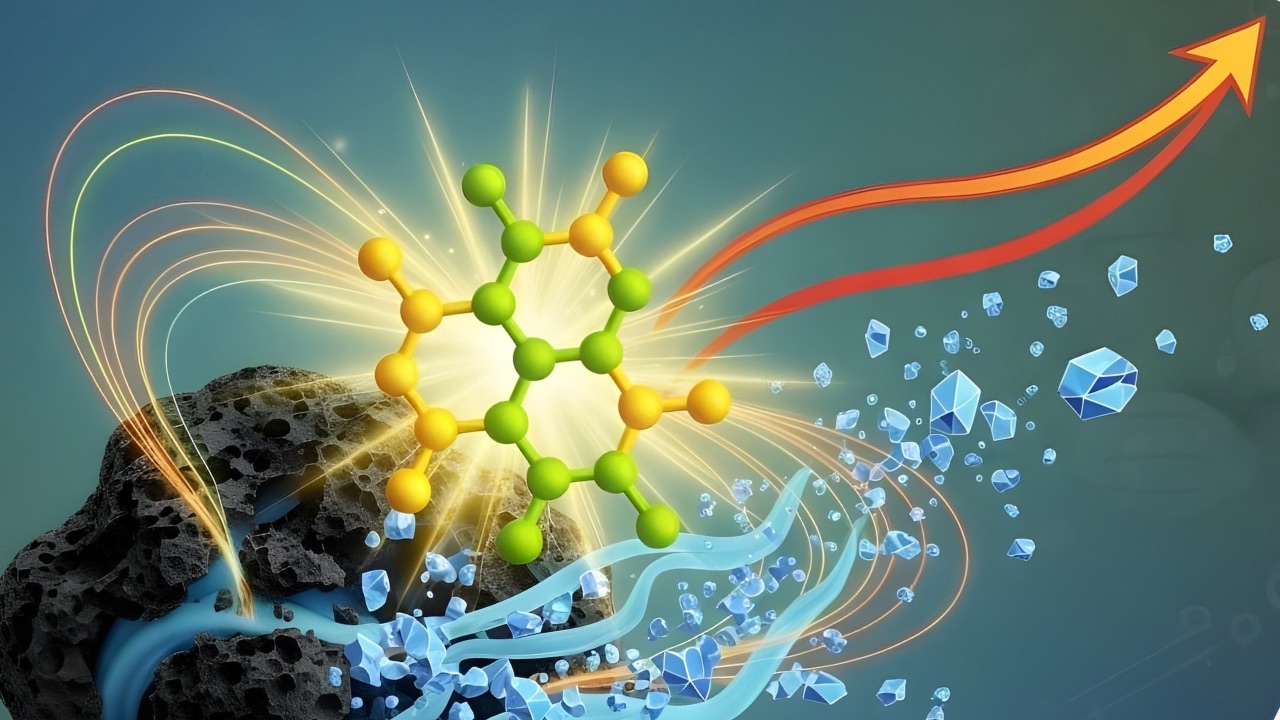
- Citric Acid is the Hero Molecule: The most potent compound responsible for releasing the locked-up phosphorus is citric acid, the same acid found in lemons. Its chemical structure makes it an excellent metal-binder, essentially freeing the phosphate from iron.
- A Path to Better Fertilizers: These findings provide a blueprint for creating the next generation of biofertilizers—ones that focus on using biochar to enhance the production of key organic acids, like citric acid, for sustainable farming.
Phosphorus (P) is the second most critical nutrient for plants, powering essential processes like photosynthesis and growth. Unfortunately, the most soluble and plant-available forms of phosphate fertilizer often bind with metal ions like iron and calcium in the soil, transforming into deposited P—an insoluble form plants can’t easily access. This inefficiency not only wastes resources but also leads to over-application, causing environmental issues like water body eutrophication. Finding a green, cost-effective way to activate this deposited P is a major goal in sustainable agriculture.
In a study published in Carbon Research authors Lu, Qin, Wu, Chen, Pan, and Xing investigated how biochar could be leveraged to solve this problem by teaming up with beneficial soil microbes. Phosphate-solubilizing microbes (PSMs) are known to convert deposited P into soluble forms by secreting enzymes and, crucially, organic acids. While biochar—a carbon-rich material produced from biomass—is known to provide a favorable habitat and nutrients for microbes, its specific role in boosting their P-solubilizing ability has been unclear.
The researchers used different types of biochar (made from corn straw and chicken feathers at various temperatures) as carriers for Talaromyces pinophilus (T. pinophilus) strains, a potent PSM isolated from the rhizosphere soil of various crops. To accurately measure the strains’ phosphate-solubilizing ability (PSA), they developed an improved method that accounted for both the P released into the solution and the P absorbed by the microbe cells.
The experiments yielded a striking result: biochar significantly enhanced the phosphate-solubilizing ability of T. pinophilus, but the degree of enhancement varied based on the biochar and strain type. The most dramatic increase in PSA was observed when adding a specific corn straw biochar (Y450) to the strains isolated from wheat rhizosphere soil, boosting the PSA by an impressive 356%. While some biochars (like Y700) caused the highest increase in microbial biomassBiomass is a complex biological organic or non-organic solid product derived from living or recently living organism and available naturally. Various types of wastes such as animal manure, waste paper, sludge and many industrial wastes are also treated as biomass because like natural biomass these More (up to a 19.2-fold increase), the highest biomass did not correlate with the best PSA. The statistical analysis confirmed no significant correlation between the PSA and the microbial biomass. This finding challenges the previous assumption that simply increasing the number of microbes is enough to enhance P activation.
Instead, the study found that the dissolved P was strongly correlated with the secretion of organic acids. Corn straw biochars (specifically Y300 and Y450), which had higher dissolved organic carbon (DOC) content and larger pore sizes, were generally more effective at enhancing PSA and promoting organic acid secretion. DOC is believed to act as a crucial carbon source for the microbe’s activity. The researchers investigated six common organic acids secreted by the microbes: citric acid, oxalic acid, malic acid, tartaric acid, malonic acid, and lactic acid. They found that among all the components, citric acid content showed the strongest positive correlation with the phosphate-solubilizing ability.
To confirm this, they conducted a laboratory simulation by adding each organic acid individually to the iron phosphate mixture. At equal molar concentrations, citric acid released significantly more soluble P than the other five acids. When the experiment was repeated using solutions that contained the same molar concentration of carboxyl groups, the variation in PSA between the acids was much smaller, confirming the essential role of the carboxyl group in activating deposited phosphate. Citric acid still performed the best, likely due to its slightly stronger ability to form complexes with iron.
Source: Lu, L., Qin, W., Wu, M., Chen, Q., Pan, B., & Xing, B. (2025). Biochar promotes FePO4 solubilization through modulating organic acids excreted by Talaromyces pinophilus. Carbon Research, 4(27).





Leave a Reply