

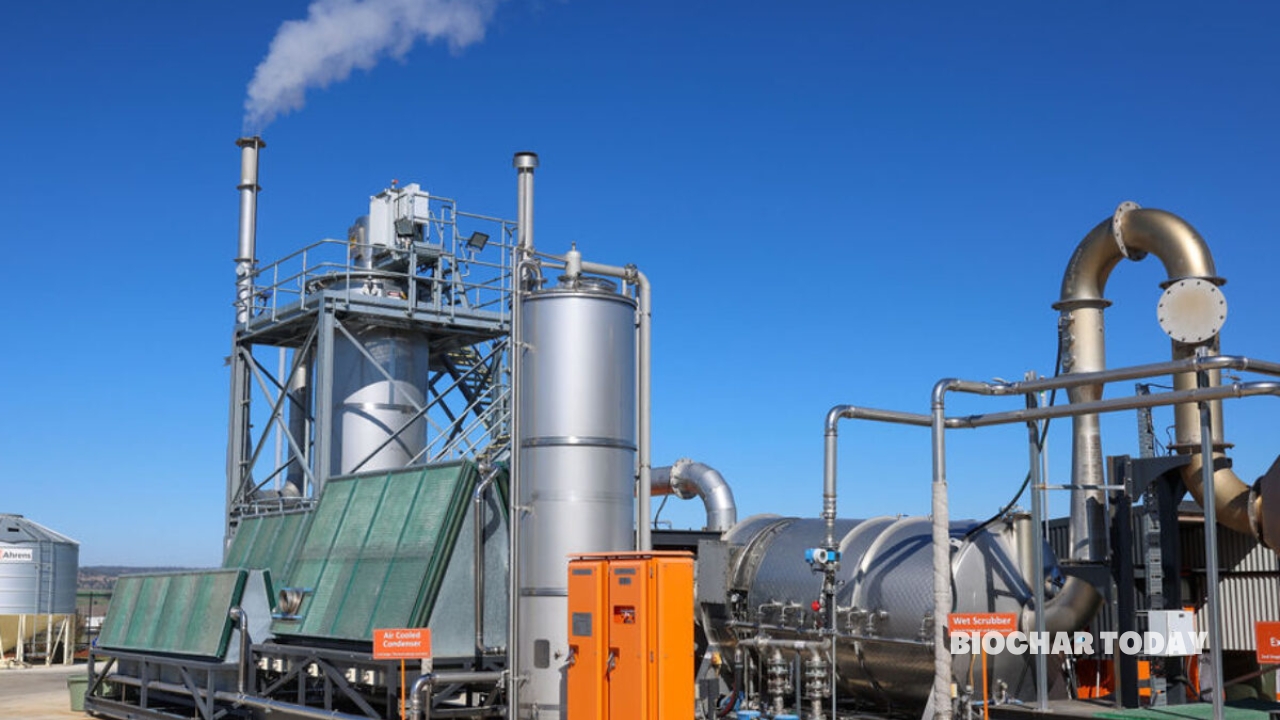
On May 9, 2025, CHAR Technologies Ltd., in partnership with Synagro Technologies and the Baltimore City Department of Public Works (DPW), will launch a commercial-scale demonstration of high-temperature pyrolysisPyrolysis is a thermochemical process that converts waste biomass into bio-char, bio-oil, and pyro-gas. It offers significant advantages in waste valorization, turning low-value materials into economically valuable resources. Its versatility allows for tailored products based on operational conditions, presenting itself as a cost-effective and efficient More (HTP) technology aimed at PFAS destruction from biosolids. The pilot, which takes place at Synagro’s Back River Facility in Baltimore, is being introduced during the Water Environment Federation’s RB/ITT25 Conference and will run through December 2025.
This pilot represents a strategic step in advancing integrated waste management technologies capable of addressing persistent organic pollutants while recovering valuable co-products. The focus is on validating the performance of CHAR Tech’s proprietary HTP system, which processes biosolids in an oxygen-free environment to thermally degrade PFAS compounds. This approach also yields renewable syngasSyngas, or synthesis gas, is a fuel gas mixture consisting primarily of hydrogen and carbon monoxide. It is produced during gasification and can be used as a fuel source or as a feedstock for producing other chemicals and fuels. More and solid biocharBiochar is a carbon-rich material created from biomass decomposition in low-oxygen conditions. It has important applications in environmental remediation, soil improvement, agriculture, carbon sequestration, energy storage, and sustainable materials, promoting efficiency and reducing waste in various contexts while addressing climate change challenges. More, positioning the technology as a multifunctional solution within the broader circular economy framework.
For Synagro, the collaboration marks an investment in next-generation treatment technologies that align with customer demand for both regulatory compliance and sustainable waste recovery. With PFAS regulations tightening across jurisdictions, utilities and waste processors are under pressure to implement effective remediation systems. The commercial-scale scope of this pilot adds significance, as successful results could accelerate adoption across other municipal and industrial biosolids processing sites.
The pilot also reflects a growing industry trend: coupling thermal conversion with resource recovery. The production of biochar from biosolids not only helps reduce landfill use but also provides a potential marketable byproduct, depending on contaminant profiles and regulatory limits. Meanwhile, syngas recovery enhances the system’s energy balance, offering pathways to internal energy use or further upgrading to renewable fuels.
From a technical perspective, CHAR Tech’s HTP system is differentiated by its closed-loop design and lack of direct combustion, which reduces air emissions and operational risks. The project’s outcome will be closely watched by stakeholders interested in thermal PFAS destruction, especially as full-scale deployment remains limited.
As regulatory and environmental pressures mount, this pilot could serve as a blueprint for how pyrolysis technologies are deployed not just for waste mitigation, but as platforms for resource recovery and energy transition within the biosolids management sector.



Leave a Reply