
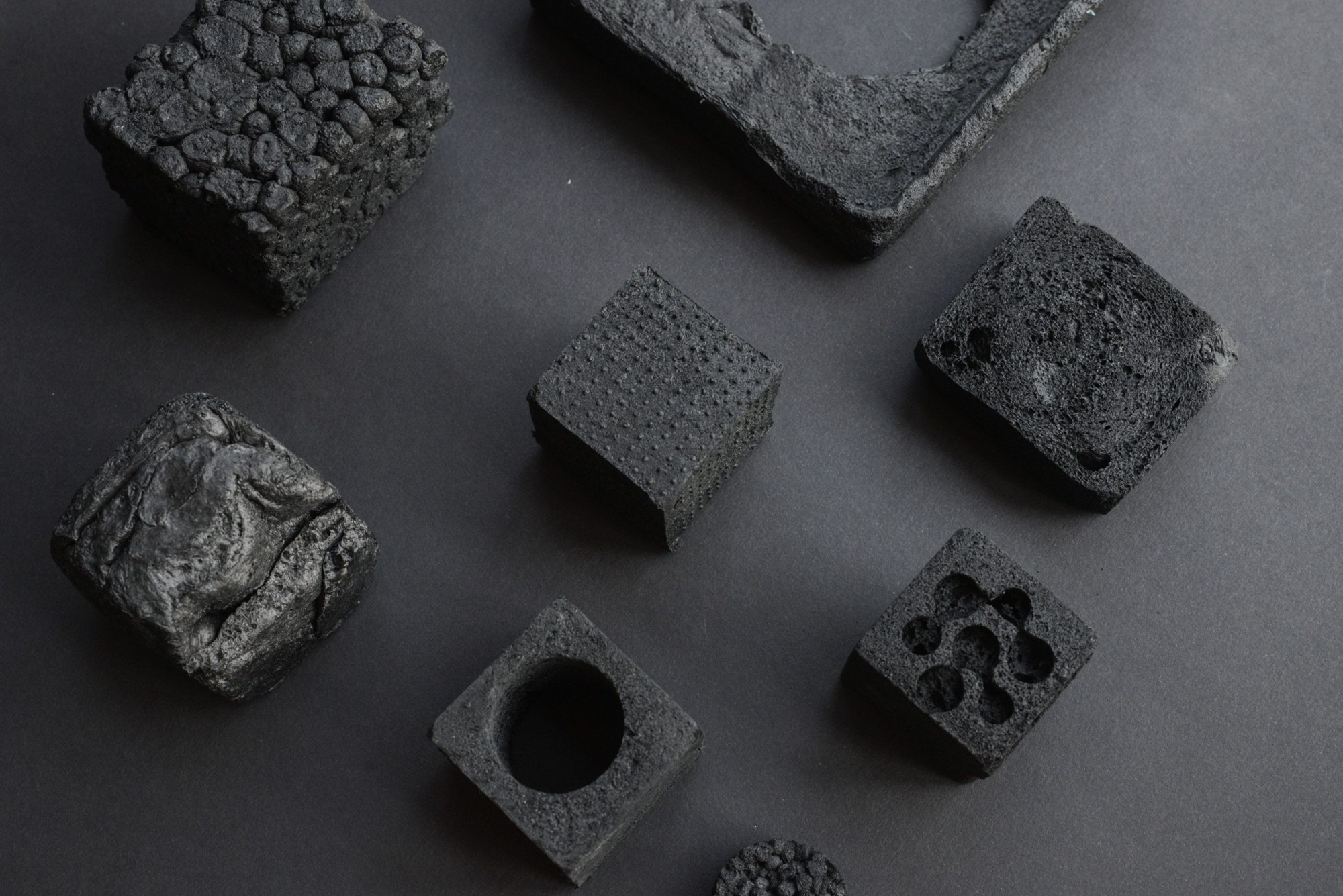
Carbon Cell, a company based in the United Kingdom, is preparing to launch a novel, plastic-free alternative to expanded polystyrene (EPS) manufactured primarily from biocharBiochar is a carbon-rich material created from biomass decomposition in low-oxygen conditions. It has important applications in environmental remediation, soil improvement, agriculture, carbon sequestration, energy storage, and sustainable materials, promoting efficiency and reducing waste in various contexts while addressing climate change challenges. More. Developed by a team of scientists and designers originally from Imperial College London and the Royal College of Art, the product utilizes agricultural waste transformed via pyrolysisPyrolysis is a thermochemical process that converts waste biomass into bio-char, bio-oil, and pyro-gas. It offers significant advantages in waste valorization, turning low-value materials into economically valuable resources. Its versatility allows for tailored products based on operational conditions, presenting itself as a cost-effective and efficient More into a rigid foam. This material is designed to be carbon-negative, compostable, and functionally equivalent to traditional fossil-fuel-based foams. With pilot production scheduled to commence in December, the initiative represents a significant step toward integrating biochar into high-volume industrial applications.
The biochar industry has long sought scalable applications that move beyond soil amendmentA soil amendment is any material added to the soil to enhance its physical or chemical properties, improving its suitability for plant growth. Biochar is considered a soil amendment as it can improve soil structure, water retention, nutrient availability, and microbial activity. More, particularly in sectors dominated by problematic synthetic materials. Expanded polystyrene poses a substantial environmental challenge; it is derived from fossil fuels, rarely recycled, and produced in volumes estimated between 7 and 12.8 tonnes annually. Despite its excellent insulating and protective properties, EPS waste remains a persistent pollutant in the packaging and construction industries. Replacing this ubiquitous material requires a solution that not only offers environmental benefits but also matches the technical performance and manufacturing convenience of existing plastics.
Carbon Cell addresses this challenge by leveraging the physical properties of biochar—specifically its porosityPorosity of biochar is a key factor in its effectiveness as a soil amendment and its ability to retain water and nutrients. Biochar’s porosity is influenced by feedstock type and pyrolysis temperature, and it plays a crucial role in microbial activity and overall soil health. Biochar More and light weight—to create a “drop-in” replacement material. The process involves mixing biochar derived from crop waste with bio-based polymers to form hard pellets. These pellets are then expanded, much like popcorn, using the same machinery currently employed for manufacturing polystyrene. The resulting closed-cell foam mimics the strength, insulation, and moisture-buffering capabilities of EPS but consists entirely of renewable materials.
The outcomes of this innovation extend to both carbon sequestration and waste reduction. The company estimates that for every kilogram of foam produced, nearly one kilogram of carbon dioxide is removed from the atmosphere. At the end of its lifecycle, the material is biodegradable in home composting conditions, returning the sequestered carbon to the soil. Carbon Cell is initially targeting the packaging and building insulation markets, with recent demonstrations featuring collaborations on consumer goods such as lamps and packaging.
For the wider biochar industry, Carbon Cell’s approach underscores the importance of compatibility with existing manufacturing infrastructure. By designing a material that utilizes current EPS expansion equipment, the company reduces barriers to adoption. Furthermore, this case illustrates the immense potential for biochar to serve as a functional filler in advanced composites, validating its role in the transition toward a circular, carbon-negative economy.





Leave a Reply