
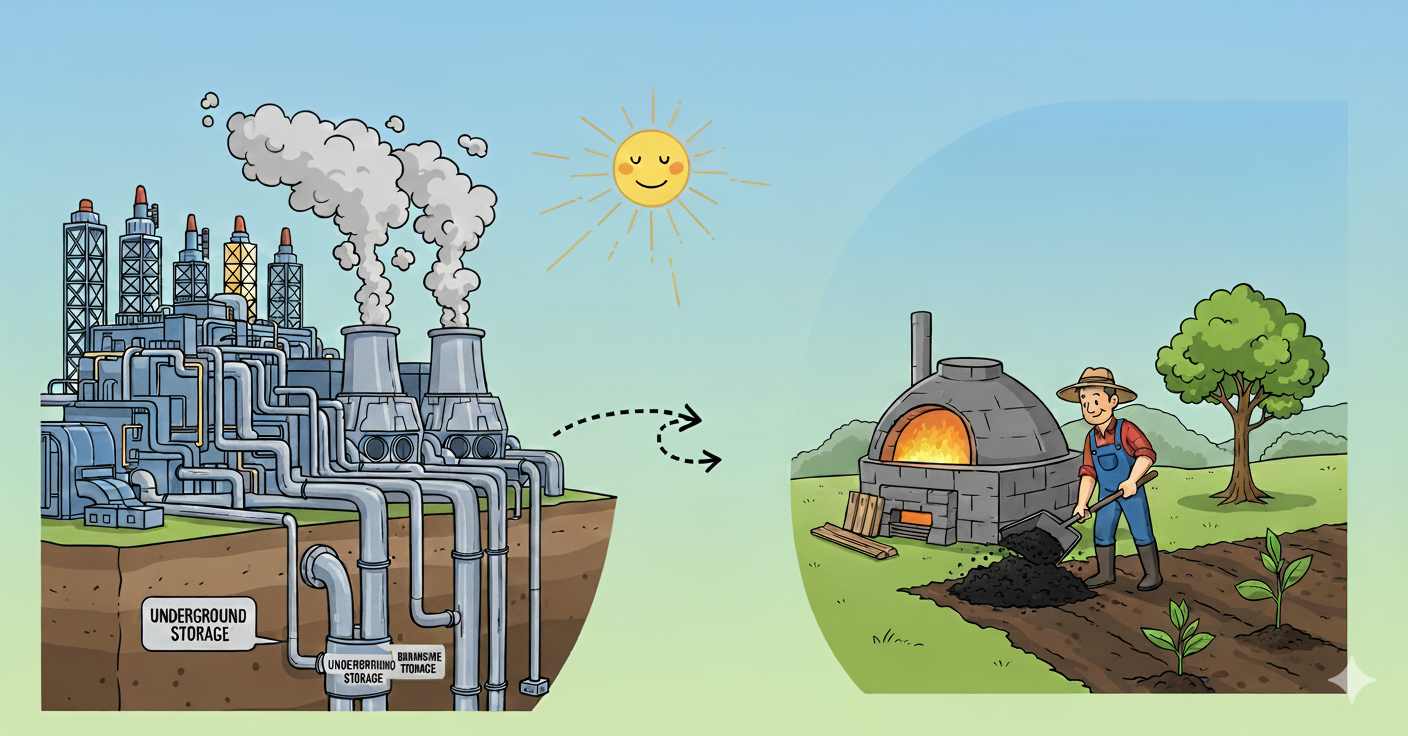
Recent findings from a study in the journal Nature challenge long-held assumptions about the potential of Carbon Capture and Storage (CCS) to mitigate climate change. The research indicates that the number of suitable locations for securely storing carbon dioxide deep underground is about ten times fewer than previously believed, significantly reducing the technology’s overall climate-mitigation potential. This new perspective emphasizes that while CCS remains important for certain industrial applications, it is not a singular solution to the climate crisis and requires careful prioritization alongside deep emissions reductions.
The study highlights the inherent challenges of large-scale, centralized carbon storage, which includes the risk of leakage, potential for seismic activity, and the high cost and complexity of the technology. The need for extensive pipeline infrastructure to transport CO2 and the limited number of viable geological storage sites present major logistical and economic hurdles.
In this context, biocharBiochar is a carbon-rich material created from biomass decomposition in low-oxygen conditions. It has important applications in environmental remediation, soil improvement, agriculture, carbon sequestration, energy storage, and sustainable materials, promoting efficiency and reducing waste in various contexts while addressing climate change challenges. More presents itself as a compelling alternative. Unlike the capital-intensive and geographically-restricted nature of CCS, biochar production is a decentralized and scalable process. It is created by heating biomassBiomass is a complex biological organic or non-organic solid product derived from living or recently living organism and available naturally. Various types of wastes such as animal manure, waste paper, sludge and many industrial wastes are also treated as biomass because like natural biomass these More, such as agricultural waste, in the absence of oxygen, a process known as pyrolysisPyrolysis is a thermochemical process that converts waste biomass into bio-char, bio-oil, and pyro-gas. It offers significant advantages in waste valorization, turning low-value materials into economically valuable resources. Its versatility allows for tailored products based on operational conditions, presenting itself as a cost-effective and efficient More. The resulting carbon-rich material can then be incorporated into soils, where it permanently sequesters carbon for hundreds to thousands of years.
Biochar’s approach to carbon removal is not only accessible—it can be produced on a range of scales from farm-level to industrial—but it also delivers multiple co-benefits. Its application to soil improves water retention, enhances nutrient availability, and supports microbial life, leading to healthier soil and increased agricultural productivity. As the conversation around carbon mitigation evolves, biochar’s low-tech, distributed, and multi-beneficial properties position it as an increasingly important part of the global climate strategy. It serves as a complementary solution that can be deployed now, offering a tangible way to remove atmospheric carbon while improving local ecosystems.
SOURCE: Study: There is less room to store carbon dioxide, driver of climate change, than previously thought



Leave a Reply