
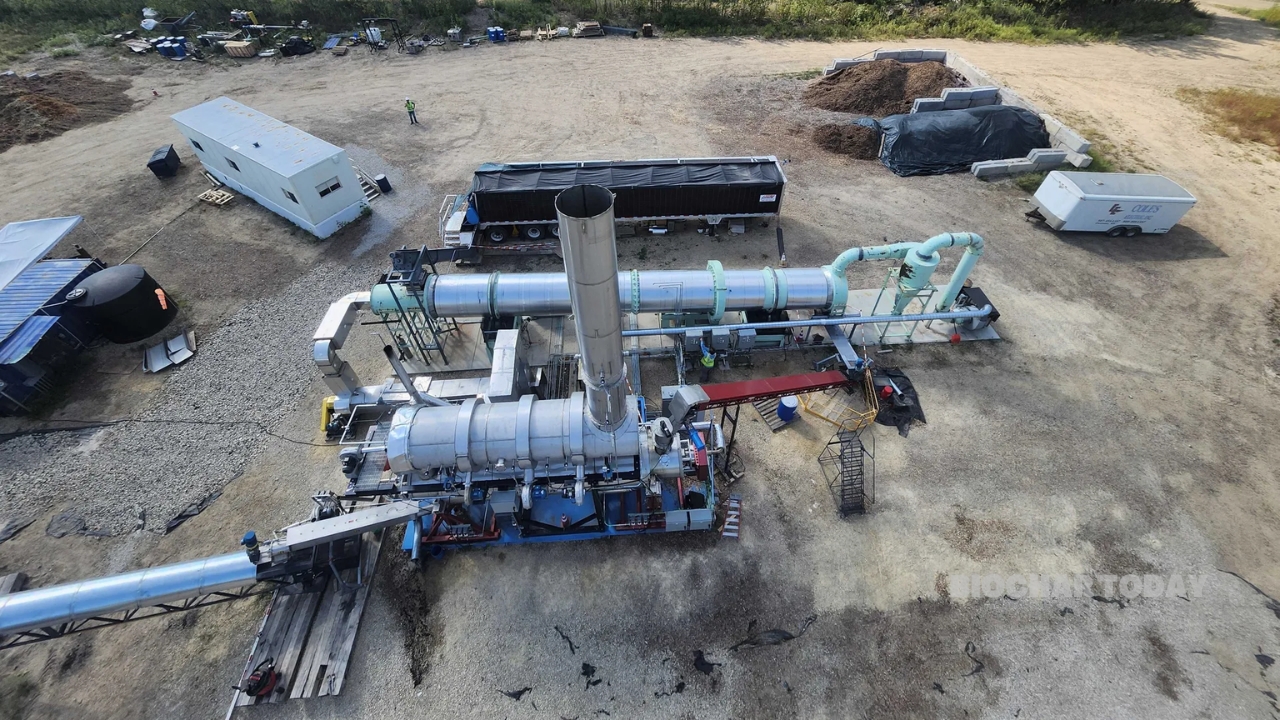
Carba has announced that its flagship facility at the Burnsville Sanitary Landfill in Minnesota, United States, has become the first carbon removal initiative validated under Isometric’s methodology for biocharBiochar is a carbon-rich material created from biomass decomposition in low-oxygen conditions. It has important applications in environmental remediation, soil improvement, agriculture, carbon sequestration, energy storage, and sustainable materials, promoting efficiency and reducing waste in various contexts while addressing climate change challenges. More storage in low-oxygen environments. This third-party verification confirms that the project fulfills strict scientific criteria for quantifying and monitoring biocarbon sequestered within engineered landfill systems. Following the validation milestone, corporate buyer U.S. Bank executed its inaugural purchase of durable carbon removal credits from Carba, securing verified offsets tied directly to the site’s operations.
The deployment addresses key logistical and economic hurdles facing the carbon dioxide removal sector, primarily the high capital requirements and lengthy timelines associated with building dedicated, standalone storage facilities. Scaling permanent biomass-based sequestration often requires novel infrastructure that increases deployment costs and slows commercial expansion. Furthermore, municipal waste streams, including low-value wood waste, are frequently incinerated, left to decompose, or disposed of without capturing their inherent carbon retention value or mitigating associated environmental hazards.
To resolve these capital constraints and waste management inefficiencies, Carba utilizes a patent-pending autothermal processing system and an anoxic burial method that converts waste biomassBiomass is a complex biological organic or non-organic solid product derived from living or recently living organism and available naturally. Various types of wastes such as animal manure, waste paper, sludge and many industrial wastes are also treated as biomass because like natural biomass these More into stable biocarbon for direct integration into active landfill infrastructure. By leveraging existing waste disposal sites, the company avoids the heavy capital expenditure of greenfield infrastructure while repurposing municipal wood waste into active filtration media. Placed within low-oxygen landfill zones, the processed biocarbon functions simultaneously as a long-term carbon sink and an active medium capable of adsorbing leachate contaminants, oxidizing fugitive methane, and reducing wildfire fuel loads.
This operational model yields verified, multi-thousand-year carbon sequestration alongside measurable environmental benefits at the Burnsville site. The Isometric validation officially establishes a scientific framework for landfill-based biocarbon storage, clearing the path for commercial credit sales to institutional purchasers like U.S. Bank. Operationally, the application of biocarbon within the landfill environment serves to reduce toxic contaminants—including PFAS, lead, and mercury—while curbing fugitive emissions, providing a scalable blueprint for transforming underutilized waste streams into certified carbon removal assets.



Leave a Reply