
Thermochemical energy storage ( TCES) is a highly effective way to store heat long-term, offering significantly higher energy density than sensible or latent heat storage. Hygroscopic salts, such as calcium chloride (CaCl2), are promising TCES materials due to their high storage energy density and moderate working temperature, making them suitable for applications like space heating. However, practical application is hampered by issues like salt agglomeration and leakage during repeated hydration/dehydration cycles, which degrade performance.
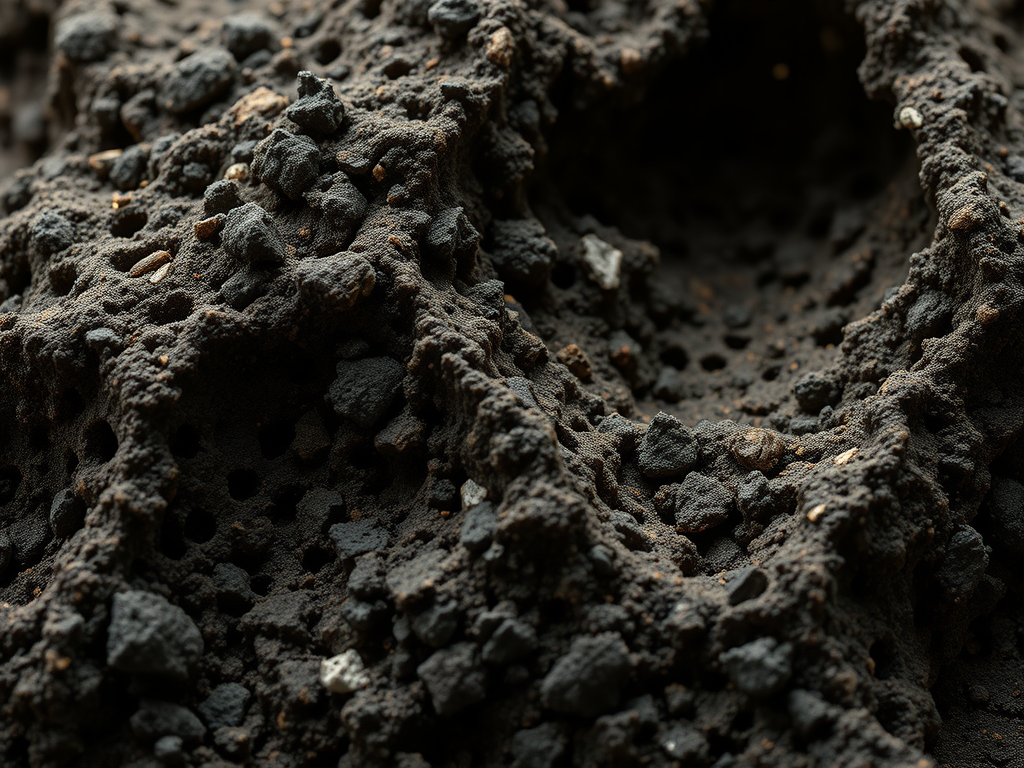
A new composite, developed by Ali Kasebi Vayghan, Maryam Roza Yazdani McCord, Annukka Santasalo-Aarnio, and Ari Seppälä, and published in Energy Conversion and Management, addresses these issues. They created a composite by impregnating CaCl2 into a sustainable, porous activated biocharBiochar is a carbon-rich material created from biomass decomposition in low-oxygen conditions. It has important applications in environmental remediation, soil improvement, agriculture, carbon sequestration, energy storage, and sustainable materials, promoting efficiency and reducing waste in various contexts while addressing climate change challenges. More matrix derived from wood. This research specifically investigates how the biochar particle size affects the composite’s energy storage density and cyclic stability.
The study found that biochar particle size has a highly significant effect on the initial energy storage density of the composite, unlike the base biochar material. The optimal performance was achieved by the composite sample (C4) using biochar particles with a diameter between 354 μm and 595 μm.
The C4 composite exhibited a remarkable initial energy storage density of approximately 2480 J/g. This represents 66.8% of the average energy density of pure CaCl2 and demonstrates a higher performance than most other carbon-based TCES materials reported in the literature, even when tested at a relatively low 35% relative humidity. The activated biochar matrix itself, synthesized from alder wooden chips, is highly effective, exhibiting a hierarchical multiscale porous structure and an impressive surface area of approximately 800 m2/g. Micro-computed tomography ( μCT) confirmed that in the optimal C4 sample, the CaCl2 successfully deposited on the inner pore walls without blocking the pores, facilitating mass transfer and successful salt impregnation.
To accurately assess the material’s durability, the researchers introduced a novel, quantitative leakage test based on monitoring energy storage density loss, which is a more accurate measure than the qualitative visual observations or standard thermal analysis cycles typically used in research. Standard consecutive cycling with a simultaneous thermal analyzer (STA) was shown to overlook the significant energy density loss caused by salt leakage because the leaked salt remains in the sample holder, artificially contributing to the measured energy.
Source: Kasebi Vayghan, A., Yazdani McCord, M. R., Santasalo-Aarnio, A., & Seppälä, A. (2026). High energy density long-term thermochemical energy storage composite based on salt and wood-derived activated biochar. Energy Conversion and Management, 347: 120532.



Leave a Reply