

The construction industry faces a major challenge: how to reduce its carbon footprint while responsibly managing waste materials. Traditional cement production is a significant source of CO2 emissions, and waste like fly ashAsh is the non-combustible inorganic residue that remains after organic matter, like wood or biomass, is completely burned. It consists mainly of minerals and is different from biochar, which is produced through incomplete combustion. Ash Ash is the residue that remains after the complete More can contain leachable heavy metals that threaten the environment. In a promising new study published in the journalBiocharBiochar is a carbon-rich material created from biomass decomposition in low-oxygen conditions. It has important applications in environmental remediation, soil improvement, agriculture, carbon sequestration, energy storage, and sustainable materials, promoting efficiency and reducing waste in various contexts while addressing climate change challenges. More, researchers Sai Praneeth, Sanandam Bordoloi, and Ajit K. Sarmah explored a revolutionary solution: using biochar to create eco-friendly building blocks from fly ash.
This research focused on developing low-carbon building blocks by incorporating biochar into a fly ash-cement mixture, with Portland cement making up a minimal 2% of the total. The study aimed to test two key hypotheses: that biochar would enhance the blocks’ strength and that it would reduce the leachingLeaching is the process where nutrients are dissolved and carried away from the soil by water. This can lead to nutrient depletion and environmental pollution. Biochar can help reduce leaching by improving nutrient retention in the soil. More of heavy metals. The team created four different mixes, replacing fly ash with biochar at 0%, 2%, 4%, and 6% by weight, and then tested their strength and leaching potential.
The results demonstrated that biochar can indeed improve the mechanical properties of these building blocks. The blocks with a 2% biochar amendment achieved the highest compressive strength, outperforming the control group (0% biochar) by 10%. This increase is likely due to the pore-filling effects of biochar, which improves water retention and facilitates internal curing during the hardening phase. This process creates a more dense and uniform structure, improving the overall strength of the material. The researchers noted that at higher concentrations, such as 4% and 6%, the compressive strength decreased by 6-13% compared to the control group. This is attributed to the highly porous biochar consuming too much water during the mixing phase, which creates more voids and a less rigid structure in the final product. Despite this decrease at higher concentrations, all the biochar-amended blocks with 28-day compressive strengths of 8–12 MPa met Eurocode 6 standards for masonry mortars used in severe conditions.
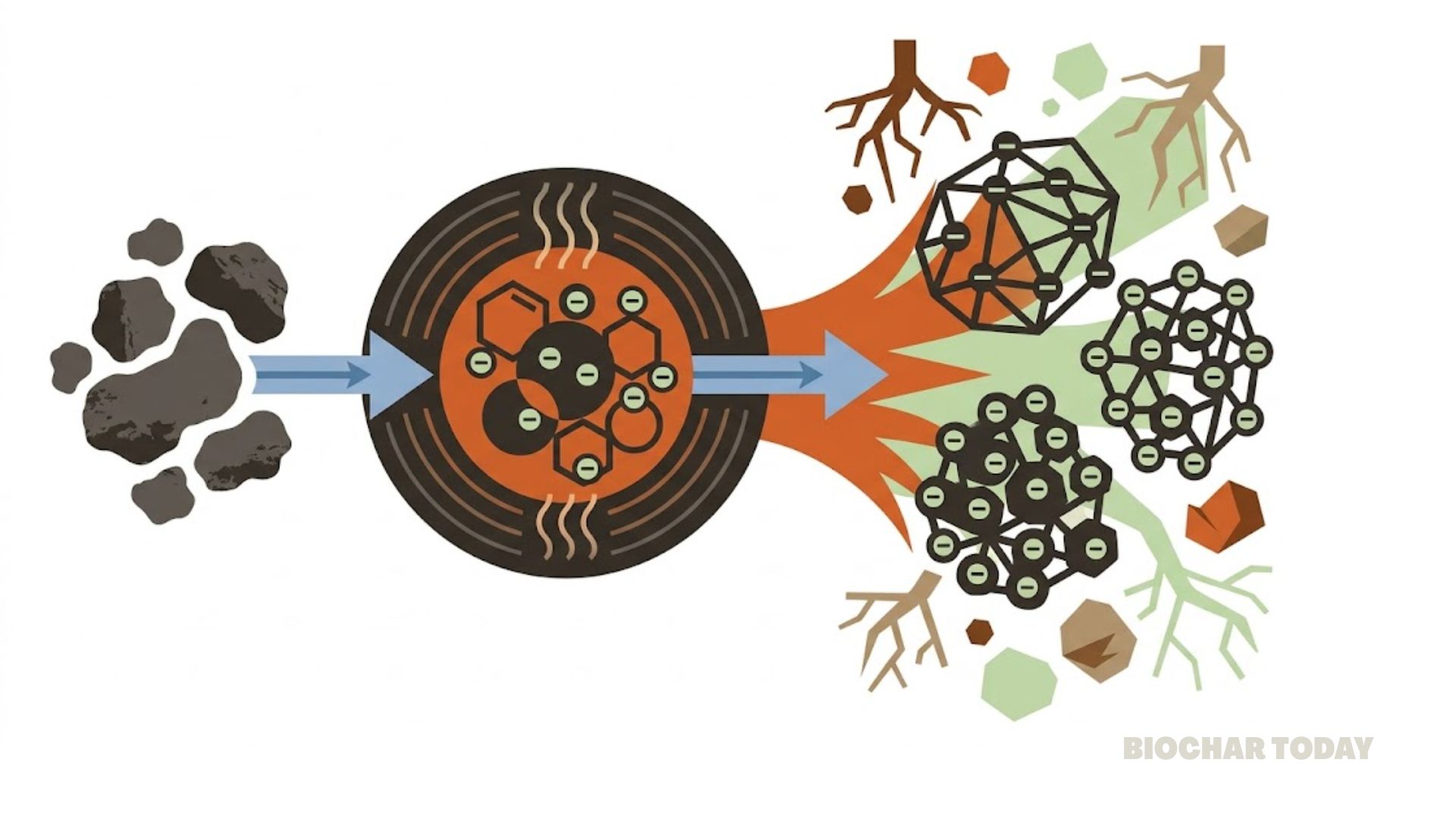
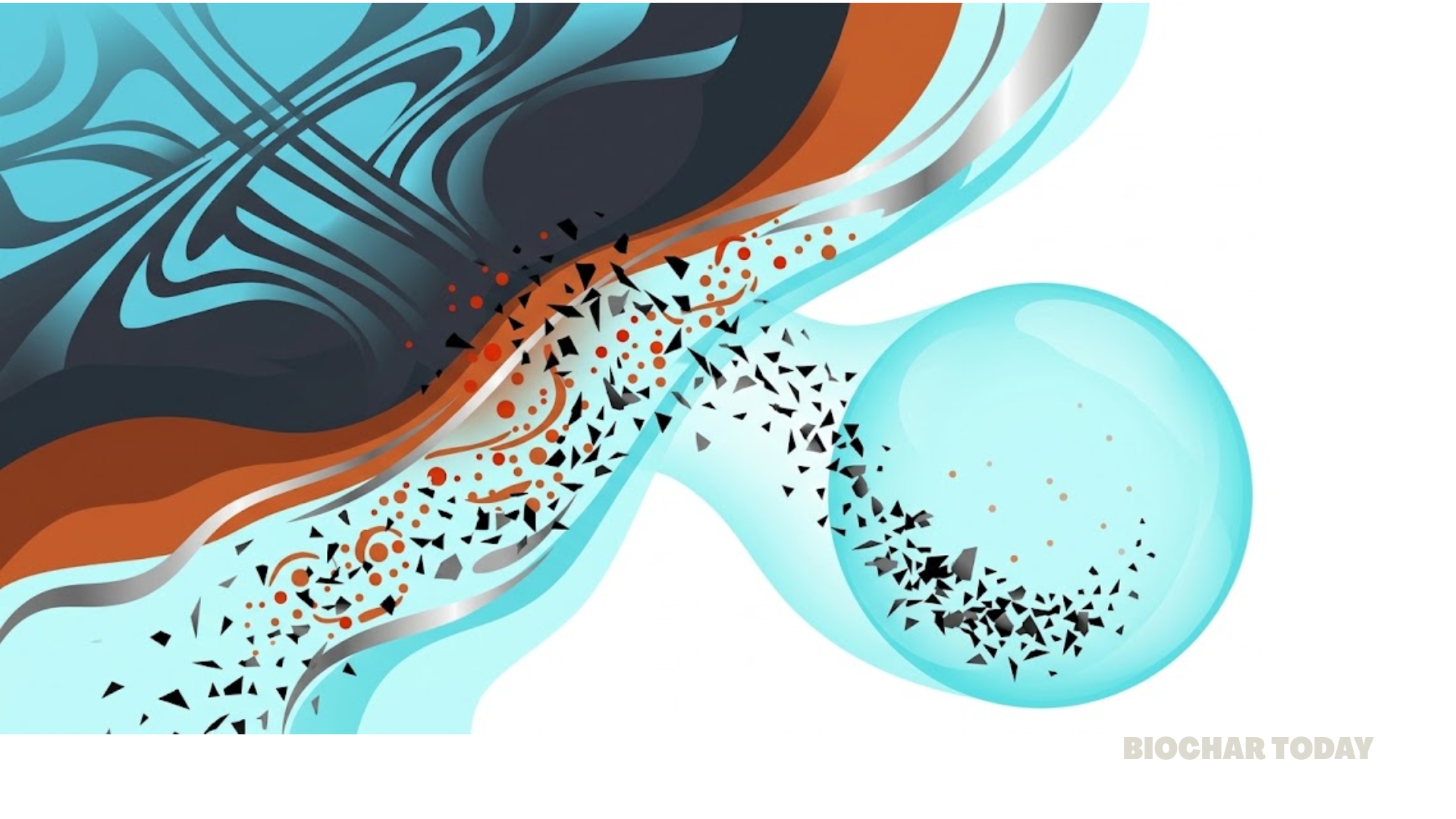
Beyond strength, the study’s most significant finding was biochar’s effectiveness in reducing metal leaching. The researchers found that adding biochar dramatically lowered the concentration of leached contaminants. Specifically, the 6% biochar mix reduced the leaching of aluminum (Al), selenium (Se), barium (Ba), and chromium (Cr) by 72%, 48%, 58%, and 53%, respectively, under synthetic precipitation conditions. While Al and Se concentrations remained above drinking water limits across all mixes, the Cr levels in the 4% and 6% biochar mixes dropped below the USEPA’s standards. The study highlighted that biochar’s high cation exchange capacity and ability to form complexes with surface functional groups are responsible for adsorbing and immobilizing these metals.
The researchers also explored how pHpH is a measure of how acidic or alkaline a substance is. A pH of 7 is neutral, while lower pH values indicate acidity and higher values indicate alkalinity. Biochars are normally alkaline and can influence soil pH, often increasing it, which can be beneficial More and liquid-to-solid (L/S) ratios affect leaching. They found that both Al and Cr showed minimal leaching under neutral pH conditions, with leaching significantly increasing in both highly acidic and alkaline environments. The study noted that biochar had a negligible effect on leaching across different pH ranges, suggesting that pH is the primary factor controlling contaminant release. This detailed analysis is crucial for understanding how these building blocks would behave at their end-of-life, particularly when disposed of in landfills where conditions can change over time.
This research successfully demonstrates that using biochar in fly ash-based building blocks not only meets strength requirements for severe environmental conditions but also substantially mitigates the risk of heavy metal leaching. The findings provide valuable data for developing sustainable and environmentally safe building materials from waste, offering a pathway toward a greener construction industry.
Source: Praneeth, S., Bordoloi, S., & Sarmah, A. K. (2025). Low carbon biochar amended fly ash-cement building blocks: Assessment of metal leaching scenarios. Biochar, 7(80).


Leave a Reply