
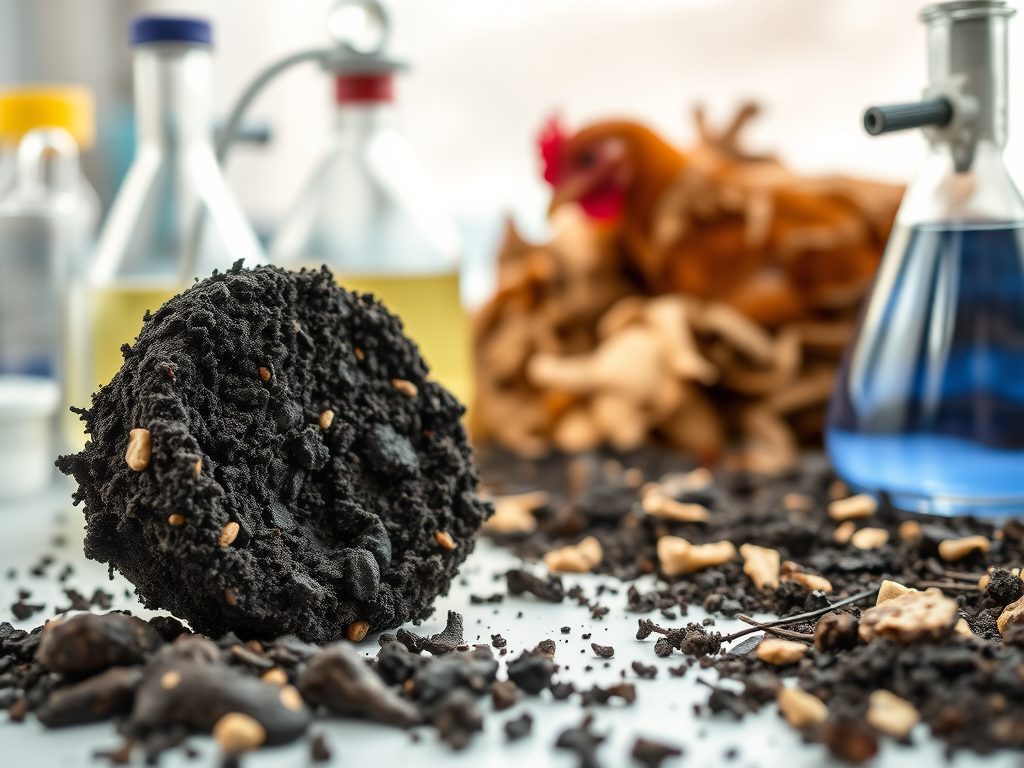
Chicken manure is a promising source for biogas production, but high ammonia levels often inhibit methane generation. In a recent study published in Waste and BiomassBiomass is a complex biological organic or non-organic solid product derived from living or recently living organism and available naturally. Various types of wastes such as animal manure, waste paper, sludge and many industrial wastes are also treated as biomass because like natural biomass these More Valorization, Tao Li and colleagues explored how magnesium-iron modified biocharBiochar is a carbon-rich material created from biomass decomposition in low-oxygen conditions. It has important applications in environmental remediation, soil improvement, agriculture, carbon sequestration, energy storage, and sustainable materials, promoting efficiency and reducing waste in various contexts while addressing climate change challenges. More (Mg/Fe-BC) can improve anaerobic digestion, enhancing methane yield while reducing ammonia toxicity.
The researchers synthesized Mg/Fe-BC from corncob biomass using a chemical precipitation and pyrolysisPyrolysis is a thermochemical process that converts waste biomass into bio-char, bio-oil, and pyro-gas. It offers significant advantages in waste valorization, turning low-value materials into economically valuable resources. Its versatility allows for tailored products based on operational conditions, presenting itself as a cost-effective and efficient More process. Compared to standard biochar, Mg/Fe-BC had a higher surface area (71.69 m²/g) and greater adsorption capacity (87.83 mg/g), making it highly effective at capturing ammonia nitrogen. Laboratory experiments showed that adding 2%, 3%, and 5% Mg/Fe-BC to biogas slurry improved ammonia removal efficiency by 16.38%, 32.85%, and 38.57%, respectively.
When tested in an anaerobic digestion system with chicken manure, Mg/Fe-BC significantly boosted cumulative methane production by 116%–229%, depending on the dosage. The biochar also reduced oxidation-reduction potential (ORP), promoted the breakdown of volatile fatty acids (VFA) and chemical oxygen demand (COD), and helped maintain stable ammonia levels (2.67–3.63 g/L). These factors created a more efficient environment for methanogenic bacteria, particularly Methanosarcina and Methanosaeta, which are crucial for methane generation.
This study highlights Mg/Fe-BC as a cost-effective and sustainable strategy for improving biogas production from organic waste. By mitigating ammonia toxicity, biochar-enhanced anaerobic digestion could support renewable energy production, waste recycling, and environmental sustainability. Future research will explore its large-scale application and long-term microbial interactions.
SOURCE: Li, T., Li, J., Li, T., & Cheng, X. (2025). Characterization of magnesium-iron modified biochar to alleviate ammonia inhibition and enhance anaerobic digestion of chicken manure. Waste and Biomass Valorization. https://doi.org/10.1007/s12649-025-02894-0



Leave a Reply