
Key Takeaways
- BiocharBiochar is a carbon-rich material created from biomass decomposition in low-oxygen conditions. It has important applications in environmental remediation, soil improvement, agriculture, carbon sequestration, energy storage, and sustainable materials, promoting efficiency and reducing waste in various contexts while addressing climate change challenges. More is a 2-in-1 product: Think of it as having two parts. One part dissolves like a tea bag, releasing quick nutrients (phosphorus and potassium) for plants.
- The “skeleton” is the key: The solid, undissolved part of biochar is the most important for soil health. It acts like a sponge, helping the soil hold more water , and it stores stable carbon, which improves soil structure.
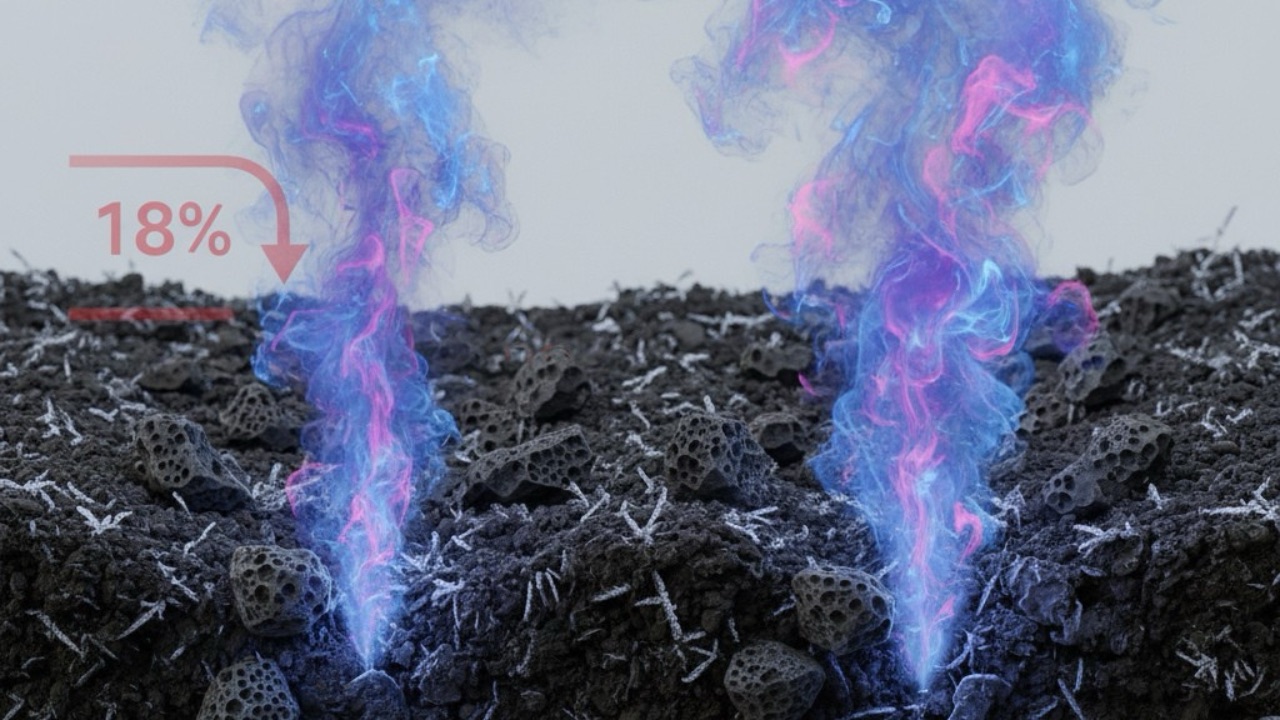
- Biochar protects soil life from winter: Freezing and thawing is extremely stressful for soil microbes. In the experiment, this stress killed off 62.7% of the microbial nitrogen.
- Biochar acts as a “shield”: Adding biochar, thanks to its solid skeleton, cut this microbial loss down to 44.7%. It gives microbes a safe place to hide, protecting them from physical damage and drought.
- A stable home matters more than food: The study found that biochar’s ability to create a good physical environment (holding water, stable structure) was more important for protecting microbes than just providing nutrients.
Winter is tough on soil. In cold regions, repeated freezing and thawing—known as freeze-thaw cycles (FTCs)—are becoming more common as the climate changes. This process wreaks havoc on soil structure, breaking it apart, drying it out, and causing it to lose vital nutrients like nitrogen. For agriculture, this means lower fertility and a higher risk of nutrient pollution. A popular solution is biochar from organic waste that’s added to soil. But how it really works has been a bit of a black box. A new study in the journal Agronomy by Xiaoyuan Gao and colleagues investigates this, finding that biochar isn’t one single substance; it’s a team of two distinct parts working in very different ways.
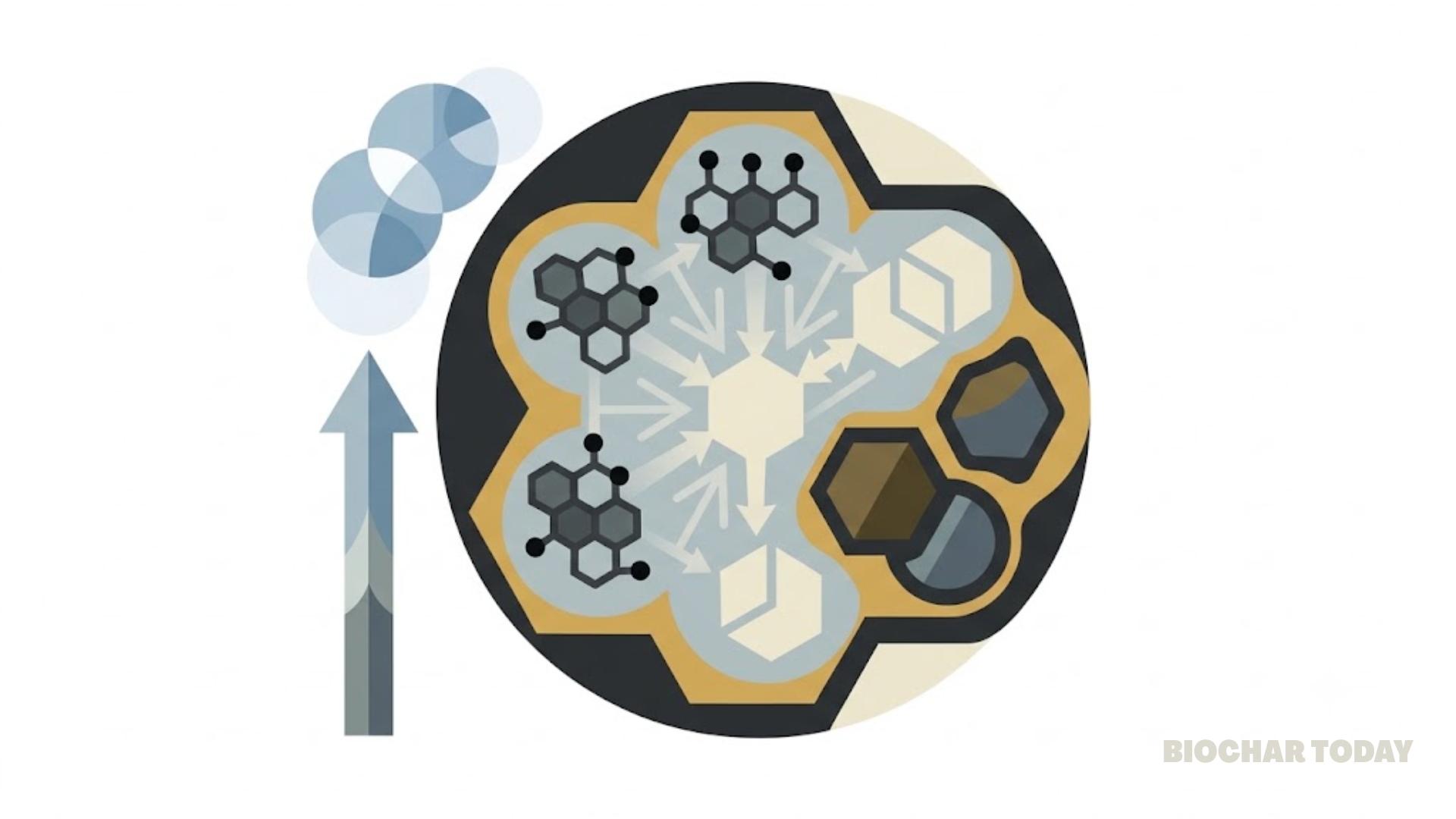
The researchers separated pristine corn stover biochar (PBC) into its two components: a dissolved fraction (DBC), which is essentially a nutrient-rich “tea” of soluble salts and minerals , and an undissolved fraction (UBC), the tough, stable carbon “skeleton” left behind. They then added these separate parts, plus the original biochar, to black soil and put it through 20 grueling freeze-thaw cycles, simulating a harsh winter. What they found was a clear division of labor.
The dissolved fraction (DBC) acted like a quick vitamin shot. It was the primary driver for increasing the soil’s electrical conductivity and, more importantly, the amount of readily available phosphorus and potassium—key nutrients for plants. This is the “fast food” part of biochar. But the undissolved fraction (UBC) was the real foundation. This carbon skeleton was the main reason the soil held onto more water, a critical factor as FTCs tend to dry soil out significantly. While the freeze-thaw control soil lost 36.6% of its moisture, the soils with PBC and UBC held on to much more. The UBC also provided the bulk of the stable, long-term soil organic carbon, which is essential for soil structure and fertility.
The most important finding, however, relates to nitrogen and the microbes that cycle it. FTCs are brutal for soil microbes. In the control soil that only went through freezing and thawing, the microbial biomassBiomass is a complex biological organic or non-organic solid product derived from living or recently living organism and available naturally. Various types of wastes such as animal manure, waste paper, sludge and many industrial wastes are also treated as biomass because like natural biomass these More nitrogen (MBN)—a measure of the nitrogen held within the microbes themselves—plummeted by a massive 62.7% over 20 cycles. This is a catastrophe for soil health, as these microbes are the engines of fertility. This is where the undissolved fraction shined. By adding pristine biochar (PBC), the MBN loss was cut to just 44.7%. That’s an 18 percentage point reduction in microbial death and nitrogen loss. The study shows this protection comes mainly from the undissolved part. Its stable structure likely provided physical shelter for microbes, while its ability to hold water and carbon gave them a more stable home.
This undissolved fraction was also the dominant force in reducing nitrate (NO3−N), the form of nitrogen most easily leached from soil and lost as a pollutant. The reduction of ammonium (NH4+−N) was a team effort from both the dissolved and undissolved parts. The researchers also found that the type of nitrogen (total N and nitrate) was the key environmental factor shaping which microbes could survive. The structural equation model confirmed that the physical changes to the soil—its water retention and structure, thanks to the UBC—had a stronger, more positive effect on microbial diversity than the nutrient changes did. It seems that during the stress of a freeze-thaw cycle, having a stable home is more important than just having food.
This research shows that when biochar is added to soil, we’re getting two different benefits. The dissolved part gives a quick nutrient boost, but the undissolved skeleton provides the long-term resilience. It builds soil carbon, holds water, and, most critically, acts as a protective shield for the microbial communities that keep soil fertile.
Source: Gao, X., Wang, Y., Li, M., Yu, J., & Han, S. (2025). Effects of Biochar and Its Fractions on Soil Nitrogen Forms and Microbial Communities Under Freeze-Thaw Conditions. Agronomy, 15(10), 2437.




Leave a Reply