
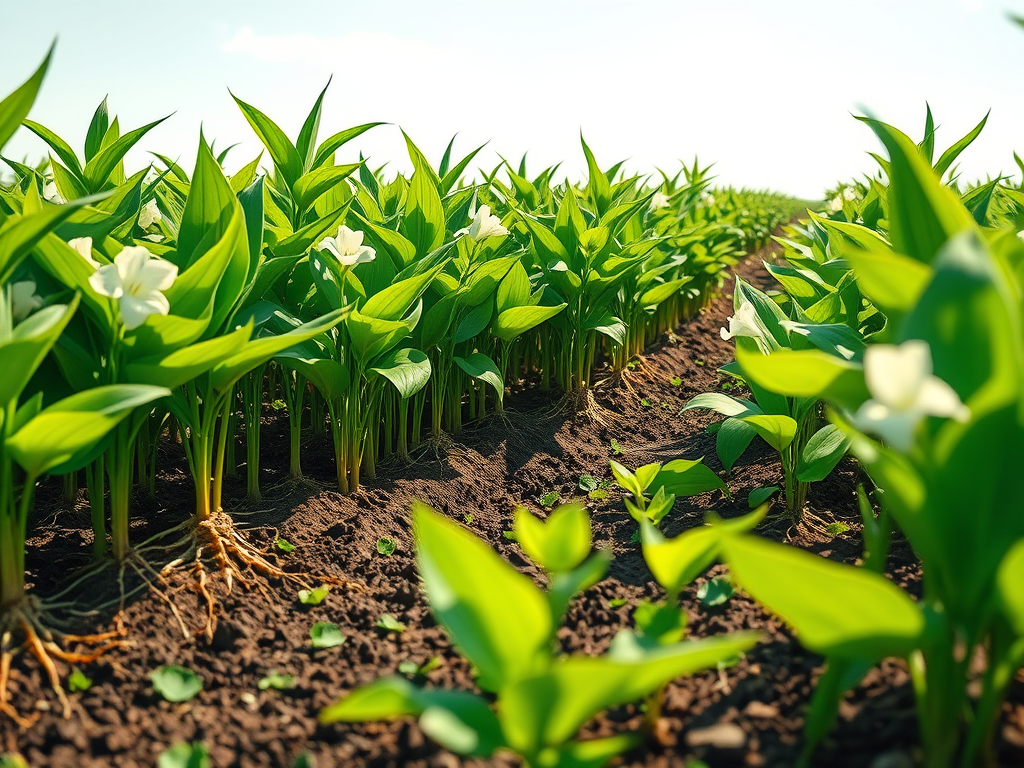
Lan et al., in Environmental Technology & Innovation, investigated the impact of oligotrophic biocharBiochar is a carbon-rich material created from biomass decomposition in low-oxygen conditions. It has important applications in environmental remediation, soil improvement, agriculture, carbon sequestration, energy storage, and sustainable materials, promoting efficiency and reducing waste in various contexts while addressing climate change challenges. More on soybean plants. The study found that biochar, a charcoal-like substance produced from biomassBiomass is a complex biological organic or non-organic solid product derived from living or recently living organism and available naturally. Various types of wastes such as animal manure, waste paper, sludge and many industrial wastes are also treated as biomass because like natural biomass these More, can stimulate the generation of salicylic acid (SA) in soybean roots. This process occurs due to increased nutrient and oxidative stress caused by the biochar.
Biochar is known to have a porous structure and high adsorption capacity, which can lead to the retention of essential nutrients like phosphorus and ammonium. This nutrient retention can trigger adaptive responses in plants, such as the production of SA, which helps in phosphorus solubilization. However, the strong adsorption of nutrients by biochar can also exacerbate soil oligotrophy, leading to overproduction of SA as a stress compensation mechanism.
The study also revealed that biochar can induce oxidative stress in plants due to the presence of persistent free radicals (PFRs). This oxidative stress can lead to the accumulation of malondialdehyde (MDA), a marker of lipid peroxidation. The researchers found a strong correlation between SA and MDA, indicating a bidirectional stress signaling mechanism where allelochemicals exacerbate oxidative damage while activating defense responses.
The findings of this study highlight the complex interaction between biochar and plant physiology. While biochar can offer benefits like soil improvement and carbon sequestration, it can also induce stress responses in plants due to nutrient retention and oxidative stress. The study emphasizes the need for optimizing biochar application strategies to balance its agricultural benefits with potential ecological risks.
SOURCE: Lan, P., Chen, Q., Wu, M., Oleszczuk, P., & Pan, B. (2025). Oligotrophy biochar stimulates the generation of salicylic acid from soybean roots by increasing nutrient and oxidative stress. Environmental Technology & Innovation, 27, 104083. https://doi.org/10.1016/j.eti.2025.104083


Leave a Reply