
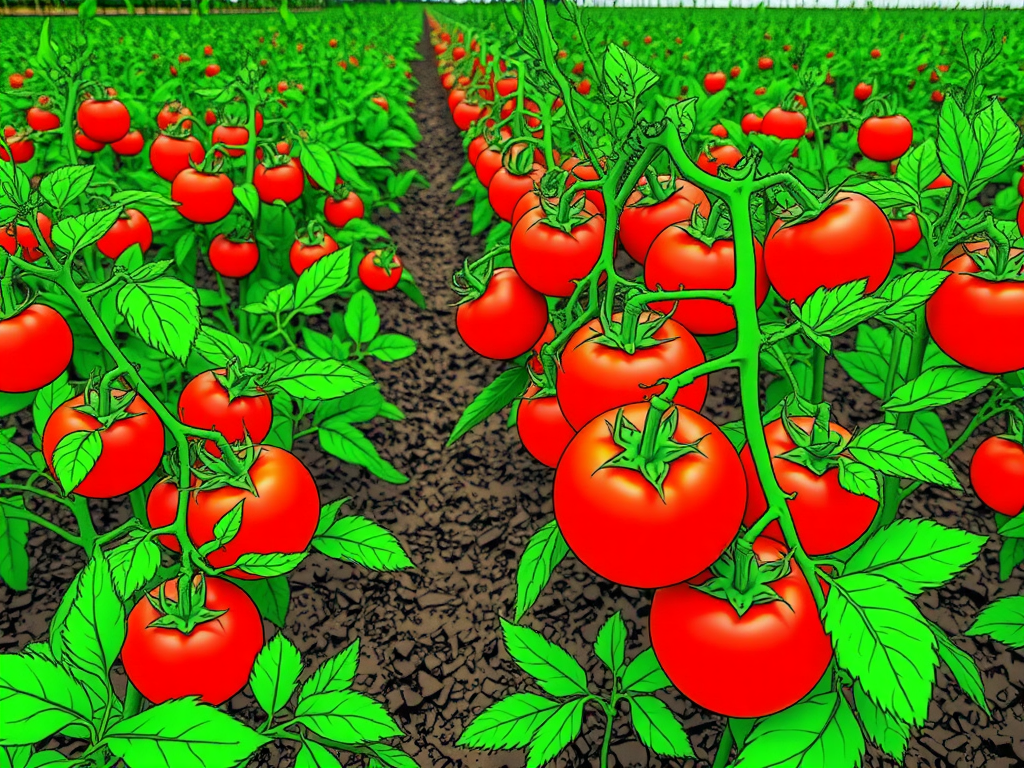
In a recent study published in the Journal of Environmental Management, Sara Paliaga et al. investigated the effects of enriched biocharBiochar is a carbon-rich material created from biomass decomposition in low-oxygen conditions. It has important applications in environmental remediation, soil improvement, agriculture, carbon sequestration, energy storage, and sustainable materials, promoting efficiency and reducing waste in various contexts while addressing climate change challenges. More and zeolite, combined with treated wastewater (TWW) irrigation, on soil fertility and tomato plant growth. The research offers insights into a sustainable method for wastewater management and agricultural productivity enhancement.
The study explored the potential of biochar and zeolite to recover nutrients from wastewater. Biochar, a carbon-rich material from organic matter pyrolysisPyrolysis is a thermochemical process that converts waste biomass into bio-char, bio-oil, and pyro-gas. It offers significant advantages in waste valorization, turning low-value materials into economically valuable resources. Its versatility allows for tailored products based on operational conditions, presenting itself as a cost-effective and efficient More, effectively adsorbs phosphate. Zeolite, a tectosilicate mineral, adsorbs ammonium. Enriched with these nutrients, biochar and zeolite can serve as soil fertilizers. The experiment compared five treatments: control soil irrigated with tap water, soil amended with enriched biochar and zeolite irrigated with tap water or TWW, and soil amended with natural biochar and zeolite irrigated with TWW.
After 80 days, tomato plant shoot dry weights were similar across treatments, but TWW irrigation reduced root dry weights. TWW irrigation increased soil total nitrogen by 22% and available phosphorus by 15%, but also increased soil salinity, indicated by a 27% rise in electrical conductivity. Biochar and zeolite amendments mitigated the salinity increase from TWW irrigation, fostering a more salinity-tolerant microbial community and increasing microbial biomassBiomass is a complex biological organic or non-organic solid product derived from living or recently living organism and available naturally. Various types of wastes such as animal manure, waste paper, sludge and many industrial wastes are also treated as biomass because like natural biomass these More carbon.
The study concludes that treated wastewater can be used for irrigation to enhance soil fertility, especially when combined with biochar and zeolite amendments to counteract salinity effects.
SOURCE: Paliaga, S., Muscarella, S. M., Alduina, R., Badalucco, L., Bulacio Fischer, P. T., Di Leto, Y., … & Laudicina, V. A. (2025). The effects of enriched biochar and zeolite and treated wastewater irrigation on soil fertility and tomato growth. Journal of Environmental Management, 380, 124990.



Leave a Reply