

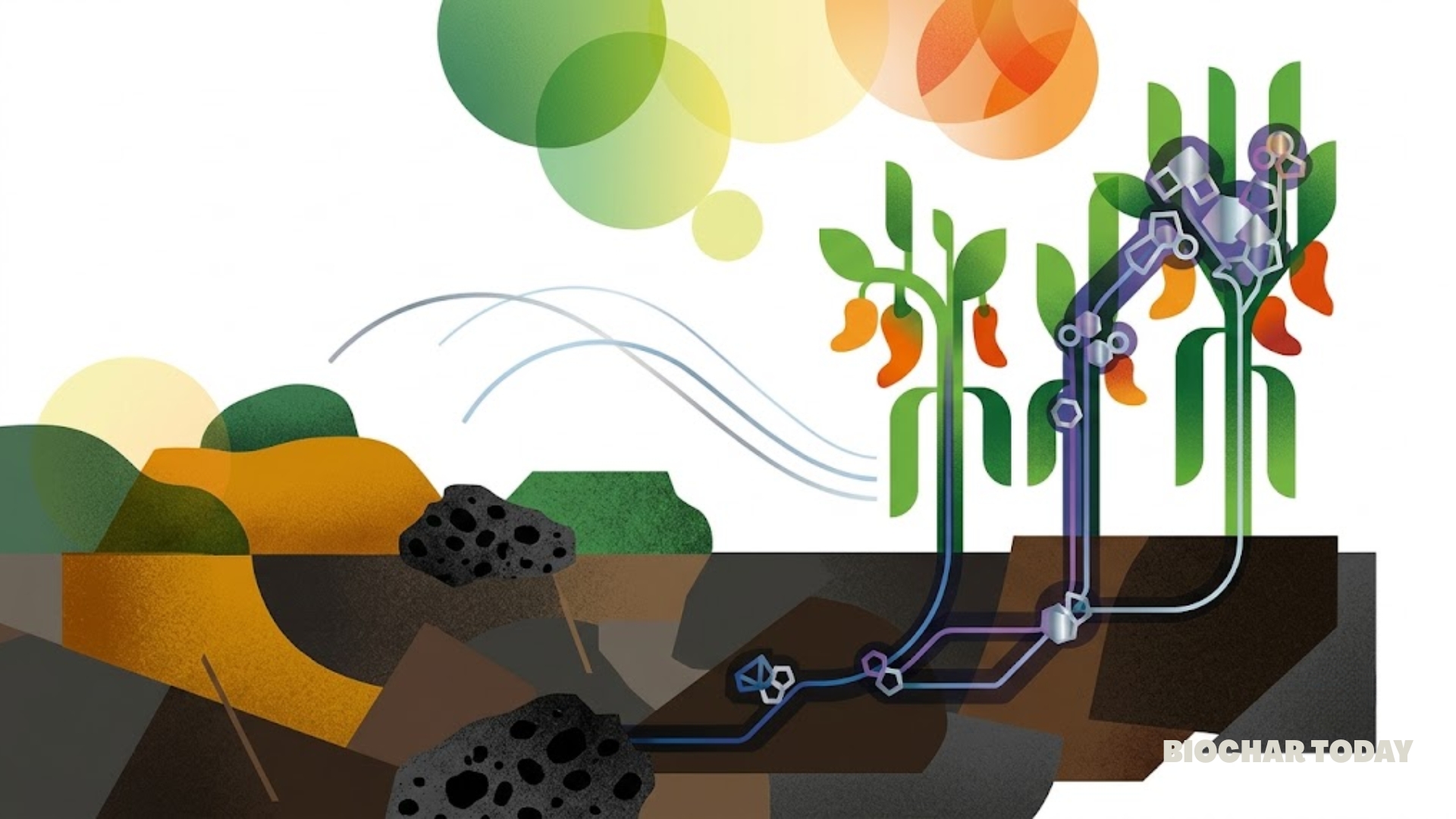
In the quest for sustainable materials and technologies, thermochemical conversion of biomassBiomass is a complex biological organic or non-organic solid product derived from living or recently living organism and available naturally. Various types of wastes such as animal manure, waste paper, sludge and many industrial wastes are also treated as biomass because like natural biomass these More has gained significant attention. Among the products of these processes are biocharBiochar is a carbon-rich material created from biomass decomposition in low-oxygen conditions. It has important applications in environmental remediation, soil improvement, agriculture, carbon sequestration, energy storage, and sustainable materials, promoting efficiency and reducing waste in various contexts while addressing climate change challenges. More and hydrochar, both carbon-rich materials with unique properties. A recent study published in the Journal of Analytical and Applied PyrolysisPyrolysis is a thermochemical process that converts waste biomass into bio-char, bio-oil, and pyro-gas. It offers significant advantages in waste valorization, turning low-value materials into economically valuable resources. Its versatility allows for tailored products based on operational conditions, presenting itself as a cost-effective and efficient More by Cognigni et al., delves into the differences and similarities between these two materials.
The study provides a comprehensive overview of biochar and hydrochar, comparing their production methods, properties, and applications. Biochar is produced through pyrolysis, a thermal decomposition process in an oxygen-free environment. This process typically occurs at higher temperatures. Hydrochar, on the other hand, is produced through hydrothermal carbonization, a process that involves heating biomass in the presence of water at lower temperatures.
The research explores the thermochemical treatments involved in the production of biochar and hydrochar, highlighting the key differences in reaction conditions. It also examines the co-occurrence of these terms in scientific literature, providing insights into the research trends and focuses in this field. The study further analyzes the physico-chemical properties of biochar and hydrochar, including their structural, elemental, and morphological characteristics. These properties are critical in determining the suitability of these materials for various applications. The review also discusses the applications of biochar and hydrochar, ranging from environmental remediation to energy storage.
This bibliographic study provides a valuable resource for understanding the nuances between biochar and hydrochar. By highlighting their differences and similarities, the research contributes to the knowledge base necessary for optimizing their production and utilization in various sustainable applications.
Source: Cognigni, P., Leonelli, C., & Berrettoni, M. (2025). A bibliographic study of biochar and hydrochar: Differences and similarities. Journal of Analytical and Applied Pyrolysis, 187, 106985.



Leave a Reply