
Key Takeaways
- BiocharBiochar is a carbon-rich material created from biomass decomposition in low-oxygen conditions. It has important applications in environmental remediation, soil improvement, agriculture, carbon sequestration, energy storage, and sustainable materials, promoting efficiency and reducing waste in various contexts while addressing climate change challenges. More acts like a sponge in dry soils, significantly increasing the amount of water available for crops to grow.
- Adding biochar to degraded land helps stick soil particles together, which prevents wind and rain from washing away valuable topsoil.
- Using biochar provides a permanent home for beneficial soil microbes, which naturally improves the health and fertility of the land.
- Biochar helps pull salt out of damaged soils, making it easier for plants to survive in harsh, salty environments.
- By burying biochar in the ground, we can safely store carbon for hundreds of years, helping to fight climate change while improving farms.
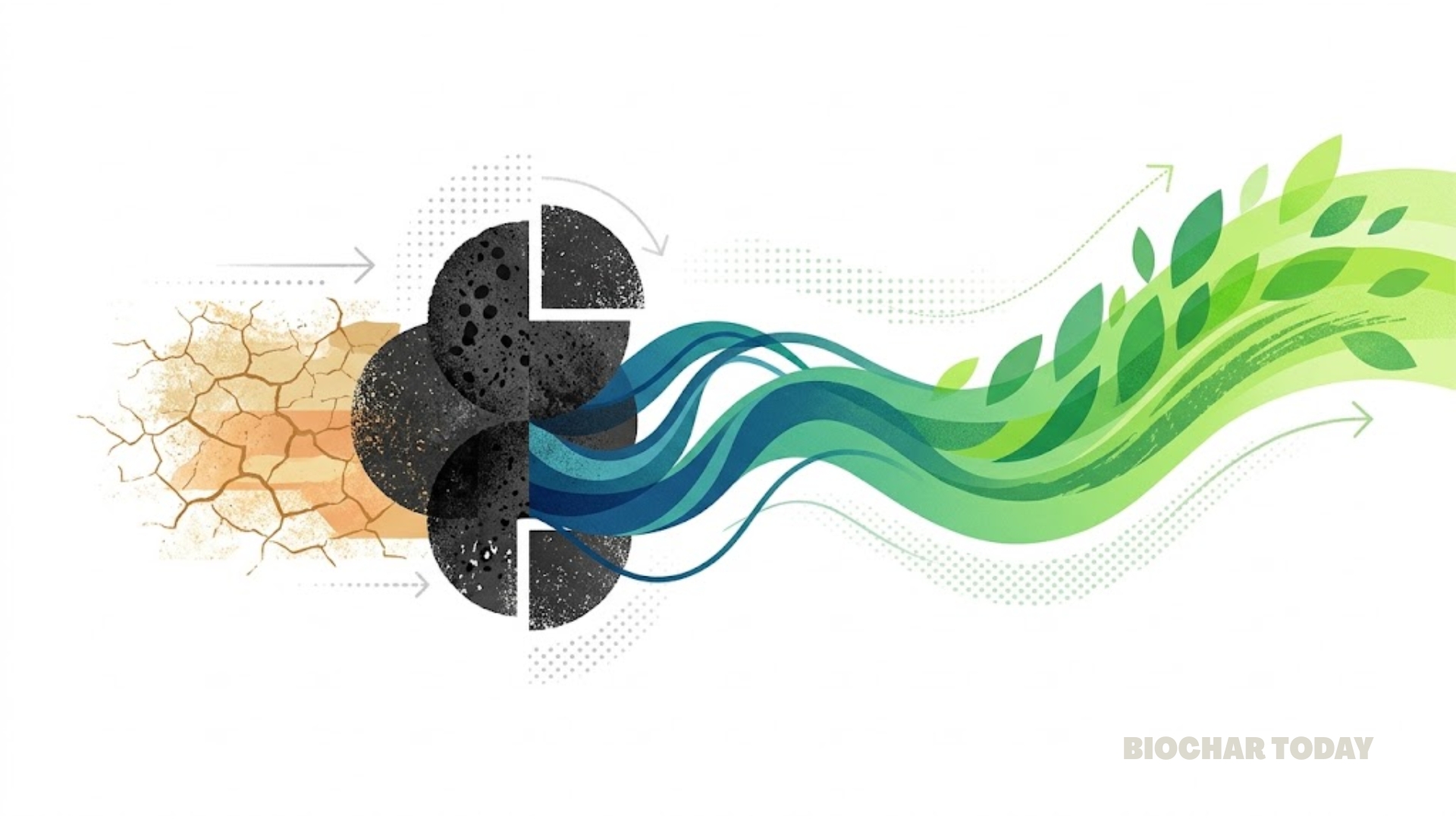
The journal Biochar recently featured a comprehensive review by authors Abdul Waheed, Qiao Xu, Dong Cui, Murad Muhammad, Hailiang Xu, Aishajiang Aili, Amannisa Kuerban, and Sajjad Ali that positions biochar as a transformative nature-based solution for arid regions. These dryland ecosystems, which cover nearly forty percent of the global land area, are currently facing severe threats from desertification and water scarcity. The researchers explored how biochar can serve as a multi-functional intervention to rehabilitate fragile soils and build agricultural resilience against climate change. By synthesizing field evidence from around the world, the study demonstrates that biochar is not just a simple amendment but a sophisticated tool for hydrological and biological restoration.
One of the most critical findings involves biochar’s ability to fundamentally change how soil manages water in thirsty landscapes. Arid soils typically suffer from high evaporation and low moisture storage, but the porous structure of biochar allows it to hold significantly more liquid in the root zone. In specific semi-arid trials, adding biochar improved soil moisture levels by twelve percent, and some models suggest improvements in plant-available water capacity can reach as high as thirty percent. This extra moisture provides a vital buffer during dry spells, allowing crops like wheat and barley to increase their yields by up to thirty-five percent even when rainfall is irregular.
Beyond water, biochar acts as a powerful chemical filter and stabilizer for nutrients. Arid soils are often nutrient-poor and prone to leachingLeaching is the process where nutrients are dissolved and carried away from the soil by water. This can lead to nutrient depletion and environmental pollution. Biochar can help reduce leaching by improving nutrient retention in the soil. More, meaning fertilizers often wash away before plants can use them. Biochar increases the soil’s ability to hold onto these nutrients by thirty to fifty percent, keeping essential elements like ammonium and potassium in the top layers of the soil where roots can reach them. This efficiency means that farmers can potentially reduce their reliance on expensive synthetic fertilizers. In fact, using biochar enriched with recycled nutrients was shown to reduce synthetic phosphorus requirements by twenty-five percent, creating a more sustainable and cost-effective circular economy for agriculture.
The review also emphasizes biochar’s role as a biological catalyst. The tiny pores within biochar fragments serve as microscopic refuges for fungi and bacteria, protecting them from the extreme heat and salt common in drylands. This habitat support can increase the total mass of living microbes in the soil by thirty to sixty percent. These thriving microbial communities are essential for healthy soil because they drive the natural processes that break down organic matter and feed plants. Furthermore, biochar specifically encourages the growth of bacteria that help plants manage salt stress and those that reduce the release of harmful greenhouse gases into the atmosphere.
Desertification control is perhaps the most visible benefit discussed in the manuscript. In areas where wind erosion strips away topsoil, biochar increases soil “stickiness” or aggregation, which reduces the amount of dust and sand moved by strong winds by up to thirty percent. By stabilizing the ground and keeping moisture in place, biochar allows native grasses and trees to re-establish themselves. Research in China showed that this restoration can increase the biomassBiomass is a complex biological organic or non-organic solid product derived from living or recently living organism and available naturally. Various types of wastes such as animal manure, waste paper, sludge and many industrial wastes are also treated as biomass because like natural biomass these More of local grass species by up to fifty percent, effectively turning barren ground back into productive green landscapes.
Finally, the study underscores the long-term climate benefits of using biochar in dryland restoration. While traditional compost and manure rot away quickly in hot climates, biochar is incredibly stable and can stay in the soil for hundreds or even thousands of years. It can sequester between fifty and seventy percent of the carbon originally found in the plants used to make it. This means that every ton of biochar buried in a dryland farm is essentially a ton of carbon removed from the atmosphere. By integrating biochar production with solar energy and precision agriculture, the researchers believe these systems can become a scalable, economically viable path toward a greener and more resilient planet.
Source: Waheed, A., Xu, Q., Cui, D., Muhammad, M., Xu, H., Aili, A., Kuerban, A., & Ali, S. (2026). Biochar as a climate-smart strategy for restoring dryland soils and mitigating desertification. Biochar, 8(59).


![Eucalyptus Wood Waste-Derived Biochar Achieves a Ninety-Eight Percent Removal Efficiency for Benzo[ghi]perylene in Vehicle-Wash Wastewater](https://biochartoday.com/wp-content/uploads/2026/10/SCIENCE-BLOGS-2026-2026-10-19T160523.703.jpg)


Leave a Reply