
Key Takeaways
- Microplastics are a major global threat found in everything from remote oceans to human drinking water.
- New materials combining charcoal-like biocharBiochar is a carbon-rich material created from biomass decomposition in low-oxygen conditions. It has important applications in environmental remediation, soil improvement, agriculture, carbon sequestration, energy storage, and sustainable materials, promoting efficiency and reducing waste in various contexts while addressing climate change challenges. More with light-activated catalysts can effectively break down these plastic particles.
- These advanced systems work by first trapping the plastic on their porous surfaces and then using sunlight to dissolve them into harmless components.
- Some versions of these materials can be easily recovered using magnets, preventing the cleaners themselves from becoming new pollution.
- Using agricultural waste to create these systems helps reduce carbon emissions while simultaneously cleaning our water.
The researchers, led by Ahmad K. Badawi, Raouf Hassan, and Bushra Ismail, published their findings in the journal RSC Advances, detailing a transformative approach to one of the most persistent environmental crises of our time. Microplastics are now ubiquitous in aquatic ecosystems, with current estimates suggesting over 51 trillion particles are circulating in global waters. These tiny synthetic fragments resist natural decay for decades, accumulating in the food chain and eventually reaching human populations through seafood and drinking water. While traditional wastewater plants can capture many particles, they still discharge billions of microplastics annually. The study highlights how biochar-supported photocatalysts represent a next-generation solution that uses the power of light to move beyond mere filtration toward complete chemical mineralization of plastic waste into harmless molecules like water and carbon dioxide.
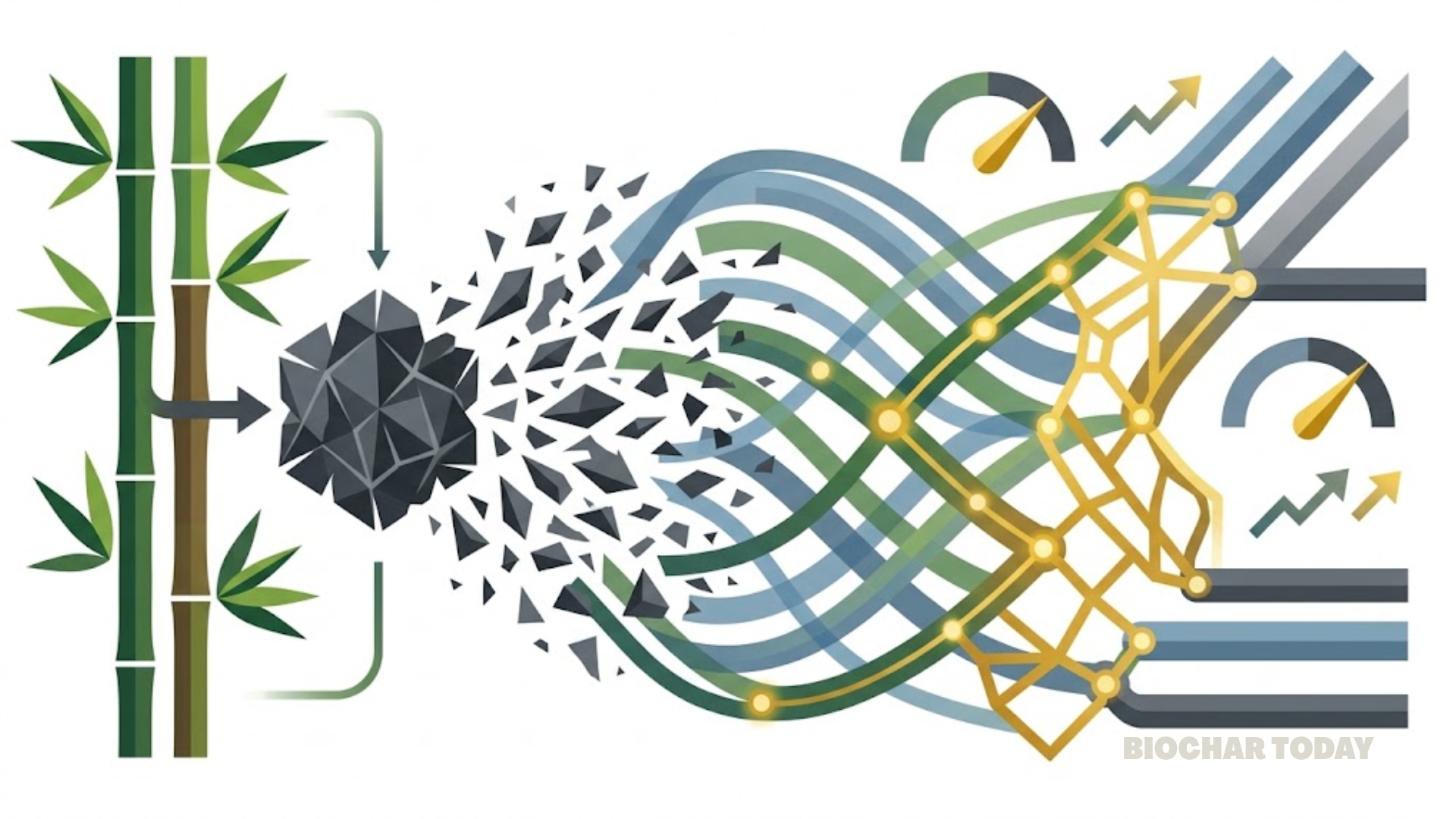
The effectiveness of these systems is rooted in a synergistic relationship where biochar acts as more than just a structural scaffold. Its high surface area and specialized chemical groups allow it to concentrate microplastics near active catalytic sites, a process the authors describe as an adsorb-and-react mechanism. For non-polar plastics like polyethylene, common in bags and bottles, the hydrophobic nature of biochar provides a strong natural attraction. For aromatic plastics like polystyrene, the carbon sheets in biochar create a molecular stacking effect that immobilizes the plastic. This close contact is essential because the reactive species generated by light have very short lifetimes and need to be in immediate proximity to the plastic chains to begin the degradation process. By anchoring the plastic, biochar ensures that the light-driven reactions are significantly more efficient than using standard catalysts alone.
Beyond just trapping the plastic, the integration of biochar solves several technical hurdles that have historically limited light-based water treatment. Conventional catalysts often suffer from a problem where the electrical charges they generate recombine too quickly, wasting the energy provided by light. In these new composite materials, biochar serves as an electron sink or a conductive highway that pulls these charges apart, extending their useful life by up to five times. This allows for the sustained generation of reactive oxygen species that attack polymer backbones. Advanced designs mentioned in the study, such as Z-scheme and S-scheme heterojunctions, further optimize this process by preserving high electrical potentials. These sophisticated architectures allow the systems to remain active under visible light, which is crucial for real-world applications where ultraviolet light may be blocked by deep or cloudy water.
The study also emphasizes the practical and economic advantages of using biochar derived from agricultural waste like rice husks, bamboo, or coconut shells. This waste-to-resource strategy creates a carbon-negative profile, meaning the process of making the catalyst actually removes more carbon dioxide from the environment than it produces. Furthermore, the researchers highlighted the success of adding magnetic components like iron oxide to the composites. This allows for nearly total recovery of the catalyst from treated water using simple magnets, addressing a major concern regarding secondary contamination. By testing different reactor designs, such as fixed-bed and membrane-integrated systems, the team showed that these materials are ready to move from laboratory prototypes to scalable engineering solutions.
Ultimately, the transition of these systems into full-scale water treatment could redefine how we manage plastic pollution. The study concludes that near-complete mineralization—over 95 percent of total organic carbon removal—is possible with optimized systems. This represents the gold standard of remediation, ensuring that microplastics are not just broken down into smaller, potentially more toxic nanoplastics, but are entirely removed from the environment. By combining materials science with circular economy principles, biochar-supported photocatalysts offer a sustainable, low-energy pathway toward achieving clean, plastic-free water.
Source: Badawi, A. K., Hassan, R., & Ismail, B. (2026). Biochar-supported photocatalysts for microplastics removal: mechanisms, material design, and pathways towards real-world applications. RSC Advances, 16(16), 17039-17062.


Leave a Reply