
Key Takeaways
- Using biocharBiochar is a carbon-rich material created from biomass decomposition in low-oxygen conditions. It has important applications in environmental remediation, soil improvement, agriculture, carbon sequestration, energy storage, and sustainable materials, promoting efficiency and reducing waste in various contexts while addressing climate change challenges. More material made from biological waste helps speed up the process of turning plant oils into useful chemicals.
- The new method works at much lower temperatures and pressures than traditional industrial techniques, saving significant energy.
- Combining two different metals on the carbon surface creates a more efficient reaction than using just one metal alone.
- The carbon support can be reused multiple times without losing its ability to drive the chemical transformation.
- This discovery provides a more sustainable way to create ingredients for plastics, fuels, and medicines from renewable farm waste.
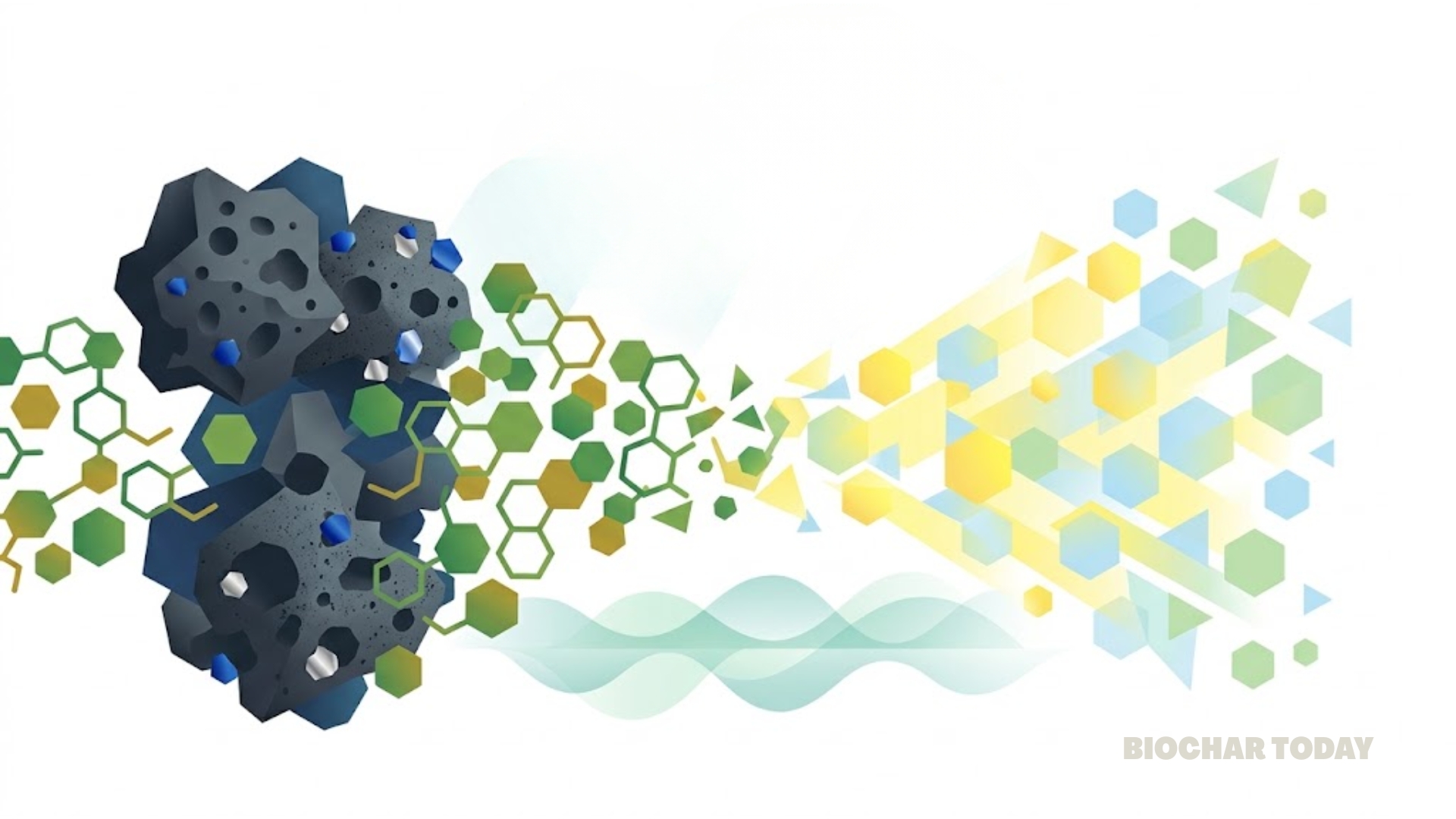
The research published in the journal Biochar by a dedicated team of scientists explores a significant advancement in the field of green chemistry and renewable energy. The study centers on the transformation of furfural, a primary byproduct of agricultural waste, into furfuryl alcohol, which is a vital building block for the production of resins, fibers, and various fine chemicals. Historically, this chemical conversion has required high energy inputs, often involving extreme temperatures and high-pressure environments that increase the carbon footprint of the manufacturing process. By utilizing an engineered biochar support derived from biomassBiomass is a complex biological organic or non-organic solid product derived from living or recently living organism and available naturally. Various types of wastes such as animal manure, waste paper, sludge and many industrial wastes are also treated as biomass because like natural biomass these More, the authors have demonstrated that it is possible to facilitate these complex reactions under much milder conditions, specifically at a temperature of only 60 degrees Celsius. This shift toward low-energy catalysis represents a critical step in making bio-based chemical production economically and environmentally competitive with petroleum-derived alternatives.
The primary finding of the study is the exceptional efficiency of the palladium-cobalt bimetallic catalyst when supported by a specially prepared biochar. The results indicate a near-total conversion of the raw material, reaching 99.1 percent, with a high degree of selectivity for the desired end product. This level of precision is attributed to the unique surface characteristics of the biochar, which acts as more than just a passive carrier for the metals. The porous structure and chemical groups on the surface of the biochar help to distribute the metal particles evenly, preventing them from clumping together and ensuring that a maximum number of active sites are available for the reaction. Furthermore, the interaction between the palladium and cobalt atoms on the carbon surface creates a synergistic effect, where the presence of the second metal enhances the overall speed and accuracy of the hydrogenation process.
A significant portion of the results highlights the functional role of the biochar support in maintaining the stability of the catalyst. In many industrial processes, catalysts lose their effectiveness over time due to the buildup of residues or the leachingLeaching is the process where nutrients are dissolved and carried away from the soil by water. This can lead to nutrient depletion and environmental pollution. Biochar can help reduce leaching by improving nutrient retention in the soil. More of metals into the surrounding liquid. However, the biochar-supported system exhibited remarkable durability, maintaining high levels of performance even after being recovered and reused in five consecutive cycles. The researchers found that the strong attachment of the metal particles to the carbon framework prevents them from washing away, which is essential for long-term industrial application. This stability, combined with the ability to operate at low pressures, suggests that this specific catalyst configuration could drastically reduce the operational costs associated with maintaining and replacing chemical processing equipment.
Beyond the immediate chemical yields, the study emphasizes the environmental benefits of using biochar as a foundational material for high-tech catalysis. Because biochar is produced from organic waste, its use in industrial chemistry contributes to a circular economy where agricultural leftovers are upcycled into high-value products. The findings suggest that the oxygen-containing groups naturally present on the biochar surface play a direct role in attracting the furfural molecules, bringing them into close contact with the active metal sites. This natural affinity reduces the amount of external energy required to force the molecules to react. The successful integration of waste-derived carbon with advanced metallic catalysts proves that sustainable materials can meet or exceed the performance of traditional, more expensive synthetic supports used in the chemical industry.
The implications of this research extend to the broader goal of decarbonizing the chemical sector. By proving that high-conversion rates are achievable under mild conditions, the study provides a roadmap for more sustainable production facilities that do not rely on fossil-fuel-intensive heating systems. The specific success of the palladium-cobalt combination on biochar serves as a model for other types of chemical transformations involving bio-based feedstocks. As industries look for ways to reduce their environmental impact, the use of tailored biochar supports offers a versatile and effective solution for developing the next generation of green catalysts. This work confirms that the thoughtful engineering of carbon materials can unlock new potentials in renewable chemistry, making the transition away from oil-based manufacturing more feasible for a wide range of global applications.
Source: Biochar-supported PdCo catalyst facilitates hydrogenation of bio-based furfural under mild conditions: the function of biochar support. (2026). Biochar, 8(49).



Leave a Reply