
Key Takeaways
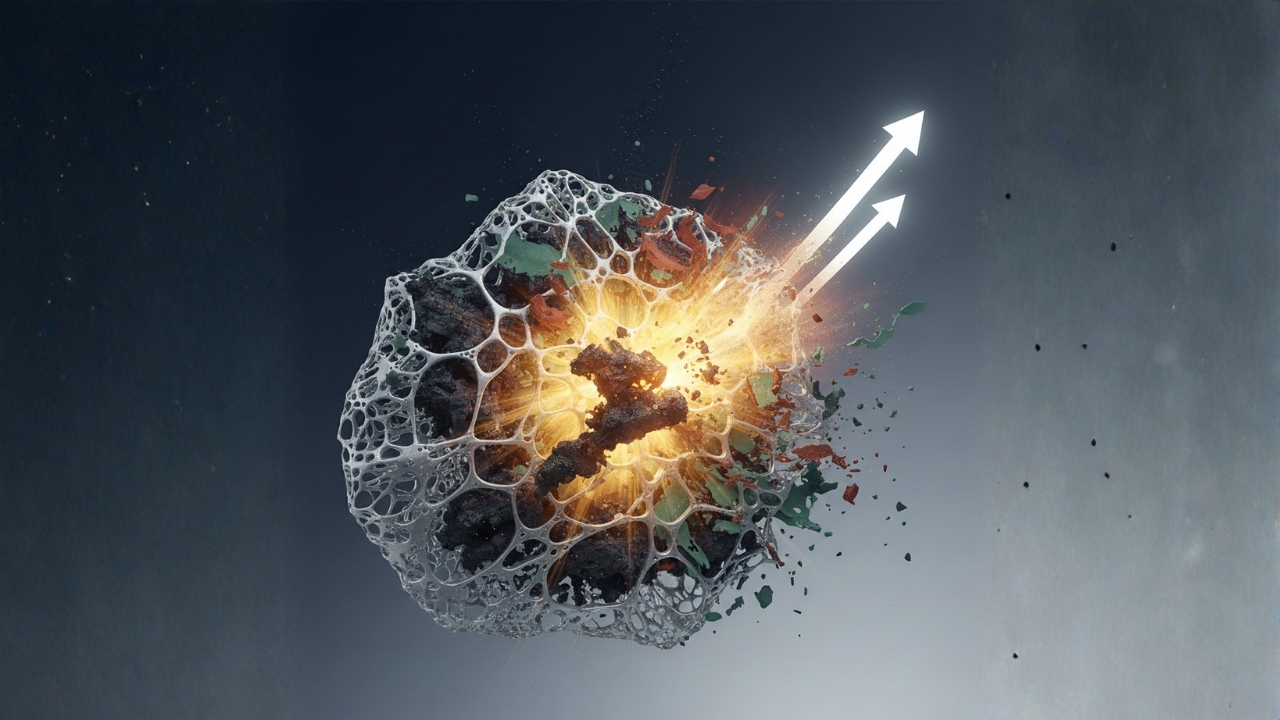
- Low concentrations of biocharBiochar is a carbon-rich material created from biomass decomposition in low-oxygen conditions. It has important applications in environmental remediation, soil improvement, agriculture, carbon sequestration, energy storage, and sustainable materials, promoting efficiency and reducing waste in various contexts while addressing climate change challenges. More (1-2 wt.%) significantly increase the corrosion resistance of closed-cell aluminum foam, with a maximum improvement of 88.8% compared to the unreinforced base composition.
- The mechanical strength, including compressive offset stress, plateau stress, and energy absorption, decreases as biochar content increases, with energy absorption dropping by up to 68.8% at 3 wt.% biochar.
- Biochar’s porous structure leads to increased foam porosityPorosity of biochar is a key factor in its effectiveness as a soil amendment and its ability to retain water and nutrients. Biochar’s porosity is influenced by feedstock type and pyrolysis temperature, and it plays a crucial role in microbial activity and overall soil health. Biochar More, which causes larger, less uniform pores and compromises structural integrity at higher concentrations (3-4 wt.%).
- The ideal microhardness of the foam sees a slight increase of 5.88% at 1 wt.% biochar, but increasing porosity at higher percentages causes wear resistance to deteriorate.
- The enhanced corrosion resistance is attributed to a “carbon barrier effect,” where the carbon-rich biochar forms a protective layer, shielding the aluminum surface from corrosive agents.
In a recent scientific reports publication titled “Effect of biochar reinforcement on the mechanical and corrosion behavior of closed-cell aluminum foams,” authors Ahmed Hassan and Ibrahim Abdullah Alnaser detail their pioneering work utilizing Conocarpus biochar to enhance the properties of lightweight aluminum foams. Aluminum foam is a material highly valued in the aerospace and automotive sectors for its combination of low density, energy absorption, and thermal properties. However, for use in harsh environments, improving its strength and corrosion resistance is crucial. This study explored the use of biochar as a reinforcement through the liquid metallurgy route, testing samples with varying weight percentages of biochar (1 wt.%, 2 wt.%, 3 wt.%, and 4 wt.%) against a base composition (AF02) optimized in a previous study.
The primary and most compelling finding of this research is the dramatic improvement in the foam’s resistance to corrosion upon the introduction of biochar. Using linear polarization to evaluate the material in a 0.5 M industrial NaCl solution, the base sample, AF02, exhibited a very high corrosion rate of 2086.04 mpy. In stark contrast, the biochar-reinforced samples showed substantially lower corrosion rates, with the best performance observed in the 1 wt.% biochar sample (AFB01). This composition showed an impressive 88.8% improvement in corrosion resistance over the base sample, with a corrosion rate of only 235.12 mpy. Even the 3 wt.% biochar sample (AFB03) showed a significant 72.2% enhancement. This anticorrosion effect is attributed to the carbon barrier effect, where the biochar’s carbon network acts as a protective shield, inhibiting the penetration of the corrosive NaCl solution to the aluminum matrix.
Despite the breakthrough in corrosion resistance, the mechanical properties showed a trade-off. The porous nature of the biochar, when incorporated, led to an increase in the overall porosity of the aluminum foam, resulting in larger and more irregular pores, which compromised the foam’s structural integrity. This was evident in the uniaxial compression tests, where the compressive properties significantly deteriorated as the biochar content increased from 1% to 3%. For the 3 wt.% biochar sample (AFB03), the compressive offset stress decreased by up to 43.4%, the plateau stress by 66.7%, and the energy absorption capacity—a vital metric for crash safety applications—dropped by a steep 68.8% compared to the high-performing base sample, AF02. The energy absorption is graphically represented by the area under the stress-strain curve, and AF02’s ability to dissipate impact energy far surpassed the biochar variants.
Microhardness measurements showed a slight initial increase, with the 1 wt.% biochar sample (AFB01) displaying a 5.88% increase in hardness compared to the base. This suggests that low biochar concentrations can, to some extent, reinforce the material without major structural compromise. However, consistent with the trend in mechanical strength, the specific wear rate increased with the percentage of biochar and corresponding increase in porosity, showing a deterioration of 39.7% for the 3 wt.% biochar sample (AFB03) compared to AF02. The study notes that excessive biochar content, such as 4 wt.% (AFB04), led to pore coalescence and cell collapse, resulting in a failed foaming region and significantly reduced foam production. This suggests that while biochar offers exciting advantages, its concentration must be carefully controlled to balance the increase in corrosion resistance and marginal microhardness enhancement against the substantial loss in compressive strength. Overall, the research successfully establishes Conocarpus biochar as a sustainable and effective reinforcement for enhancing the corrosion resistance of aluminum foam, but highlights the necessity for further optimization to mitigate the detrimental effects on mechanical stability, perhaps through hybrid reinforcement strategies. The use of locally sourced Conocarpus biochar also offers a cost-effective and environmentally responsible solution for future engineering applications.
SOURCE: Hassan, A., & Alnaser, I. A. (2025). Effect of biochar reinforcement on the mechanical and corrosion behavior of closed-cell aluminum foams. Scientific Reports, 15(41444).



Leave a Reply