

Key Takeaways
- Applying biocharBiochar is a carbon-rich material created from biomass decomposition in low-oxygen conditions. It has important applications in environmental remediation, soil improvement, agriculture, carbon sequestration, energy storage, and sustainable materials, promoting efficiency and reducing waste in various contexts while addressing climate change challenges. More to farmland significantly lowers soil density, which helps improve the overall structure and health of the ground.
- In long-term farming scenarios, the density of the soil can decrease by more than eleven percent after five years of consistent biochar use.
- Using real measurements from actual farms is more accurate for calculating carbon storage than using theoretical mathematical formulas.
- These findings confirm that biochar is a reliable tool for trapping carbon in the soil and helping to fight climate change.
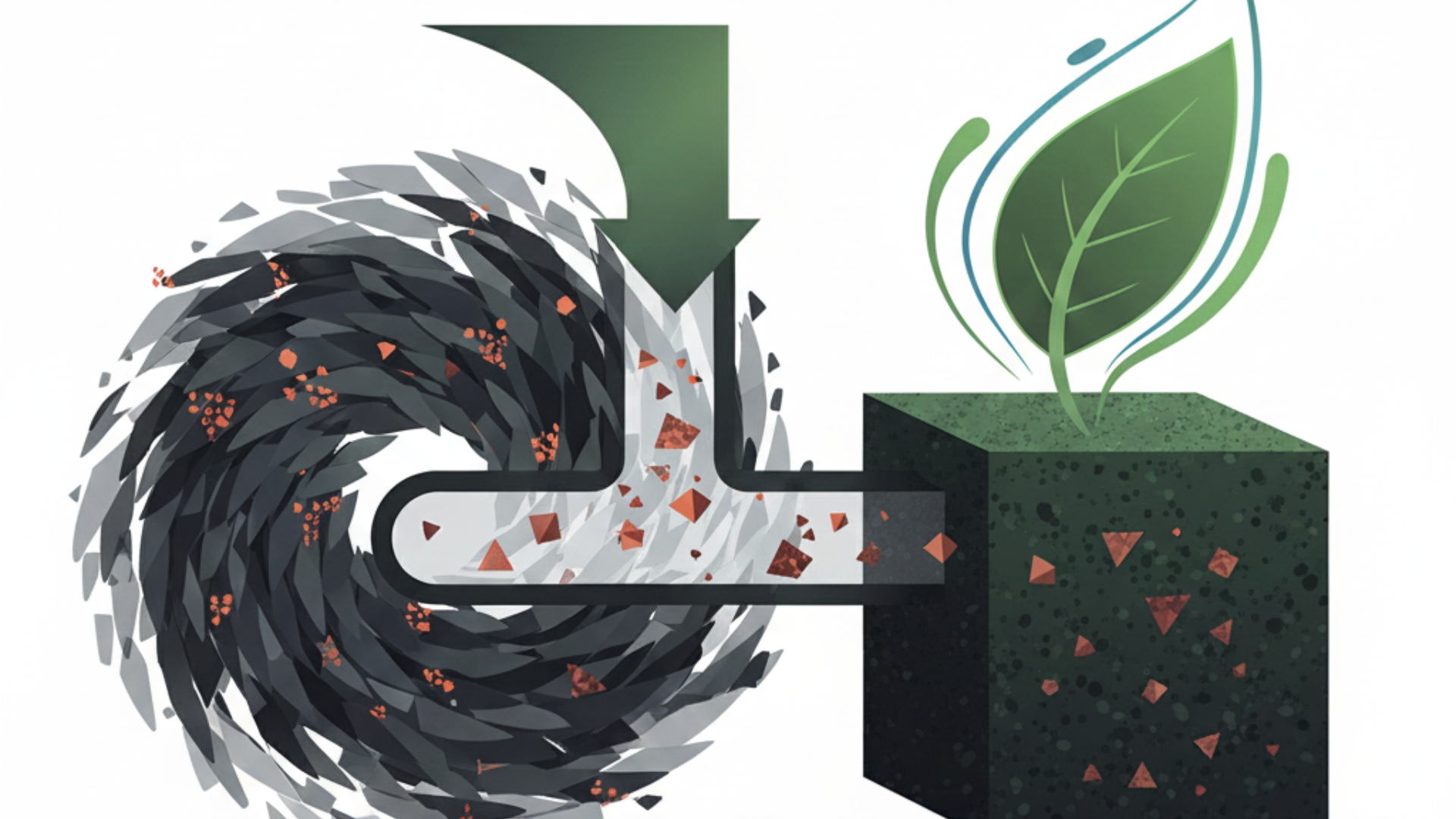
The study of how we manage our planet’s soil is becoming increasingly vital as the global community seeks effective ways to remove carbon dioxide from the atmosphere. One of the most promising tools in this effort is biochar by heating organic waste material in a low-oxygen environment. When added to farmland, biochar does not just sit there; it fundamentally changes the physical properties of the earth. A recent study published in the journal PNAS by Jingrui Yang and a team of international researchers explores how these physical changes, specifically in soil bulk density, support the high potential of biochar for sequestering carbon. By analyzing real-world data from various agricultural sites, the authors address how biochar helps the soil become less compact and more porous over time.
The researchers focused on soil bulk density because it is a critical measure of how much space exists between soil particles for air and water to move. Their findings show a clear and significant decrease in bulk density across different types of agricultural environments. In paddy fields, which are typically flooded for rice production, the bulk density decreased by an average of 7.1 percent. In upland soils, which are used for crops like corn or wheat, the reduction was even more pronounced at 8.3 percent. These results indicate that biochar makes the soil lighter and less dense, which is generally beneficial for root growth and water retention.
One of the most compelling aspects of the research is the impact of long-term application. The data revealed that the benefits of biochar do not fade away but actually intensify as the years pass. For agricultural sites where biochar was applied continuously for more than five years, the reduction in soil bulk density reached 11.0 percent in paddy soils and 11.3 percent in upland soils. This long-term trend is crucial because it suggests that the physical improvements to the soil structure are sustained and even improve with time, reinforcing the idea that biochar is a viable long-term strategy for soil health and carbon management.
The study also emphasizes the importance of using actual field measurements rather than relying on idealized mathematical models. The authors found that theoretical equations often fail to capture the complexity of real-world soil systems. For example, in paddy fields, theoretical models tended to overestimate how much the density would drop, while in upland fields, the models underestimated the change. These discrepancies matter because bulk density is a key variable used to calculate how much carbon is being stored in the ground. If the density measurement is wrong, the estimate of how much carbon we are keeping out of the atmosphere will also be incorrect.
Several natural factors explain why real-world results differ from simple theory. Over time, biochar particles can break down into tiny pieces that move through the soil or settle into existing pores. Conversely, biochar can encourage soil particles to clump together into larger aggregates, which naturally reduces the overall density of the ground. These biological and physical interactions are complex and vary depending on whether the soil is clay-heavy, loamy, or sandy. By using a vast dataset of measured values from peer-reviewed studies, the researchers were able to show that biochar’s impact is robust across these different conditions.
Ultimately, the research confirms that biochar is doing exactly what scientists hoped it would do: improving the physical structure of the soil while providing a stable home for carbon. The significant and sustained drop in soil density serves as strong evidence that biochar can help turn agricultural lands into effective carbon sinks. By moving away from idealized calculations and focusing on what is actually happening in the dirt, this study provides a more accurate and optimistic picture of our ability to mitigate climate change through smart land management. It reinforces the necessity of empirical evidence in climate science and highlights biochar as a cornerstone of sustainable agriculture.
Source: Yang, J., van Groenigen, K. J., Meng, J., Yan, X., & Xia, L. (2026). Reply to Sun: Real-world bulk density changes support high carbon sequestration potential of biochar. Proceedings of the National Academy of Sciences, 123(2), e2533070123.


Leave a Reply