
Key Takeaways
- Adding biocharBiochar is a carbon-rich material created from biomass decomposition in low-oxygen conditions. It has important applications in environmental remediation, soil improvement, agriculture, carbon sequestration, energy storage, and sustainable materials, promoting efficiency and reducing waste in various contexts while addressing climate change challenges. More to cement mixes significantly increases their ability to conduct electricity for better building monitoring.
- Biochar acts as a protective home for specialized bacteria that can automatically fix cracks in concrete structures.
- Using biochar in construction materials helps trap carbon and reduces the overall environmental footprint of new buildings.
- Smart cement containing biochar can sense its own internal stress and strain without the need for expensive external sensors.
- Concrete treated with biochar-supported bacteria can heal wide cracks within eight weeks when exposed to moisture.
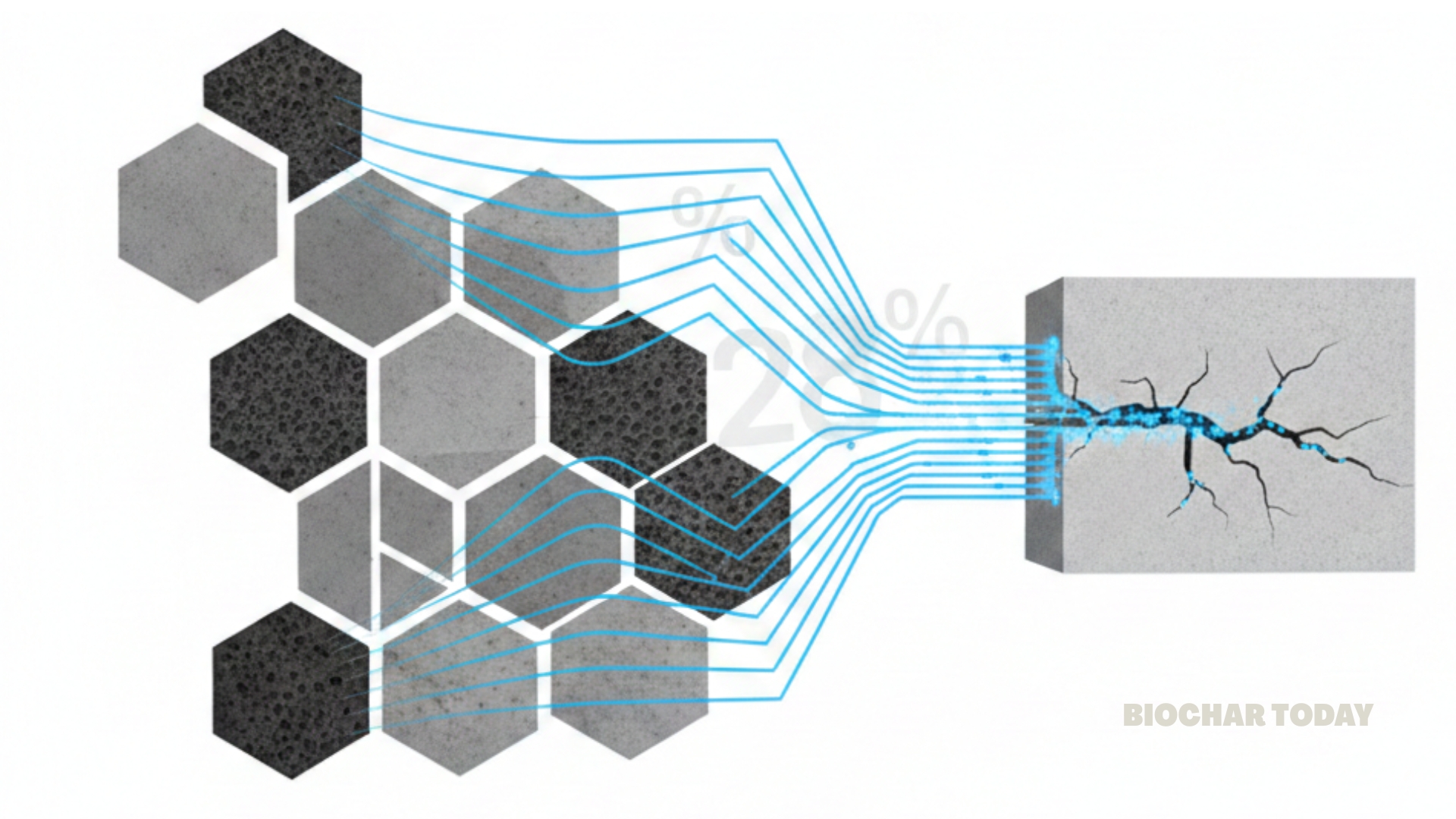
The application of biochar in modern construction is the focus of a comprehensive review published in the journal Procedia Structural Integrity by authors Amandeep Singh Sidhu, Flora Faleschini, and Michele Secco. Their research examines how this carbon-rich material, typically used for soil improvement, is now transforming the way engineers design and maintain buildings. Traditional cement is essentially an electrical insulator, which makes it difficult for engineers to monitor the health of a structure in real-time without installing a vast array of external sensors. By introducing biochar as a partial replacement for cement, researchers have successfully created a composite material that is both conductive and capable of sensing internal damage.
The fundamental challenge in modern infrastructure is the inherent brittleness and low conductivity of cementitious materials. Standard concrete cannot easily signal when it is under excessive stress or when micro-cracks begin to form deep within a structure. Furthermore, once cracks do form, they often require expensive and labor-intensive manual repairs that may not always be effective over the long term. Environmental factors and the natural aging of materials lead to degradation that can compromise safety if not detected and addressed early. Scientists have long sought a low-cost, sustainable additive that could provide both self-sensing capabilities and a mechanism for autonomous repair without sacrificing the mechanical strength of the building.
The solution presented in this research involves the strategic use of biochar as a multifunctional additive within the cement matrix. Biochar possesses a high carbon content and a unique porous structure that serves two distinct purposes. First, the carbon particles create a conductive network throughout the cement, allowing the material to function as a giant sensor that experiences measurable changes in electrical resistance when stressed. Second, the porous nature of biochar makes it an ideal carrier for self-healing agents, such as specialized bacteria. These microbes are protected within the biochar pores from the harsh, high-alkaline environment of the cement, remaining dormant until a crack occurs and moisture enters the system to trigger their healing activity.
Results from various experiments highlight the significant impact of this technology on structural performance. Studies showed that adding as little as five to ten percent biochar can reduce the electrical resistance of cement paste by nearly thirty percent. In more advanced applications where biochar was specially treated, conductivity increased by millions of times compared to standard mixes. Regarding self-repair, biochar-immobilized bacteria successfully filled cracks as wide as 0.8 millimeters, significantly outperforming methods where bacteria were added directly to the mix. These biochar-based composites also demonstrated an impressive ability to recover their original strength after healing, with some samples regaining more than 100 percent of their initial compressive capacity.
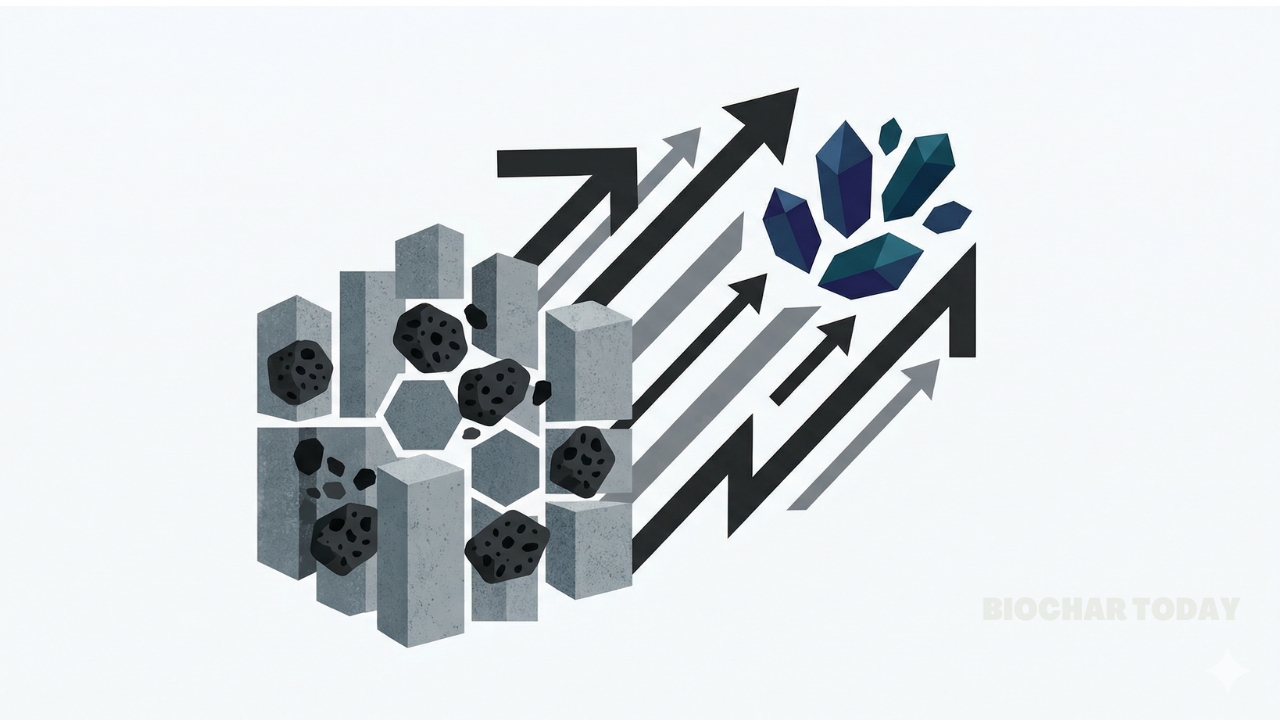
This innovative use of biochar represents a major step forward in creating a more resilient and sustainable built environment. By utilizing a carbon-negative material to replace a portion of traditional cement, the construction industry can lower its carbon footprint while simultaneously extending the lifespan of its structures. The ability of biochar to provide real-time health data and autonomous repair capabilities reduces the need for frequent manual inspections and costly maintenance cycles. As research continues to refine these applications, biochar-enhanced cement could become a standard component of smart cities, offering a practical and environmentally friendly approach to infrastructure management.
Source: Sidhu, A. S., Faleschini, F., & Secco, M. (2026). A Review on the Application of Biochar as a Self-Sensing and Self-Healing Additive in the Cementitious Composites. Procedia Structural Integrity, 78, 1871-1878.



Leave a Reply