
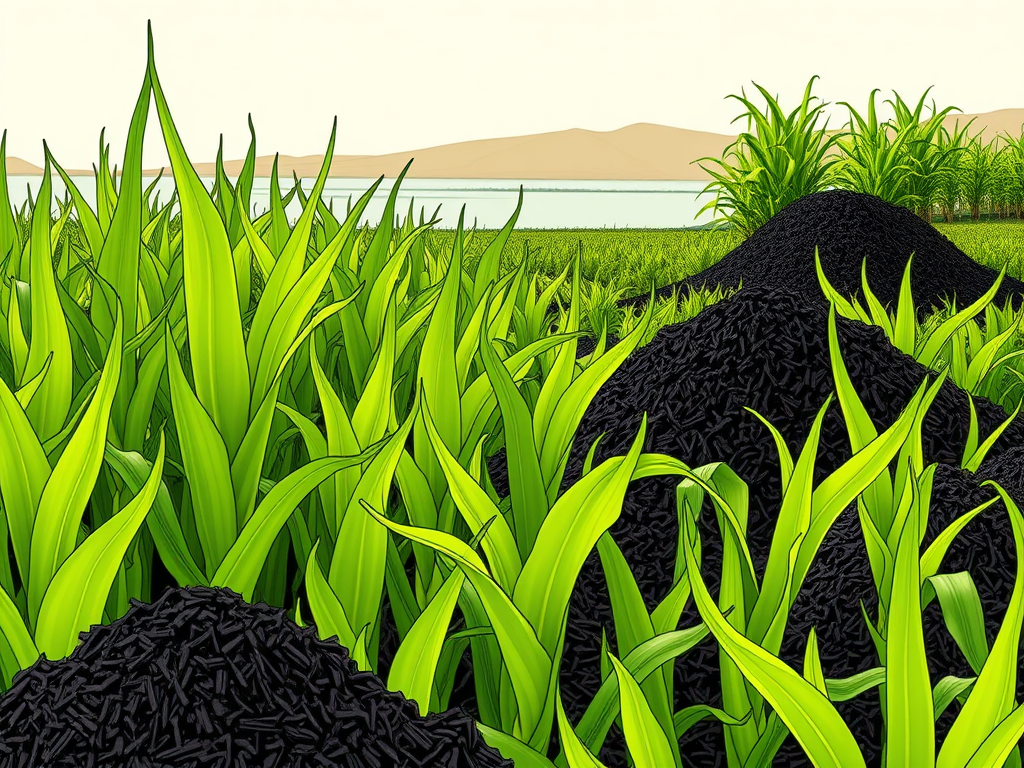
A recent study published in the Journal of Agriculture and Food Research investigated the use of water hyacinth biocharBiochar is a carbon-rich material created from biomass decomposition in low-oxygen conditions. It has important applications in environmental remediation, soil improvement, agriculture, carbon sequestration, energy storage, and sustainable materials, promoting efficiency and reducing waste in various contexts while addressing climate change challenges. More (WHB) in combination with inorganic fertilizers to improve soil properties and maize yield in the Northwestern Ethiopian Highlands. The research found that applying WHB significantly improved soil physicochemical properties and increased maize grain yield by up to 33.6% when combined with half the recommended rate of inorganic fertilizers.
The research addressed the critical challenges faced by Ethiopian agriculture, where soil acidity and nutrient depletion severely limit crop production. This study focused on water hyacinth, an abundant aquatic weed in Lake Tana, Ethiopia, as the feedstockFeedstock refers to the raw organic material used to produce biochar. This can include a wide range of materials, such as wood chips, agricultural residues, and animal manure. More for biochar production. The researchers hypothesized that transforming this problematic weed into a valuable soil amendmentA soil amendment is any material added to the soil to enhance its physical or chemical properties, improving its suitability for plant growth. Biochar is considered a soil amendment as it can improve soil structure, water retention, nutrient availability, and microbial activity. More could offer a dual benefit: controlling its spread and enhancing agricultural productivity. Field experiments were conducted over two growing seasons, evaluating the impact of different WHB application rates (0, 5, 10, and 20 tons per hectare) in conjunction with half and full recommended rates of inorganic fertilizers. The results demonstrated that WHB significantly improved soil physicochemical properties, regardless of the fertilizer rate. Notably, WHB application reduced soil bulk density, increased porosityPorosity of biochar is a key factor in its effectiveness as a soil amendment and its ability to retain water and nutrients. Biochar’s porosity is influenced by feedstock type and pyrolysis temperature, and it plays a crucial role in microbial activity and overall soil health. Biochar More, and raised soil pHpH is a measure of how acidic or alkaline a substance is. A pH of 7 is neutral, while lower pH values indicate acidity and higher values indicate alkalinity. Biochars are normally alkaline and can influence soil pH, often increasing it, which can be beneficial More, effectively mitigating soil acidity. Furthermore, the study revealed a significant boost in maize grain yield with the combined application of WHB and inorganic fertilizers. This yield enhancement underscores the synergistic effect of biochar and inorganic fertilizers in improving soil fertility and supporting plant growth.
In addition to yield increases, the study also highlighted the positive impact of WHB on nitrogen use efficiency. This finding suggests that WHB can help optimize fertilizer use, reducing environmental pollution and input costs. The study’s findings support the adoption of integrated soil management strategies that combine biochar with inorganic fertilizers to achieve sustainable increases in crop production and improved soil health.
SOURCE: Gezahegn, A., Selassie, Y. G., Agegnehu, G., Addisu, S., Mihretie, F. A., Kohira, Y., Lewoyehu, M., & Sato, S. (2025). Synergistic effects of aquatic weed biochar and inorganic fertilizer on soil properties, maize yield, and nitrogen use efficiency on Nitisols of Northwestern Ethiopian Highlands. Journal of Agriculture and Food Research, 21, 101939.





Leave a Reply