

Key Takeaways
- Invasive weeds like Crotalaria burhia can be converted into high-performing, sustainable biocharBiochar is a carbon-rich material created from biomass decomposition in low-oxygen conditions. It has important applications in environmental remediation, soil improvement, agriculture, carbon sequestration, energy storage, and sustainable materials, promoting efficiency and reducing waste in various contexts while addressing climate change challenges. More for cleaning municipal wastewater.
- Just four hours of contact time with the biochar significantly reduced organic pollutants and total coliforms.
- The treatment improved the water’s suitability for irrigation by substantially lowering the Sodium Adsorption Ratio.
- C. burhia biochar consistently demonstrated the best efficiency compared to C. gigantea and T. purpurea.
- This approach offers a cost-effective, dual-benefit solution for managing invasive species and enhancing water reuse in water-scarce regions.
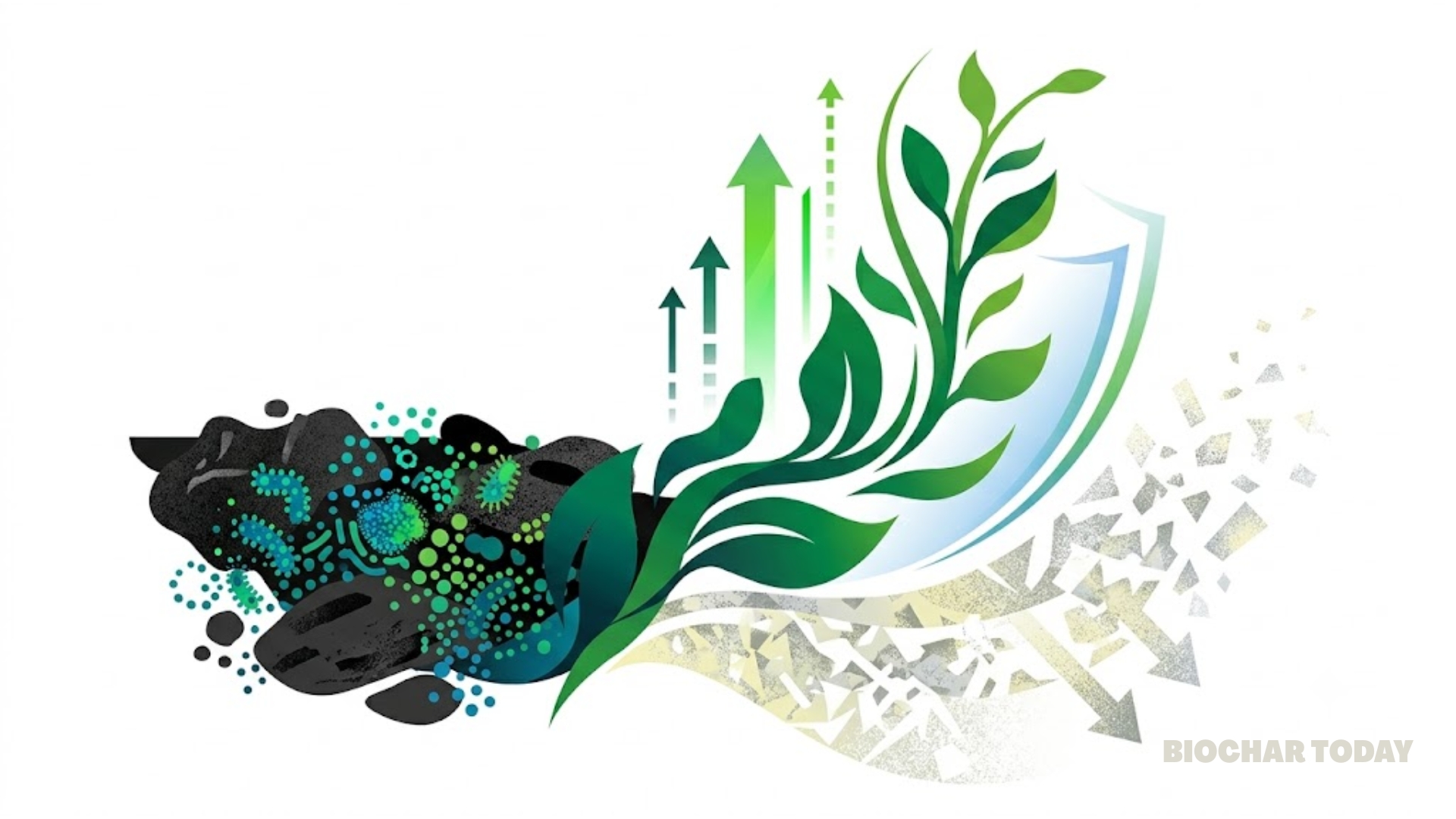
The global challenge of managing agricultural waste and treating wastewater finds a potential solution in the conversion of invasive weeds into biochar, as detailed in a recent article in Scientific Reports by Poonia, Gaur, Parihar, and colleagues. The study investigated biochars derived from three invasive weed species—Calotropis gigantea, Crotalaria burhia, and Tephrosia purpurea—for their effectiveness in cleaning municipal wastewater in Jodhpur, India.
The biochars were produced through pyrolysisPyrolysis is a thermochemical process that converts waste biomass into bio-char, bio-oil, and pyro-gas. It offers significant advantages in waste valorization, turning low-value materials into economically valuable resources. Its versatility allows for tailored products based on operational conditions, presenting itself as a cost-effective and efficient More at 450°C, yielding 31% for C. gigantea, 33.23% for C. burhia, and 30.18% for T. purpurea. Analysis showed that these biochars had a high fixed carbon content, and low O/C atomic ratios, which indicate good stability. The structure of the materials, as examined by FESEM, showed that C. burhia biochar had a highly porous, honeycomb-like structure that was well-preserved, suggesting a high surface area suitable for adsorption. This structural integrity, combined with its high carbon content of 70.21% and unique elemental composition, contributed to its superior performance.
When treating municipal wastewater, C. burhia consistently showed the highest efficiency among the three biochars. After just four hours of residence timeResidence time refers to the duration that the biomass is heated during the pyrolysis process. The residence time can influence the properties of the biochar produced. More, the C. burhia biochar reduced COD and BOD, significantly outperforming C. gigantea and T. purpurea. The dissolved oxygen (DO) levels, which were low in the untreated wastewater, increased with C. burhia treatment, indicating an overall improvement in water quality. Beyond organic pollutants, C. burhia also achieved reduction in total coliform counts, addressing the microbial contamination issue.
A critical finding for water reuse in agriculture was the impact on the Sodium Adsorption Ratio (SAR), a measure that indicates the risk of soil sodification. The SAR of the untreated municipal wastewater was high, suggesting potential risks for irrigation. Treatment with C. burhia reduced the SAR to a value below 10, moving the water into the category of excellent quality with low sodium content for agricultural irrigation standards. The other biochars also showed substantial reductions, with C. gigantea and T. purpurea. The reduction in SAR is primarily due to the biochar’s ion exchange capacity, where it adsorbs sodium ions while releasing beneficial calcium and magnesium ions.
The removal of pollutants occurs through a combination of mechanisms. The initial phase of treatment (around four hours) is dominated by rapid adsorption due to the biochar’s porous structure and functional groups, like hydroxyl and carbonyl. This surface chemistry allows for strong interactions, including hydrogen bonding, π−π interactions, and electrostatic attraction, with organic contaminants. For microbial pathogens like coliforms, the porous structure facilitates physical filtration and adsorption of bacterial cells onto the negatively charged biochar surface. However, the study also revealed that prolonged contact times beyond the four to six-hour peak led to a decline in removal efficiency, often resulting in the leachingLeaching is the process where nutrients are dissolved and carried away from the soil by water. This can lead to nutrient depletion and environmental pollution. Biochar can help reduce leaching by improving nutrient retention in the soil. More of fine biochar particles or dissolved organic carbon back into the water, highlighting the importance of optimizing the treatment contact duration.
Overall, the investigation confirms that biochars derived from invasive weeds offer a sustainable, low-cost alternative to conventional adsorbents. C. burhia biochar emerged as the most promising material, demonstrating the best balance of high carbon content, structural integrity, and pollutant removal efficiency across a range of critical parameters. This approach not only cleans municipal wastewater for safe reuse in water-scarce areas but also addresses the ecological and management challenges posed by the invasive species themselves.
Source: Poonia, P., Gaur, L., Parihar, S., Jadhav, R., Solanki, V. S., Annu, Zairov, R., Fulekar, M. H., & Yadav, V. K. (2025). Biochar from invasive weeds for enhanced removal of organic pollutants and pathogens from municipal wastewater. Scientific Reports.



Leave a Reply