
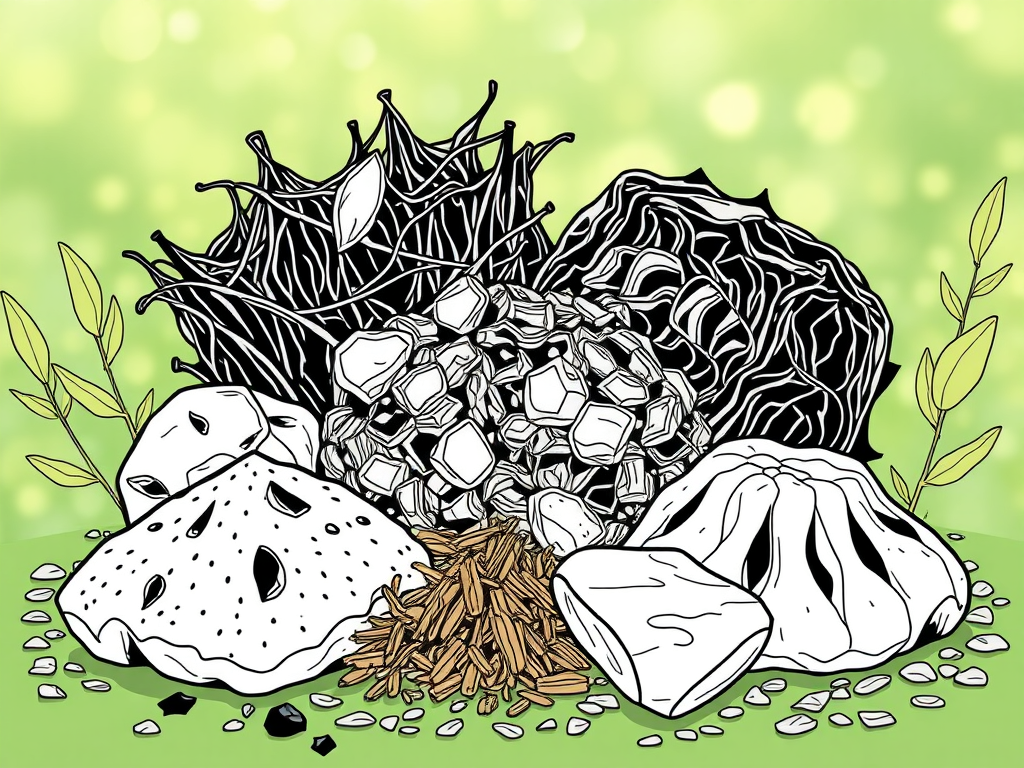
In a recent study published in the Journal of Analytical and Applied PyrolysisPyrolysis is a thermochemical process that converts waste biomass into bio-char, bio-oil, and pyro-gas. It offers significant advantages in waste valorization, turning low-value materials into economically valuable resources. Its versatility allows for tailored products based on operational conditions, presenting itself as a cost-effective and efficient More, Andrej Šáner and colleagues investigated the production of biocharBiochar is a carbon-rich material created from biomass decomposition in low-oxygen conditions. It has important applications in environmental remediation, soil improvement, agriculture, carbon sequestration, energy storage, and sustainable materials, promoting efficiency and reducing waste in various contexts while addressing climate change challenges. More from the fibrous residue of green biorefineries, with a focus on its potential for animal feed and technical applications. Green biorefineries aim to produce sustainable protein feed from grasses and legumes, generating a high-fiber byproduct called press-cake. This research explored converting this press-cake into biochar through slow pyrolysis.
The study examined biochar production from grass-clover and lucerne at pyrolysis temperatures of 400, 600, and 800 °C. A key aspect of the research was the detailed characterization of the produced biochar. Elemental composition, FTIR (Fourier-transform infrared spectroscopy), and XPS (X-ray photoelectron spectroscopy) analyses showed that the biochars from different sources exhibited similar overall chemical and structural features. Crucially, the levels of organic contaminants, including harmful substances like polychlorinated biphenyls (PCBs) and polycyclic aromatic hydrocarbons (PAHs), were found to be below the legal limits for feed applications. This is a vital finding for the potential use of this biochar as an animal feed supplement.
The results showed that biochar yields decreased from 32 wt% at 400°C to 22 wt% at 800°C. The biochars had high carbon content (above 60 wt%) and low levels of organic contaminants, such as polychlorinated biphenyls and polycyclic aromatic hydrocarbons, below legal limits. While the biochars had low adsorption capacity towards methylene blue (less than 12 mg/g), their high carbon content suggests potential for carbon activation.
This research indicates that biochar from herbaceous fiber residue is a promising resource for animal feed and technical applications, contributing to the sustainability of green biorefineries.
SOURCE: Šáner, A., Ambye-Jensen, M., Ceccato, M., Smith, A. M., Jensen, S. K., & Vorkamp, K. (2025). Biochar produced from bio-refined herbaceous fibre residue for feed and technical purposes. Journal of Analytical and Applied Pyrolysis, 187, 107004.S


Leave a Reply