
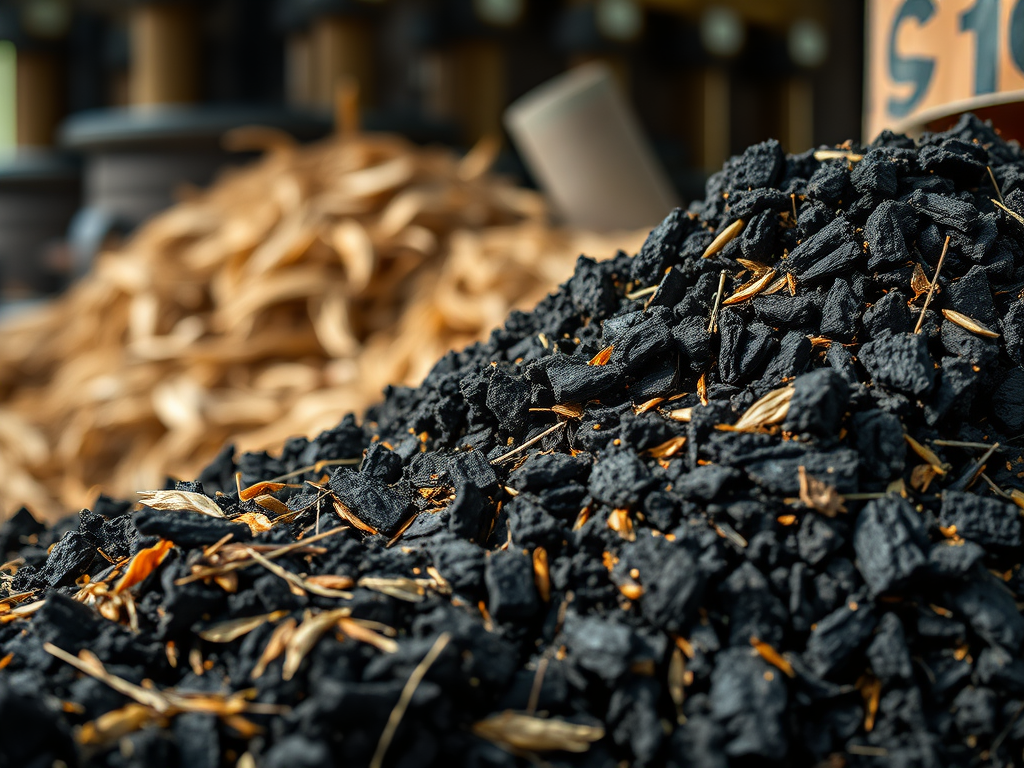
Kwoczynski et al.,in BiomassBiomass is a complex biological organic or non-organic solid product derived from living or recently living organism and available naturally. Various types of wastes such as animal manure, waste paper, sludge and many industrial wastes are also treated as biomass because like natural biomass these More Conversion and Biorefinery, explored the potential of converting wheat dust and rapeseed scrap, two abundant agricultural wastes, into biocharBiochar is a carbon-rich material created from biomass decomposition in low-oxygen conditions. It has important applications in environmental remediation, soil improvement, agriculture, carbon sequestration, energy storage, and sustainable materials, promoting efficiency and reducing waste in various contexts while addressing climate change challenges. More for use as a soil amendmentA soil amendment is any material added to the soil to enhance its physical or chemical properties, improving its suitability for plant growth. Biochar is considered a soil amendment as it can improve soil structure, water retention, nutrient availability, and microbial activity. More and as an adsorbent. The researchers produced biochar from these waste products through pyrolysisPyrolysis is a thermochemical process that converts waste biomass into bio-char, bio-oil, and pyro-gas. It offers significant advantages in waste valorization, turning low-value materials into economically valuable resources. Its versatility allows for tailored products based on operational conditions, presenting itself as a cost-effective and efficient More and then steam-activated it to enhance its properties. They conducted a thorough characterization of the biochar, analyzing its structure, porosityPorosity of biochar is a key factor in its effectiveness as a soil amendment and its ability to retain water and nutrients. Biochar’s porosity is influenced by feedstock type and pyrolysis temperature, and it plays a crucial role in microbial activity and overall soil health. Biochar More, specific surface area, and composition of bound functional groups, nutrients, and toxic elements.
The study found that rapeseed scrap biochar was particularly rich in nutrients, making it suitable for direct use as a soil amendment. On the other hand, wheat dust biochar, with its high surface area and porous structure, showed promise as an adsorbent, especially after activation. The researchers highlighted that using these biochars could contribute to a circular economy, reduce pollution, improve soil properties, and decrease the reliance on industrial fertilizers and adsorbents.
The research draws attention to the potential of biochar in sustainable agriculture and environmental protection. Biochar can improve soil health by increasing water retention, aeration, and nutrient availability. As an adsorbent, it can effectively remove pollutants from water and soil, offering a sustainable alternative to conventional, often more expensive and less environmentally friendly materials.
This study underscores the importance of finding value in waste streams and provides a compelling example of how agricultural by-products can be transformed into valuable resources. By exploring the diverse applications of biochar, we can move towards a more sustainable and circular economy, mitigating waste and promoting environmental stewardship.
Source: Kwoczynski, Z., Burdová, H., Al Souki, K. S., & Čmelík, J. (2025). Wheat dust and extracted rapeseed scrap biochar: A comprehensive characterization and assessment of potential utilization in the context of the circular economy. Biomass Conversion and Biorefinery, 1-14. https://doi.org/10.1007/s13399-025-06524-6

Leave a Reply