
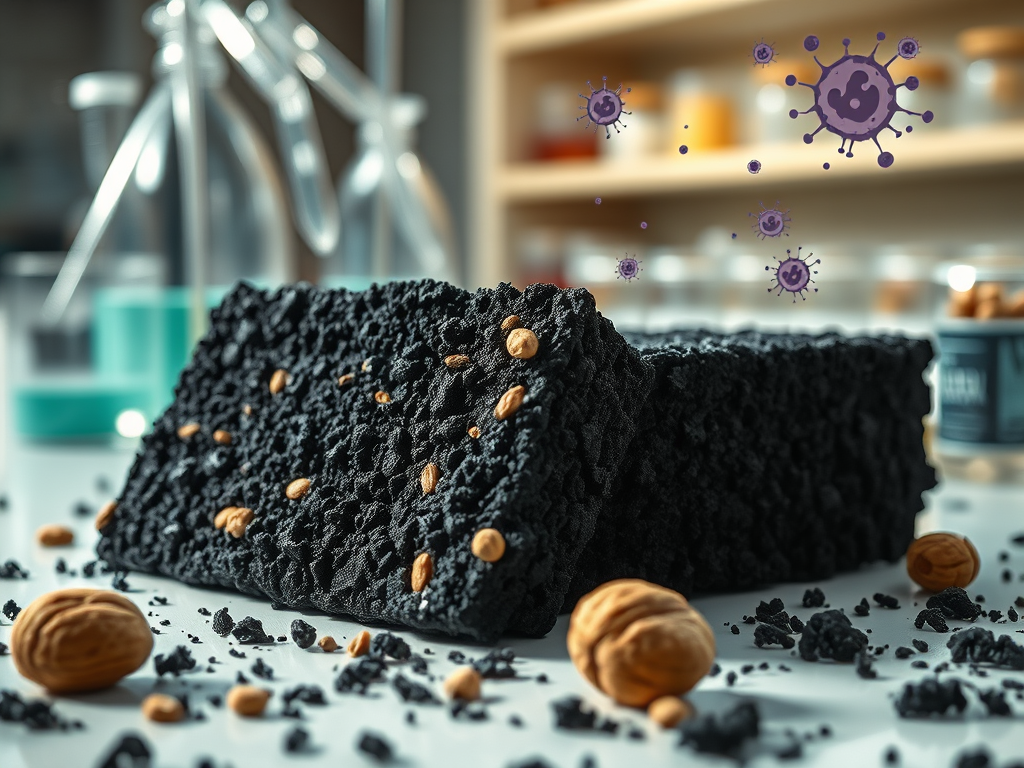
A recent study published in Scientific Reports highlights biochar’s potential in mitigating antimicrobial resistance (AMR), a global health crisis causing over 1.27 million deaths annually. Researchers explored the effectiveness of biocharBiochar is a carbon-rich material created from biomass decomposition in low-oxygen conditions. It has important applications in environmental remediation, soil improvement, agriculture, carbon sequestration, energy storage, and sustainable materials, promoting efficiency and reducing waste in various contexts while addressing climate change challenges. More produced from walnut shells under controlled pyrolysis conditionsThe conditions under which pyrolysis takes place, such as temperature, heating rate, and residence time, can significantly affect the properties of the biochar produced. More in filtering multidrug-resistant (MDR) bacteria and active pharmaceutical ingredients (APIs) from wastewater.
The study found that biochar’s adsorption efficiency significantly depends on its production conditions. Walnut shell biochar, pyrolyzed at 450°C, removed up to 94% of Pseudomonas aeruginosa and 85% of Staphylococcus aureus. Moreover, this biochar effectively adsorbed APIs such as clarithromycin, with removal rates reaching 88%. These results demonstrate biochar’s dual capacity to target environmental AMR by reducing both resistant bacteria and the selective pressures exerted by APIs in wastewater.
The research also unveiled that alkaline pretreatment of biomassBiomass is a complex biological organic or non-organic solid product derived from living or recently living organism and available naturally. Various types of wastes such as animal manure, waste paper, sludge and many industrial wastes are also treated as biomass because like natural biomass these More enhances biochar’s surface accessibility and polarity, optimizing its interaction with different bacteria and APIs. Advanced imaging techniques, like scanning electron microscopy, revealed the structural evolution of biochar during pyrolysisPyrolysis is a thermochemical process that converts waste biomass into bio-char, bio-oil, and pyro-gas. It offers significant advantages in waste valorization, turning low-value materials into economically valuable resources. Its versatility allows for tailored products based on operational conditions, presenting itself as a cost-effective and efficient More, including increased porosityPorosity of biochar is a key factor in its effectiveness as a soil amendment and its ability to retain water and nutrients. Biochar’s porosity is influenced by feedstock type and pyrolysis temperature, and it plays a crucial role in microbial activity and overall soil health. Biochar More and ruptured cell membranes, which enhance its adsorption properties.
Our Take
While these findings offer a promising approach to AMR mitigation, challenges persist. Key gaps include optimizing biochar production, ensuring long-term stability, managing spent filters, and addressing ecological impacts. Scaling this solution requires evaluating cost-effectiveness, life cycle impacts, and integration into wastewater treatment systems.
SOURCE: Fady, P. E., Richardson, A., Barron, L., Volpe, R., Mason, A. J., & Barr, M. (2024). Biochar filtration of drug-resistant bacteria and active pharmaceutical ingredients to combat antimicrobial resistance. https://doi.org/10.1038/s41598-024-83825-2

![Eucalyptus Wood Waste-Derived Biochar Achieves a Ninety-Eight Percent Removal Efficiency for Benzo[ghi]perylene in Vehicle-Wash Wastewater](https://biochartoday.com/wp-content/uploads/2026/10/SCIENCE-BLOGS-2026-2026-10-19T160523.703.jpg)


Leave a Reply