
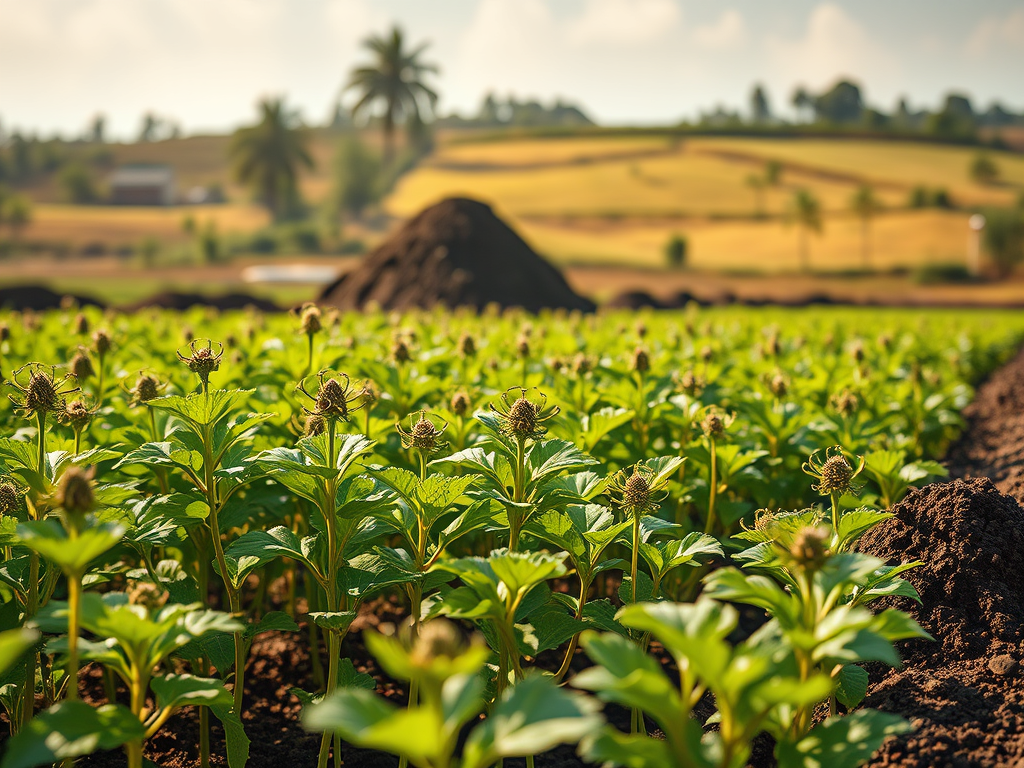
In a recent study published in the Asian Journal of Biological Sciences, Nimatu et al. explored the potential of biocharBiochar is a carbon-rich material created from biomass decomposition in low-oxygen conditions. It has important applications in environmental remediation, soil improvement, agriculture, carbon sequestration, energy storage, and sustainable materials, promoting efficiency and reducing waste in various contexts while addressing climate change challenges. More to improve the safety and quality of wastewater for irrigation. The researchers investigated the effects of different biochar-treated wastewaters on the growth and yield of amaranth, a nutritious leafy vegetable commonly grown in Ghana.
The study was conducted at Zagyuri, an irrigation field in Tamale, Ghana, where farmers rely on wastewater for irrigation due to water scarcity. However, wastewater can contain pollutants, including heavy metals like cadmium and lead, which can be harmful to human health. Biochar is a charcoal-like material produced from the pyrolysisPyrolysis is a thermochemical process that converts waste biomass into bio-char, bio-oil, and pyro-gas. It offers significant advantages in waste valorization, turning low-value materials into economically valuable resources. Its versatility allows for tailored products based on operational conditions, presenting itself as a cost-effective and efficient More of biomassBiomass is a complex biological organic or non-organic solid product derived from living or recently living organism and available naturally. Various types of wastes such as animal manure, waste paper, sludge and many industrial wastes are also treated as biomass because like natural biomass these More, such as agricultural waste. It has gained attention as a soil amendmentA soil amendment is any material added to the soil to enhance its physical or chemical properties, improving its suitability for plant growth. Biochar is considered a soil amendment as it can improve soil structure, water retention, nutrient availability, and microbial activity. More and for its potential to remove pollutants from water.
The authors compared the growth of amaranth irrigated with different biochar-treated wastewaters, including groundnut husk biochar, rice husk biochar, and corn cob biochar. They found that amaranth irrigated with wastewater treated with groundnut husk biochar had the highest growth and yield, as well as reduced levels of cadmium and lead in the leaves. The researchers concluded that biochar, particularly groundnut husk biochar, can effectively remediate wastewater and improve the growth and yield of amaranth. This is good news for farmers in water-scarce regions who rely on wastewater for irrigation, as it offers a sustainable and cost-effective way to improve the safety and quality of their produce.
This study highlights the potential of biochar as a sustainable solution for wastewater irrigation. It also demonstrates the importance of continued research into innovative approaches to address the challenges of water scarcity and food security.
SOURCE: Nimatu, H. M., Nyarko, G., & Bayor, H. (2023). Effects of different biochars and the impact of heavy metals on growth and yield of Amaranthus at Zagyuri irrigation field Tamale, Ghana. Asian Journal of Biological Sciences, 16(3), 322-336.Sources and related content. https://doi.org/10.3923/ajbs.2023.322.336




Leave a Reply